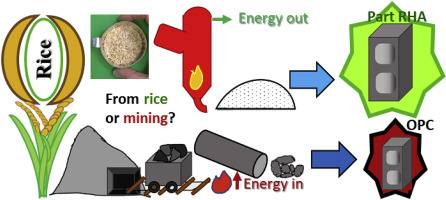
After water, concrete is the second most used material in the world. Using life cycle assessments, concrete has typically been found to be 80% of a residential building by weight. Cement production consumes large amounts of energy, motivating a search for sustainable alternatives. Rice husk ash produced in controlled combustion has been found to be a viable replacement for cement. Renewable and sustainable, rice husks have the potential to produce energy while yielding an ash product for use in concrete.
Your search request returned 8451 results.
Elsevier, Geoforum, Volume 75, 1 October 2016
Global health threats such as the recent Ebola and Zika virus outbreaks require rapid and robust responses to prevent, reduce and recover from disease dispersion. As part of broader big data and digital humanitarianism discourses, there is an emerging interest in data produced through mobile phone communications for enhancing the data environment in such circumstances.
Elsevier, Case Studies in Chemical and Environmental Engineering, Volume 1, May 2020
Pollution prevention methods were applied at an optics manufacturer in an effort to improve recovery of a valuable polishing component, cerium oxide (ceria), 77% of which was lost to dragout and sewer discharge. Centrifugation and microfiltratiion were evaluated to develop a process that would increase recovery of used ceria, which would then be sent back to the ceria supplier for reclamation and reuse. Full-scale implementation included a high-speed centrifuge that operates continuously with a microfiltration system through recirculation in a single process tank.
Elsevier, Environment International, Volume 86, January 01, 2016
Climate change refers to long-term shifts in weather conditions and patterns of extreme weather events. It may lead to changes in health threat to human beings, multiplying existing health problems. This review examines the scientific evidences on the impact of climate change on human infectious diseases. It identifies research progress and gaps on how human society may respond to, adapt to, and prepare for the related changes.

Elsevier, The Lancet, Volume 391, Issue 10140, 9 May 2018, Pages 2642-2692
In support of SDGs 3 and 5, this Lancet Commission report presents a comprehensive agenda for global, regional, and national progress on sexual and reproductive health and rights (SRHR), up to 2030 and beyond. The report highlights why recognition of, and investment in, SRHR is pivotal to shaping future economic development and environmental sustainability, and proposes an essential package of SRHR services that should be universally available to all individuals who need them.