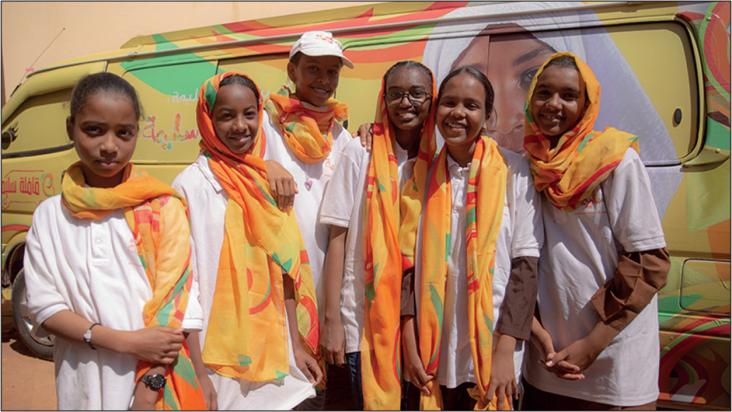
Elsevier, The Lancet Child and Adolescent Health, Volume 8, March 2024
Adolescent girls are not receiving the support they need to thrive and are continuously disadvantaged by inattention and broad inequalities that limit their tremendous potential. Their potential is enormous—as is their belief in a better future.
Elsevier, Breast CancerMultidisciplinary Pathways for Cancer Care in the Community2024, Pages 40-44
Within this chapter, we will take a look at experiential approaches and best practices to fostering effective and sustainable community outreach and health equity, supporting both SDG 3 and SDG 10.
Elsevier, Journal of Healthcare Quality Research, Volume 39, March 2024
The present study aims to identify key healthcare quality attributes from primary care professionals' (PCPs’) perspective, to validate an instrument that measures PCPs’ experiences of healthcare quality multidimensionally and to define hospital quality priorities based on PCPs’ experiences.
Large language models (LLMs) are positioned to become another destination for those seeking medical information. Consequently, the readability of these materials becomes an important factor in ensuring their effectiveness in promoting health literacy, given that the average American reads at the eighth-grade level. Supports SDGs 3 and 10.
Elsevier, Retinal and Choroidal Vascular Diseases of the Eye, 2024, Pages 375-390
This content aligns with Goal 3: Good Health by emphasizing the importance of early diagnosis and effective management of multiple sclerosis (MS) to delay disease progression and improve health outcomes for individuals affected by this condition. By exploring the innovative use of retinal imaging technology as a noninvasive method to detect and monitor neurodegeneration associated with MS, it highlights advancements in healthcare that can lead to better disease management. Additionally, it supports Goal 10: Reduced Inequalities by advocating for accessible diagnostic tools that can enhance the care of young adults with MS, ensuring that all individuals receive timely and equitable healthcare regardless of their socioeconomic status.
To mark International Women's Day 2024, Elsevier have curated and made freely available a special collection of journal articles and book chapters to advance knowledge and understanding relating to SDG 5: Gender Equality. The special collection features research relating to inclusion and the empowerment of women and girls across a broad range of disciplines and contexts including health, climate change, natural disasters, biodiversity, smart cities, sustainable development and leadership.
Position paper introducing a framework for an intersectional, equity-informed, data-driven approach to research on HIV and women and highlighting selected issues for women and gender diverse people, including HIV prevention, HIV cure, ageing with HIV, substance use and misuse, violence, pregnancy, and breastfeeding or chestfeeding
Elsevier, Obstetrics and Gynecology Clinics of North America, Volume 51, March 2024
This content aligns with Goal 3: Good Health as well as Goal 10: Reduced Inequalities by bringing to light strategies for gynecologists to provide SGM people with equitable and inclusive full spectrum reproductive health care.
This study emphasizes the importance of adopting nexus approaches in Arctic governance to address the complex interactions between climate change, biodiversity loss, land use pressures, and local livelihoods. While Arctic policies often incorporate nexus elements, there is a need to better recognize the agency and impact of local communities and traditional livelihoods in decision-making processes. This aligns with the goals of the International Day of Indigenous Peoples by highlighting the significance of involving indigenous communities in environmental governance and promoting cross-sectoral policies that consider their perspectives and contributions.
Elsevier, Nursing Clinics of North America 59:1, pp 109-120, March 2024
This article calls for a closer examination of health equity regarding the disparities and inequities in health care among marginalized and vulnerable populations.