This Personal View supports SDGs 3 and 13 by calling for more research into the contribution that physical activity can have in adapting to rising global temperatures and, more broadly, to climate change.
This One Earth Perspective makes policy recommendations for how global finance institutions can support low-carbon development (SDG 13) in low-income nations (SDG 10) and foster clean economic growth (SDG 8).
This One Earth Research Article shows how higher temperatures are associated with increased risk of childhood anemia in sub-Saharan Africa, predicts the risk to increase in the future due to climate change. The results emphasize the need for climate mitigation and adaptation (SDG 13), as well as targeted public health responses (SDG 3).
The UK is trying to achieve carbon neutrality (SDG 13) and improve biodiversity (SDG 15). This One Earth Research Article explores various land-use changes that the UK could make to achieve these various goals but finds that no solutions exist without trade offs like reduction in food production (SDG 2).
Elsevier, The Lancet Planetary Health, Volume 7, October 2023
This Article supports SDGs 3, 10, and 13 by evaluating the effect of ambient temperature on mobility within large cities and urban areas, particularly focusing on the subway system in New York city.
This article underscores the complex interplay between topography and climate in driving glacier retreat in Sikkim, with significant implications for water resources and regional economic stability.
This paper provides the most recent and accurate quantitative and qualitative assessment of available water resources and demands in the GCC countries.
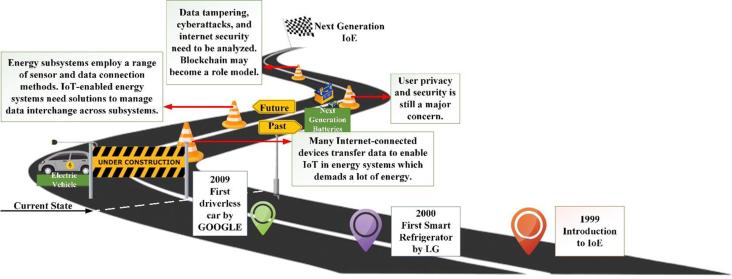
This article supports SDGs 9 and 11 by exploring the technological aspects of the Internet of Things, emphasizing blueprints, complexity, challenges, and future directions to improve performance, network security, and stability.
This article supports SDGs 7 and 13 by comparing the economy and carbon emissions of electrochemical energy storage (EES) and hydrogen energy storage (HES) in renewable energy storage, and it was found that lithium-ion batteries and certain HES routes perform best in LCOS and carbon emissions, supporting their use to achieve future decarbonization goals.