Protect, restore and promote sustainable use of terrestrial ecosystems, sustainably manage forests, combat desertification, and halt and reverse land degradation and halt biodiversity loss
Elsevier, Comparative Biochemistry and Physiology -Part A : Molecular and Integrative Physiology, Volume 267, May 2022
This article advances SDG # 15 and SDG # 11 by looking at the impact captivity has on wild animals and help identify which species may be able to successfully transition to a captive environment.
Elsevier, Current Directions in Water Scarcity Research, Volume 4, 2022, Pages 145-165
This chapter aligns with UN SDG 6 (Clean water and sanitation), SDG 10 (Reduced inequalities) and SDG 15 (Life on land) describing the historical and ethnographic description of the Krenak, the indigenous people who inhabit the left margins of the Rio Doce river and the conflicts they have experienced in their territory over the years and how the Rio Doce mining disaster impacted their lives.
Elsevier, The Lancet Planetary Health, Volume 6, May 2022
A Comment on planetary health and Indigenous land rights, in the context of SDGs 3, 15, and 17, focusing specifically on safeguarding biological and cultural diversity to halt ecosystem destruction, disease emergence, and climate change.
Elsevier, The Lancet Planetary Health, Volume 6, May 2022
An Article in support of SDGs 2 and 15, showing that farm-level diversification might contribute to improved nutrition among children and other target groups in some but not all situations, but livestock production seems to be conducive for improving child and adolescent nutrition on average.
A Review on the association between agricultural food production and hunting practices and zoonotic disease outbreaks, in the context of SDGs 3, 12, and 15, highlighting the need to redesign the global food system to reduce the threat of future outbreaks.
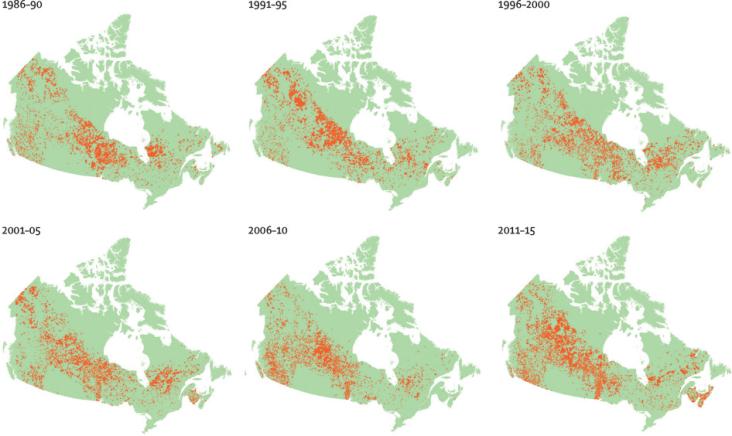
This is an article on the impact of residential exposure to wildfires and the incidence of various cancers, in the context of SDGs 3, 13, and 15, focusing on the need to develop exposure metrics to better estimate the chronic population health burden attributable to environmental pollutants emitted during wildfires.
Elsevier, Animal Behaviour, Volume 186, April 2022, Pages 151-177
The authors investigate whether applying multiple welfare indicators’ and triangulating them can lead to converged and corroborating evidence of welfare, or whether the indicators' contradict one another.
Background: Individuals with COPD have increased sensitivity to traffic-related air pollution (TRAP) such as diesel exhaust (DE), but little is known about the acute effects of TRAP on exercise res