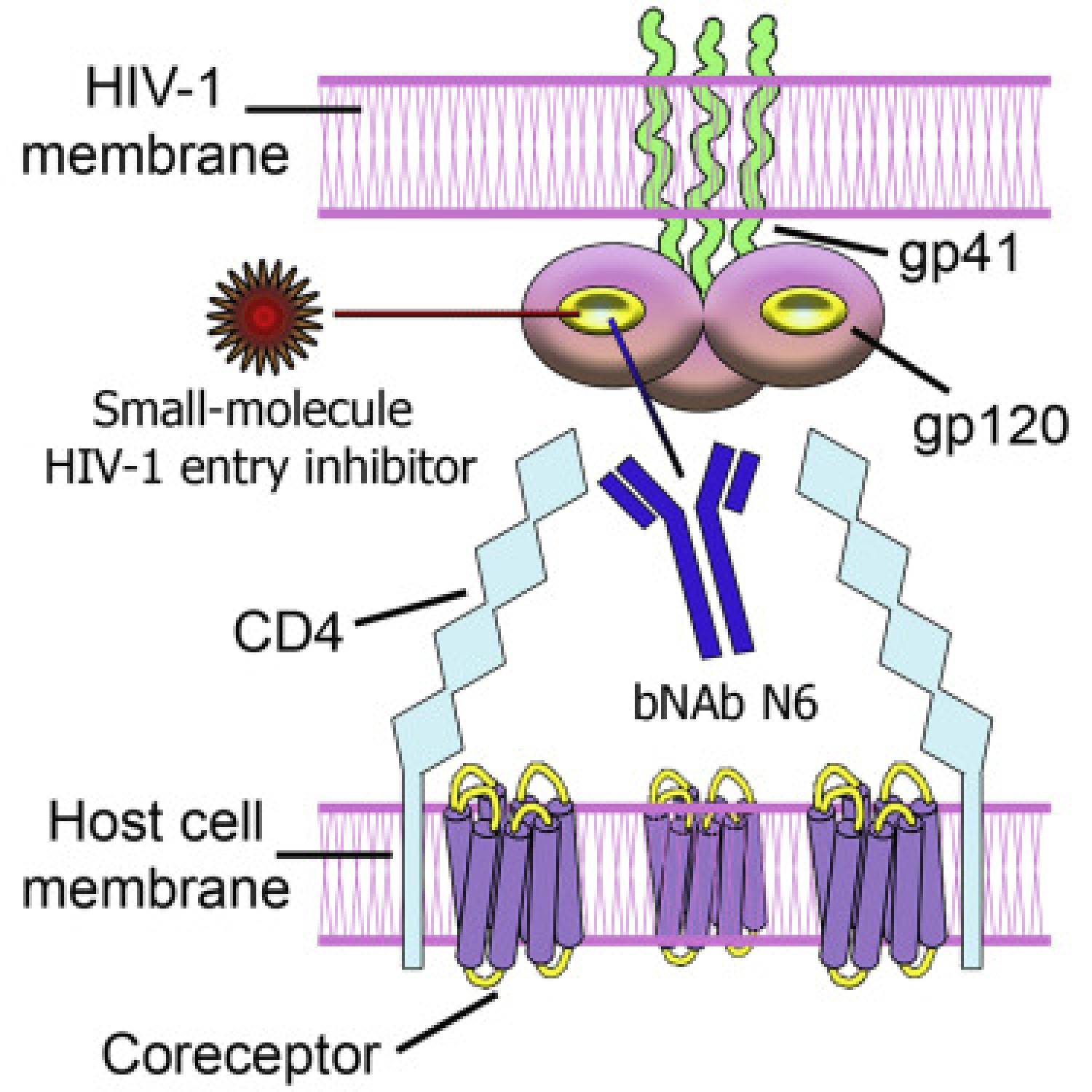
Highly active antiretroviral therapy currently used for HIV/AIDS has significantly increased the life expectancy of HIV-infected individuals. It has also improved the quality of life, reduced mortality, and decreased the incidence of AIDS and HIV-related conditions. Currently, however, affected individuals are typically on a lifetime course of several therapeutic drugs, all with the potential for associated toxicity and emergence of resistance. This calls for development of novel, potent, and broad anti-HIV agents able to stop the spread of HIV/AIDS. Significant progress has been made toward identification of anti-HIV-1 broadly neutralizing antibodies (bNAbs). However, antibody-based drugs are costly to produce and store. Administration (by injection only) and other obstacles limit clinical use. In recent years, several highly promising small-molecule HIV-1 entry inhibitors targeting the epitopes of bNAbs have been developed. These newly developed compounds are the focus of the present article.