Elsevier, Sustainable Cities and Society, Volume 27, 1 November 2016
Ensuring future water security requires broad community support for changes in policy, practice, and technology, such as those involved in delivering alternative water schemes.
Elsevier, International Encyclopedia of Public Health (Second Edition), 2017, Pages 350-360
This chapter advances SDG 6 by explaining a multidisciplinary approach to drinking water from a public health perspective and how it is important as poverty, with its associated unsanitary living conditions and lack of access to water, proper nutrition, health care, and education, is the overwhelming determinant of infection and malnutrition.
Elsevier, International Encyclopedia of Public Health (Second Edition), 2017, Pages 148-158
This chapter advances SDG 6 by summarizing water contaminants (that have been included in current promulgated regulations) and emerging agents (that have been considered as contaminant candidates which may require further regulation), current regulations, and treatment options.
Elsevier, Social Science and Medicine, Volume 166, 1 October 2016
Training and capacity building are long established critical components of global water, sanitation, and hygiene (WaSH) policies, strategies, and programs.
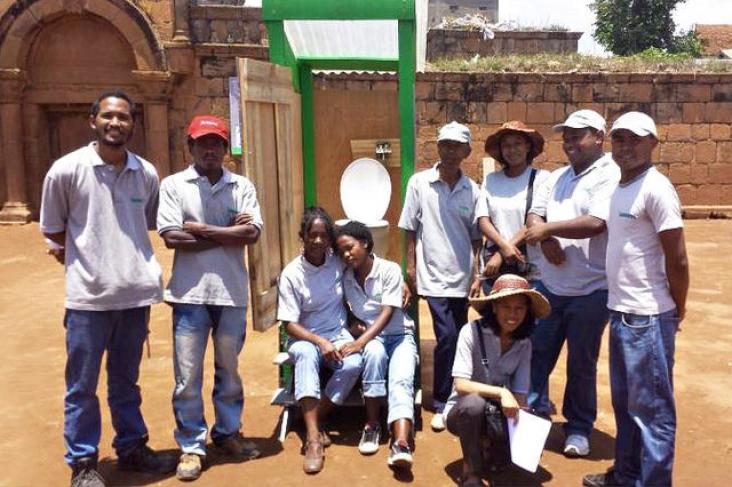
The RELX Group Environmental Challenge is awarded annually to projects that best demonstrate how they can provide sustainable access to safe water where it is presently at risk and/or access to improved sanitation. The 2016 winner was Loowatt - an innovative sanitation solution which also generates power. The Environmental Challenge directly assists SDG 6.1 and 6.2 to achieve universal and equitable access to safe and affordable drinking water and access to adequate and equitable sanitation and hygiene, for all.
This article highlights the winning proposals of the first edition of the Elsevier Foundation Green & Sustainable Chemistry Challenge. The winning proposals were chosen for their innovative green chemistry aspects and their large positive impact on the environment, contributing to SDGs 6, 12 and 15.
To advance Goal 6 and Goal 10, this webinar explores how businesses can responsibly manage the human rights impacts of their own water-intensive operations and/or supply chains