Contributing to SDGs 16 (Peace, Justice and Strong Institutions) and 17 (Partnerships for the Goals), this research seeks to understand if, when and how transitional justice, in combination with other conflict resolution tools, can contribute to transitions away from conflict in settings affected by major jihadist groups.
Your search request returned 8451 results.
Partner contentUnited Nations University
Partner contentUnited Nations University
Directly relevant to SDGs 8 (Decent Work and Economic Growth) and 17 (Partnerships for the Goals), this report explores a public-private partnership which puts the financial sector at the heart of global efforts to end modern slavery and human trafficking and accelerate action in eradicating these practices.
Focussing on SDGs 16 (Peace, Justice and Strong Institutions) and 17 (Partnerships for the Goals), this piece explores conflict prevention and the role of Resident Coordinators in fragile and conflict- affected countries without peace operations.
This event focuses on SDGs 1 (No Poverty), 2 (Zero Hunger) and 12 (Responsible Consumption and Production). Our natural environment works in cycles and, to be effective and sustainable, so should resource management.
Elsevier, International Journal of Hygiene and Environmental Health, Volume 222, May 2019
This study quantified antibiotic and antibiotic resistance gene (ARG) concentrations in hospital and communal wastewaters as well as the influents and effluents of the receiving urban wastewater treatment plants (UWWTP) in two Dutch cities. In only one city, hospital wastewater was treated on-site using advanced technologies, including membrane bioreactor treatment (MBR), ozonation, granulated activated carbon (GAC) and UV-treatment.
Elsevier, SSM - Population Health, Volume 9, December 2019
Psychological abuse within intimate relationships is linked to negative health outcomes among women and is frequently identified as more wounding than physical or sexual violence. There is little agreement, however, on how to conceptualize or measure the phenomenon, despite measurement being necessary to estimate the prevalence of psychological abuse, establish its interaction with physical and sexual violence, assess its health impacts, and monitor progress towards global Sustainable Development Goals.
Elsevier, Telematics and Informatics, Volume 38, May 2019
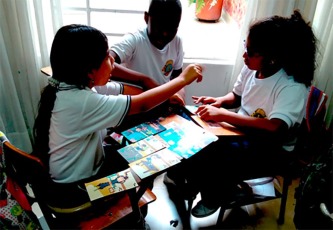
Currently, learning technologies are transforming and modifying educational systems with impressive progress of Information and Communication Technologies. Furthermore, when these technologies are available, accessible, usable and affordable, they represent more than just a transformation for people with disabilities, they represent real opportunities with access to an inclusive education and help to overcome the obstacles they meet in classical educational systems.
Elsevier, Journal of Allergy and Clinical Immunology, Volume 140, November 2017
The tremendous increase in allergy in the African continent cannot simply be explained by the change in public hygiene. There are many “prehygiene” communities with sewage-contaminated water supplies, helminth infestations, bare footedness, and poor housing, and still there is a high prevalence of allergic disease. Africans can be exposed to many risk factors facilitating severe asthma and wheezing, including airborne viruses, smoke, indoor dampness, cockroaches, and poor access to health care.
Elsevier, Futures, Volume 105, January 2019
Degrowth scholars and activists have convincingly argued that degrowth in developed nations will need to be part of a global effort to tackle climate change, and to preserve the conditions for future generations’ basic needs satisfaction. However, the barriers to building a broader degrowth movement appear to be very entrenched at present. To improve the political feasibility of degrowth it is important to better understand these structural obstacles and develop arguments and strategies to address them.