Elsevier, Polar Science, Volume 21, September 2019
Global temperature limitation near 2 °C could slow, but not halt further changes in the Arctic for future decades. The precautionary principle calls for early adaptation and mitigation actions.
This report showcases business leadership on climate action aligned with limiting global temperature rise to 1.5°C. Advancing SDGs 12, 13 and 17, this report features solutions and strategies developed by companies that have taken the 1.5°C pledge and examines how business leaders are integrating this process into corporate strategies and generating employee buy-in.
Elsevier, Measurement: Journal of the International Measurement Confederation, Volume 143, September 2019
With the advantages of reducing CO2 emissions and improving the sustainability of supply chain, returnable containers have been widely used in logistics processes.
Elsevier, Renewable and Sustainable Energy Reviews, Volume 112, September 2019
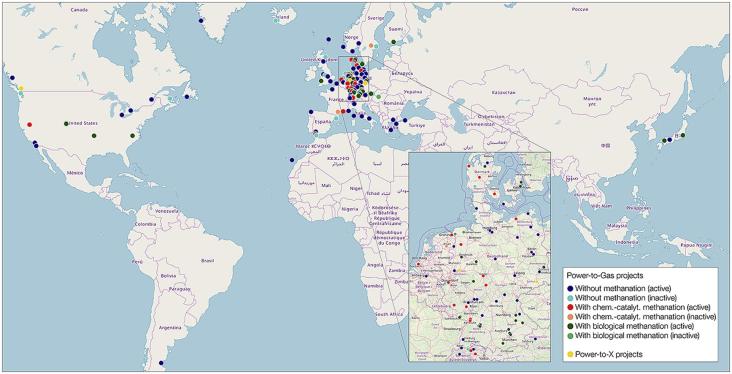
This review gives a worldwide overview on Power-to-Gas projects producing hydrogen or renewable substitute natural gas focusing projects in central Europe.
Elsevier, Encyclopedia of Environmental Health (Second Edition), 2011, Pages 327-334
This chapter analyses the complex influence of climate change on vector borne diseases. It is perhaps expected that climate change will be invoked as a major driving force. The actual effect, however, is highly site specific suggesting that other factors play an equally important role.