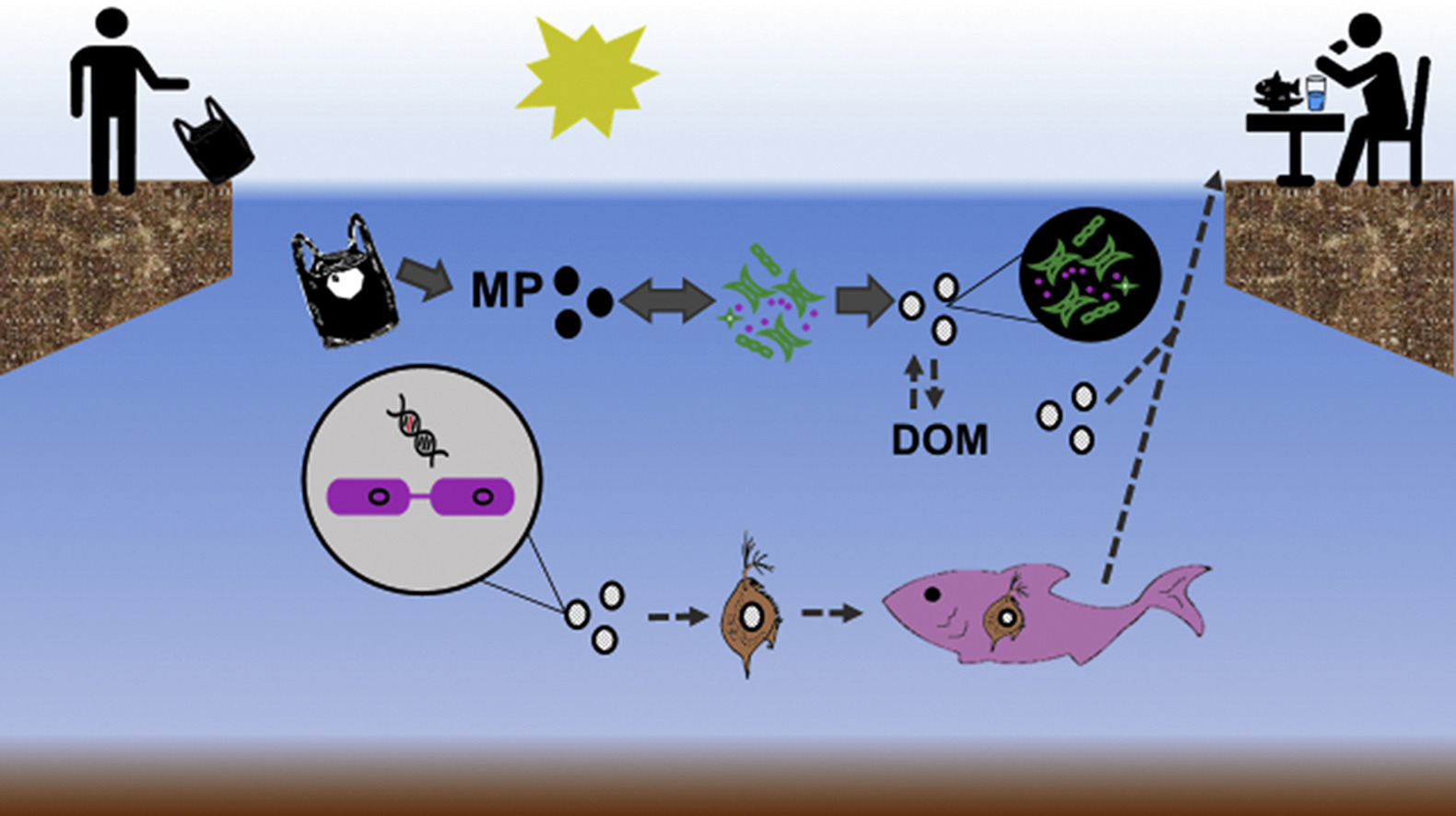
Microplastics (MP) provide a unique and extensive surface for microbial colonization in aquatic ecosystems. The formation of microorganism-microplastic complexes, such as biofilms, maximizes the degradation of organic matter and horizontal gene transfer. In this context, MP affect the structure and function of microbial communities, which in turn render the physical and chemical fate of MP. This new paradigm generates challenges for microbiology, ecology, and ecotoxicology.
Your search request returned 8452 results.
Elsevier, TrAC - Trends in Analytical Chemistry, Volume 114, May 2019
The presence of small plastic particles in the environment, reported for the first time in the 1970's, has only recently been recognized as a global issue. Although environmental awareness continues to grow, so does its consumption and associated risks. The number of studies reporting the presence of microplastics, has grown exponentially as did the concern over plastic degradation into smaller particles like nanoplastics, a potentially more pernicious form of plastic pollution.
Elsevier, TrAC - Trends in Analytical Chemistry, Volume 113, April 2019
Although the study of the effects of microplastics increased in the last years, terrestrial ecosystems remain less studied. In fact, the effects of microplastics in insects, the most abundant group of animals and major providers of key Ecosystem Services, are not well known despite the potential cascading negative effects on the ecosystems functioning in the habitats where they occur.

Accuity, 8 July 2016
Human trafficking is one of the main profit-generating activities for organised criminals in Europe and the revenue generated is often laundered through the financial system. Understanding the complexities of human trafficking is vital to both SDG 8.7 to take immediate and effective measures to eradicate forced labour, end modern slavery and human trafficking and SDG 16.4 to significantly reduce illicit financial and arms flows, strengthen the recovery and return of stolen assets and combat all forms of organized crime.

Elsevier, TrAC - Trends in Analytical Chemistry, Volume 113, April 2019
Microplastics are emerging pollutants in aquatic and terrestrial environments. In the last years, several case studies and reviews have been published about microplastics in freshwater and marine environments. However, no standardized methods are available for sampling and sample preparation. Based on literature research, this review presents different techniques and methods for sampling as well as the preparation of microplastic samples from water, sediment and biota of freshwater and marine environments.

Elsevier, TrAC - Trends in Analytical Chemistry, Volume 112, March 2019
Plastics are an integral but largely inconspicuous part of human daily routines. Associated with a high production and single use nature of several products, small plastic particles became ubiquitous. Due to processes like water currents and winds, plastics may occur far from their place of origin and affect biota at different environmental compartments. In the environment plastics can degrade into increasingly smaller particles, reaching a nanometer size which increases their potential to be incorporated by organisms.
Elsevier, TrAC - Trends in Analytical Chemistry, Volume 111, February 2019
The quantification of micro- and nanoplastics in environmental matrices is an analytical challenge and pushes to the use of unrealistic high exposure concentrations in laboratory studies which can lead to manifestations of ecotoxicological effects and risks estimation that are transient under natural conditions.

Elsevier, TrAC - Trends in Analytical Chemistry, Volume 112, March 2019
Nanoplastic is an emerging topic of relevance in environmental science. The analytical methods for microplastic have a particle size limit of a few micrometers so that new methods have to be developed to cover the nanometer range. This contribution reviews the progress in environmental nanoplastic analysis and critically evaluates which techniques from nanomaterial analysis may potentially be adapted to close the methodological gap. A roadmap is brought forward for the whole analytical process from sample treatment to particle characterization.
Elsevier, Journal of Healthcare Quality Research, Volume 34, July - August 2019
Objective: To report various components of health system responsiveness among poor internal migrants who availed the government health facilities in 13 Indian cities. Materials and methods: Cluster random sampling was used to select 50,806 migrant households, of which 14,263 households avail the government health facility in last six months. In addition, 5072 women, who sought antenatal care and 3946 women who had delivery in government health facility during last six months were also included.
Elsevier, TrAC - Trends in Analytical Chemistry, Volume 112, March 2019
Plastics are a frequently observed component of marine debris and there is growing concern about microplastic (MP) ecotoxicity, and the impacts of additives, sorbed hazardous organic contaminants, heavy metals, and biofilm on MP surfaces. The relative importance of MP from different terrestrial and freshwater sources is poorly understood and limits our ability to develop best management practices.