Microplastics pollution in aquatic ecosystems has aroused increasing global concern, leading to an explosive growth of studies regarding microplastics published in the past few years. To date, there is still a lack of standardized methodologies used for the detection of microplastics within environmental samples, thus hampering comparison of the reported data.
Your search request returned 8452 results.
Elsevier, TrAC - Trends in Analytical Chemistry, Volume 109, December 2018
The Mediterranean Sea is affected by one of the most significant plastic pollution worldwide. This review critically evaluates the most recent literature on the presence of microplastics in sediments, suggested to be long term sinks and have a high potential to accumulate this kind of marine debris. A picture of microplastic levels in coastal environments is given, evidencing information gaps and considering also estuary, lagoons and areas influenced by the contribution of rivers. A wide range of contamination levels has been found, with the highest in lagoon and estuary environments.
Elsevier, Damia Barcelo and Thomas Knepper, TrAC Trends in Analytical Chemistry, 30 July 2019
This microplastics special issue compiled by Trends in Analytical Chemistry supports many of the SDGs, namely SDGs 3 (good health and well-being), 9.5 (enhance scientific research), 12 (responsible consumption and production), 14 (life below water) and 15 (life on land).
Elsevier, Antimicrobial Resistance, 2019.
This article selection displays a sample of research that Elsevier publishes in its microbiology and medical journals, highlighting Elsevier's contribution to the efforts of battling the huge problem of antimicrobial resistance (AMR). Research within this selection supports SDGs 3 (good health and well-being), 6 (clean water and sanitation), 12 (responsible production and consumption) and 17 (partnerships for the goals).
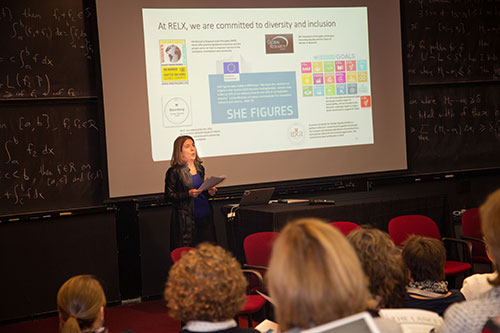

LexisNexis Legal & Professional, July 30 2019
July 30th marks the fifth World Day Against Trafficking in Persons, a call to action—for individuals and organizations—to protect and promote human rights among some of the world’s most vulnerable populations. As part of the United Nations 2030 Agenda, and specifically SDG 8 (Decent Work) and SDG 16 (Peace, justice and strong institutions), the global community has agreed to eliminate trafficking and companies are expected to meet ethical expectations for human rights standards.
LexisNexis Risk Solutions, June 26 2019
This report showcases the latest transaction patterns, trends and cybercrime threats in Europe, the Middle East and Africa (EMEA). It is essential reading for anyone involved in cybersecurity, financial crime, digital identity, fraud management and threat detection, advancing SDGs 8 (decent work and economic growth) and 16 (peace, justice and strong institutions).

Brightmine, August 1, 2019
This XpertHR blog post contributes to SDG 5 (gender equality), SDG 8 (decent work and economic growth) and SDG 10 (reduced inequalities). Content within this post discusses the challenges faced by employers when navigating issues surrounding pregnancy accommodations.
Brightmine, July 17, 2019
Advancing SDG 8, decent work and economic growth, this podcast takes an in-depth look at how Artificial Intelligence (AI) is playing an increasingly significant role in recruiting and hiring, cybersecurity, payroll and other employment areas.
All-Energy, the UK’s largest renewable energy and low carbon event, is taking place on 2nd & 3rd of May 2018 in Glasgow; it brings together the UK’s largest group of buyers across the value chain, including investors, project developers, end users and policy makers, among others. Showcasing the complete range of renewable and sustainable technologies and with a world-class free-to-attend conference alongside, All-Energy brings together over 7,500 supply chain and business energy end users – including the largest group of renewable energy developers and supply chain partners seen anywhere in the UK.