This content aligns with Goal 3: Good Health and Wellbeing and Goal 10: Reduced Inequalities by providing coverage of neural prosthetics (NPs) to restore lost limb function due to neural damage.
Elsevier, Low Vision: Principles and Management, 2024, Pages 180-188
This content aligns with Goal 3: Good Health by detailing specialized training techniques that can enhance the quality of life for individuals with visual field loss, thereby improving their ability to navigate their environment and engage in daily activities. By focusing on tailored interventions such as eccentric viewing, visual exploration, and scanning training, the chapter promotes effective rehabilitation strategies that contribute to better health outcomes for those affected by visual impairments. Additionally, it supports Goal 10: Reduced Inequalities by ensuring that individuals with visual field loss have access to adaptive training methods, which can empower them to lead more independent and fulfilling lives, regardless of their socioeconomic status or background.
Elsevier, The Lancet Regional Health - Americas, Volume 24, August 2023
This paper supports SDG 3 and 10 by provide evidence that societal cultural stress can increase the risk of lifetime bipolar disorder onset in youth growing up as a minoritized group.
Elsevier, eClinicalMedicine, Volume 62, August 2023
This Article supports SDGs 3 and 10 by showing that in Austria, Greece, Spain, and the UK, there is a dearth of targeted, tailored cancer prevention programmes for people experiencing homelessness, and concern from health professionals that cancer is not being spotted at early stages in this population.
Elsevier, Neuroscience, Volume 525, 10 August 2023
The article emphasizes the importance of providing training and supporting resources alongside open science initiatives to enhance accessibility and reduce barriers in the field. It suggests that these educational resources should be customized to cater to diverse user profiles, including neuroscientists, computational scientists, and educators.
Elsevier, Translational Sports MedicineHandbook for Designing and Conducting Clinical and Translational Research2023, Pages 513-518
This chapter focuses on n the population and environmental considerations that impact how patients receive care, identify health concerns, and empower them to take initiative in their own care with the health teams surrounding their care supporting SDG 3.
As the upcoming generation occupies a larger portion of the workforce, issues around the topic of diversity will only continue to grow in importance. Not only is Generation Z more racially and ethnically diverse than previous generations, but members of this generation are also more likely to expect employers to actively work toward cultivating diversity in the workplace. The recent DIAL Global Diversity Review, co-sponsored by XpertHR, presents comprehensive data on the practices being used to promote diversity in the workplace today. This report addresses various facets of diversity from gender and ethnicity to socioeconomic status and parenthood, promoting SDGs 5, 8 and 10.
climate change interacts with historical colonialism to shape fisheries in small island developing states. Greater attention to fish as food can improve food sovereignty and reduce historical inequalities
Elsevier, eClinicalMedicine, Volume 62, August 2023
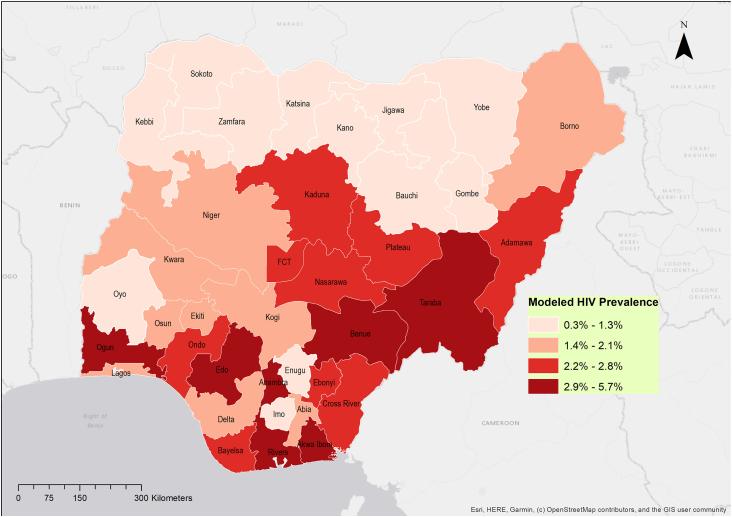
Population-based surveys are expensive and time consuming. By determining state-level seropositivity using national testing service data and a Bayesian linear model, a map of HIV prevalence was generated across the whole of Nigeria. By identifying the areas in which HIV is most prevalent interventions can be targeted. This less resource intense Bayseian method allows for national monitoring of HIV prevalence.