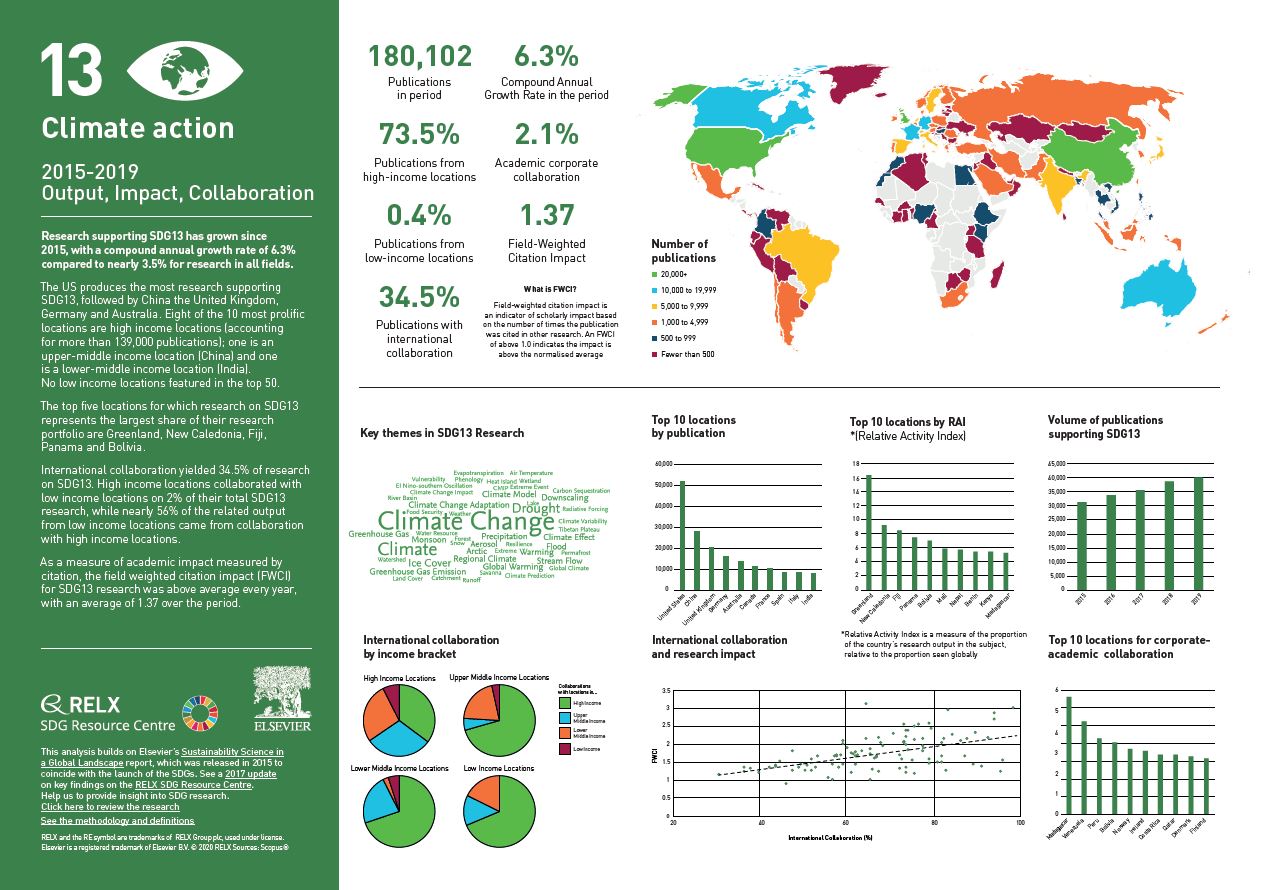
Over the past five years, we have used data and analytics to help the research and healthcare communities navigate the sea of research and to put collaboration, both interdisciplinary and international, at the heart of scientific progress on the SDGs. View findings for SDG 13.
Your search request returned 8453 results.
RELX, September 2020
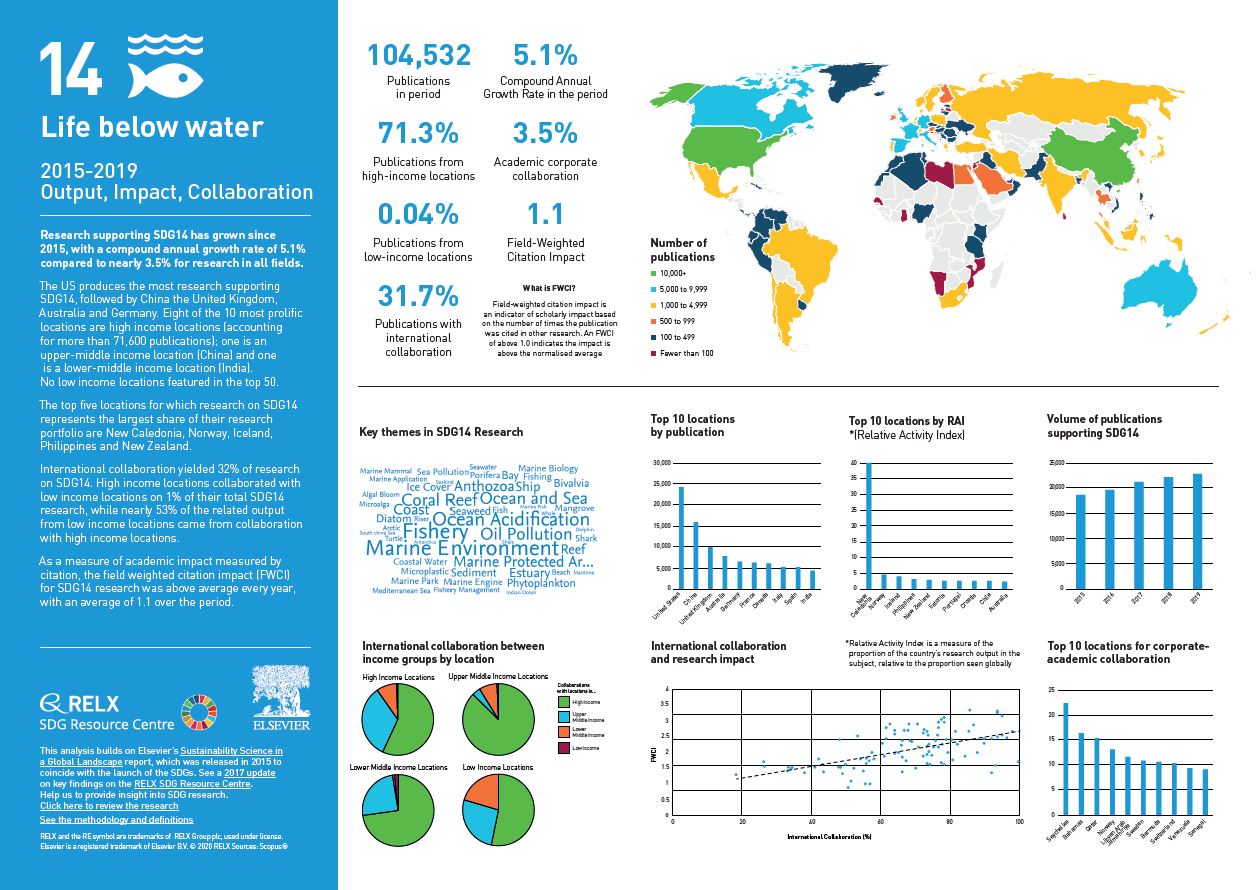
Over the past five years, we have used data and analytics to help the research and healthcare communities navigate the sea of research and to put collaboration, both interdisciplinary and international, at the heart of scientific progress on the SDGs. View findings for SDG 14.
RELX, September 2020
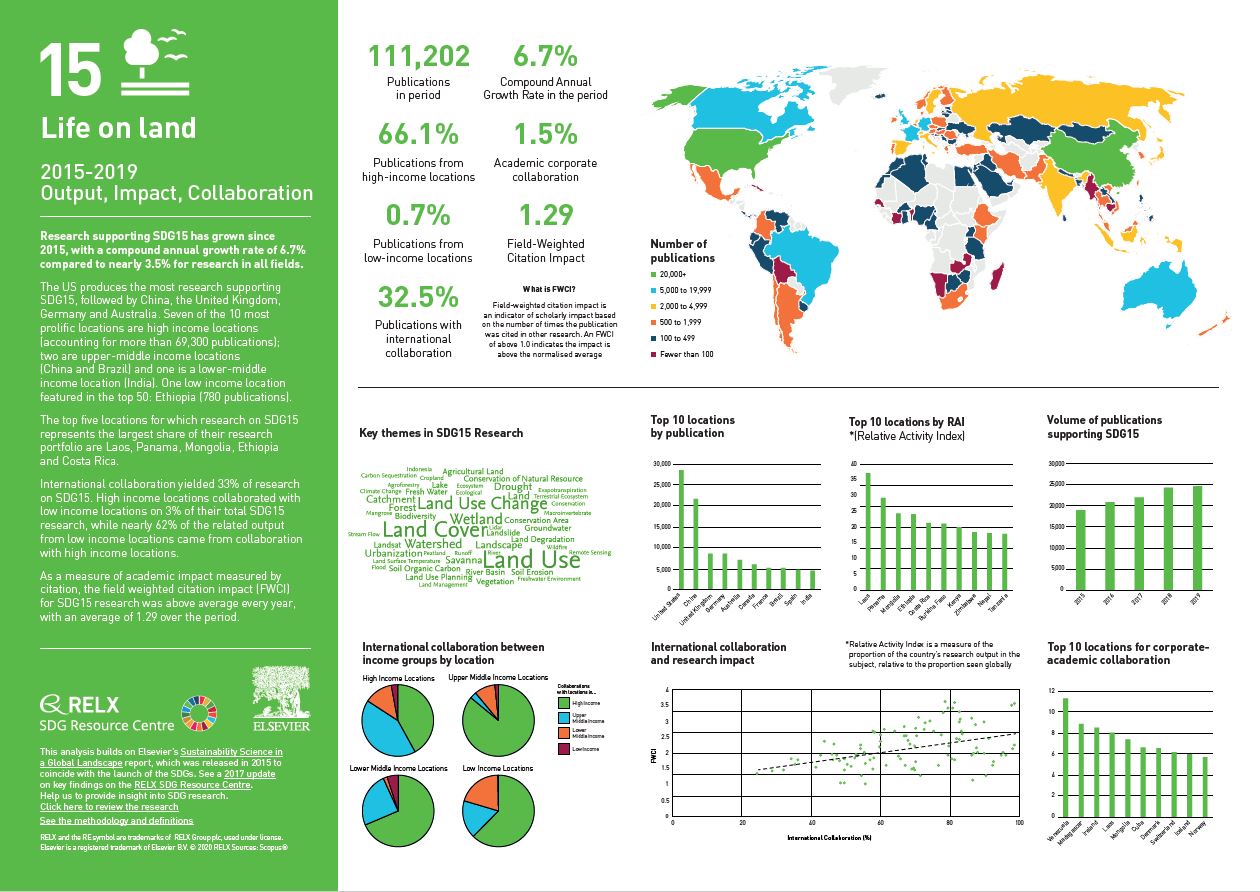
Over the past five years, we have used data and analytics to help the research and healthcare communities navigate the sea of research and to put collaboration, both interdisciplinary and international, at the heart of scientific progress on the SDGs. View findings for SDG 15.
RELX, September 2020
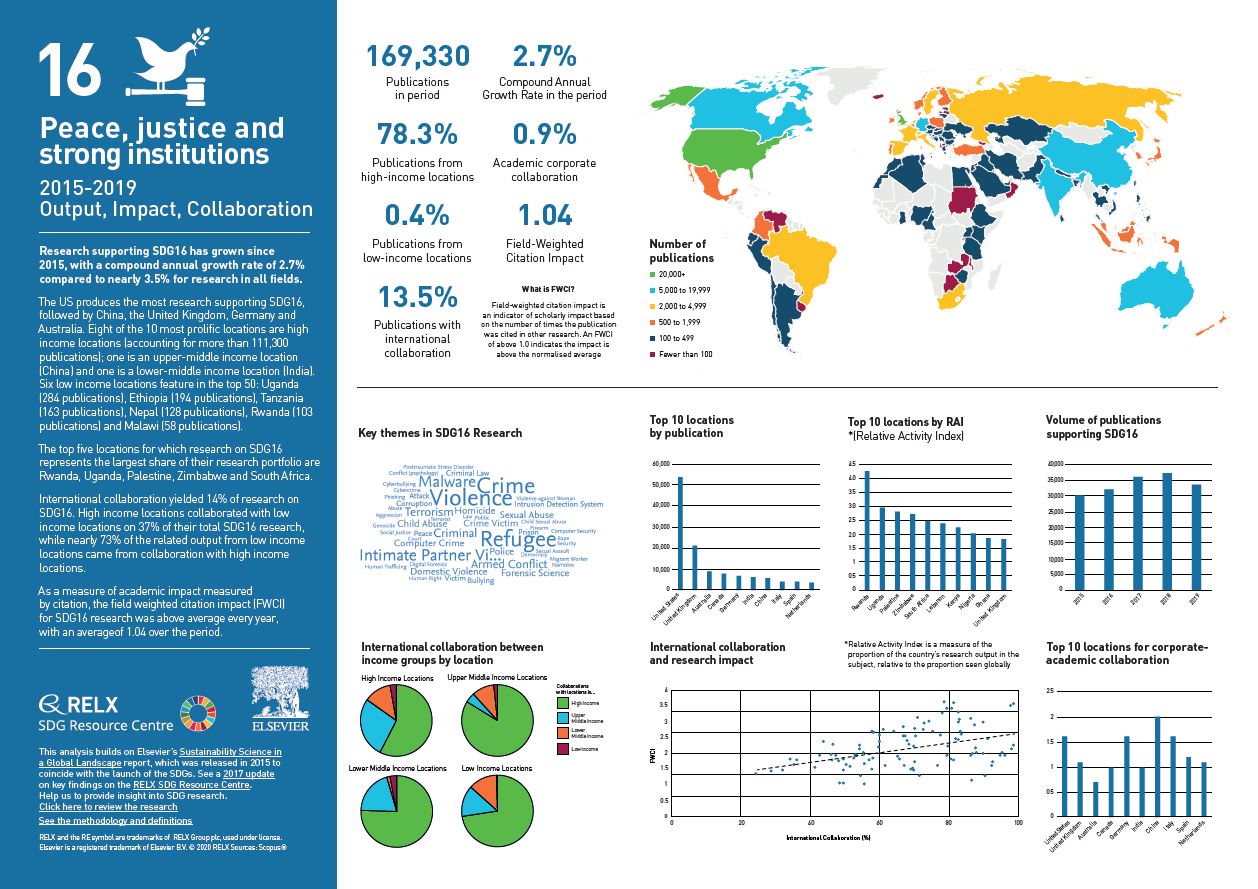
Over the past five years, we have used data and analytics to help the research and healthcare communities navigate the sea of research and to put collaboration, both interdisciplinary and international, at the heart of scientific progress on the SDGs. View findings for SDG 16.
RELX, September 2020
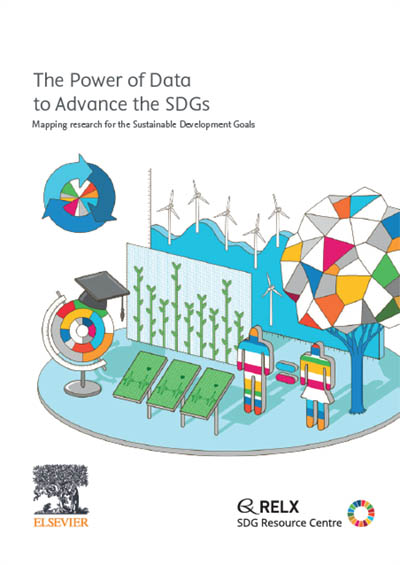
Over the past five years, we have used data and analytics to help the research and healthcare communities navigate the sea of research and to put collaboration, both interdisciplinary and international, at the heart of scientific progress on the SDGs. View findings for SDG 17.
Elsevier, 23rd September 2020
By mapping the state of research within each SDG area, this report acknowledges the pivotal role research plays in tackling some of the world’s greatest challenges. It aims to better understand the research community’s global sustainable development efforts and assesses the progress made, as well as unmet research needs.
Elsevier, Polymer Science and Innovative Applications, Materials, Techniques, and Future Developments, 2020, Pages 525-543
This chapter supports SDGs 2, 9 and 12 by discussing the critical role that polymeric materials play in terms of food packaging - increasing responsible consumption and sustainability, supporting transport of food, and reducing food waste. The chapter also highlights the latest developments in bio-based/biodegradable food packaging which offers a more sustainable route than traditional synthetic plastic food packaging.
Elsevier, Food Quality and Preference, Volume 86, December 2020
Targeted interventions have important under-explored potential for reducing meat consumption. We hypothesized that group-specific interventions targeting reduction for reducer, moderate-hindrance, and strong-hindrance meat eaters would be effective. All participants were randomly assigned to one of three treatment conditions designed for these three meat-eating groups, or to a control condition. Following the intervention, up to 28 days of food diaries were gathered to measure their consumption of animal products, which were weighted according to their greenhouse gas emissions.
Elsevier, Trends in Food Science and Technology, Volume 95, January 2020
Background: Fruits and vegetables are an excellent source of nutrients, with numerous health benefits. Most consumers are not meeting the daily recommended intake of fruits and vegetables. Yet, a significant amount of fruits and vegetables that is produced is wasted. There are opportunities to recover the wasted fruits and vegetables for manufacturing value-added products to improve the sustainability of healthy diets and reduce the environmental footprint.
Elsevier, Trends in Food Science and Technology, Volume 102, August 2020
Background: Plant-based meat alternatives are developed to address consumer demands and sustainability of future food supply, and the market has grown exponentially in recent years. Although progresses have been made to construct plant protein-based fibers organoleptically comparable to a whole-muscle cut, it remains challenging to reproduce the hierarchical organization of muscle tissue known to contribute to the overall sensory profile. For now, the market strategies are largely focused on restructured or formed meat mimeticks.