A civil engineer/cyclist helps his research team understand challenges faced by cyclists with disabilities, addressing SDG 3 and 10.
Your search request returned 8453 results.
LexisNexis Legal & Professional, LexisNexis Australia, March 2017
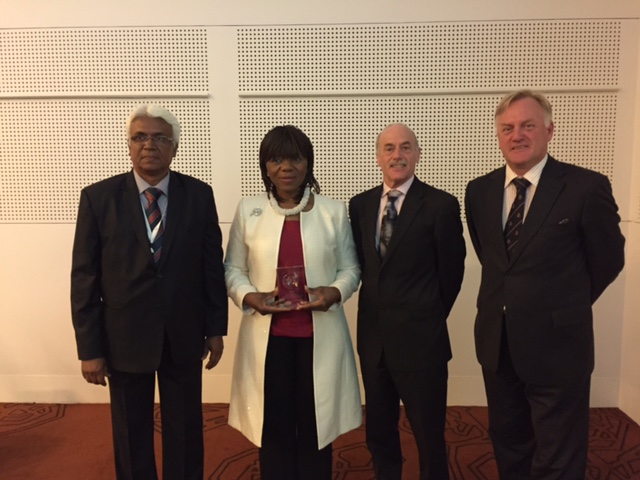
The 20th Commonwealth Law Conference took place in Melbourne in March 2017 with LexisNexis as the lead sponsor, and hosted by Commonwealth Lawyers Association (CLA) in association with the Law Institute of Victoria. The CLC brings together delegates from over 50 countries to meet and learn, as well as to recognise lawyers who champion the rule of law. Such exchanges between lawyers support SDG 16. 3 to promote the rule of law at the national and international levels.
Elsevier, The Lancet, Volume 396, Issue 10247, 1–7 August 2020, Pages 301-302
This news report addresses SDGs 3 and 5 by highlighting how the COVID-19 pandemic has led to a global surge in violence against women and girls. The report highlights that lack of access to sexual and reproductive health services during the lockdown and thereafter could result in up to 7 million unintended pregnancies worldwide, and up to 2·7 million unsafe abortions and 11 000 pregnancy-related deaths.
Elsevier, The Lancet, Volume 396, Issue 10247, 1–7 August 2020, Pages 301-302
This news report addresses SDG 5 by highlighting how the COVID-19 pandemic has led to a global surge in violence against women and girls. The report highlights that lack of access to sexual and reproductive health services during the lockdown and thereafter could result in up to 7 million unintended pregnancies worldwide, and up to 2·7 million unsafe abortions and 11 000 pregnancy-related deaths.
Elsevier, The Lancet, Volume 385, 18 April 2015
In this Series paper, we review evidence for interventions to reduce the prevalence and incidence of violence against women and girls. Our reviewed studies cover a broad range of intervention models, and many forms of violence - ie, intimate partner violence, non-partner sexual assault, female genital mutilation, and child marriage. Evidence is highly skewed towards that from studies from high-income countries, with these evaluations mainly focusing on responses to violence.
Elsevier, The Lancet, Volume 385, 18 April 2015
Health systems have a crucial role in a multisector response to violence against women. Some countries have guidelines or protocols articulating this role and health-care workers are trained in some settings, but generally system development and implementation have been slow to progress. Substantial system and behavioural barriers exist, especially in low-income and middle-income countries.
Elsevier, Forensic Science International, Volume 315, October 2020
An innovative approach towards the holistic and multidisciplinary study of the victimization of women by drug-facilitated sexual assault has been developed. This phenomenon constitutes a significant problem given the narrowing of the gender gap in drug use over the last few decades and the widespread presence of psychoactive substances worldwide. As violence against women and drug misuse intersect in this phenomenon, this intersectional nature emphasizes the need for a novel approach that enables us to go beyond the studies carried out to date.