The current paper addresses the nature of epistemic injustice as it may be experienced by persons with dementia. We describe how theoretical models of stigma align with the current model of epistemic injustice through a consideration of the concepts of ‘stereotype’ ‘prejudice’ and ‘discrimination’ shared by the two models. We draw on current understandings of dementia-related stigma to expand understandings of the epistemic injustice faced by persons with dementia.
Elsevier, 18th September 2020
World Alzheimer's Day is an international campaign organised by Alzheimer's Disease International to raise awareness and highlight issues faced by people affected by dementia. It takes place every year on September 21st and is the focus of World Alzheimer's Month.
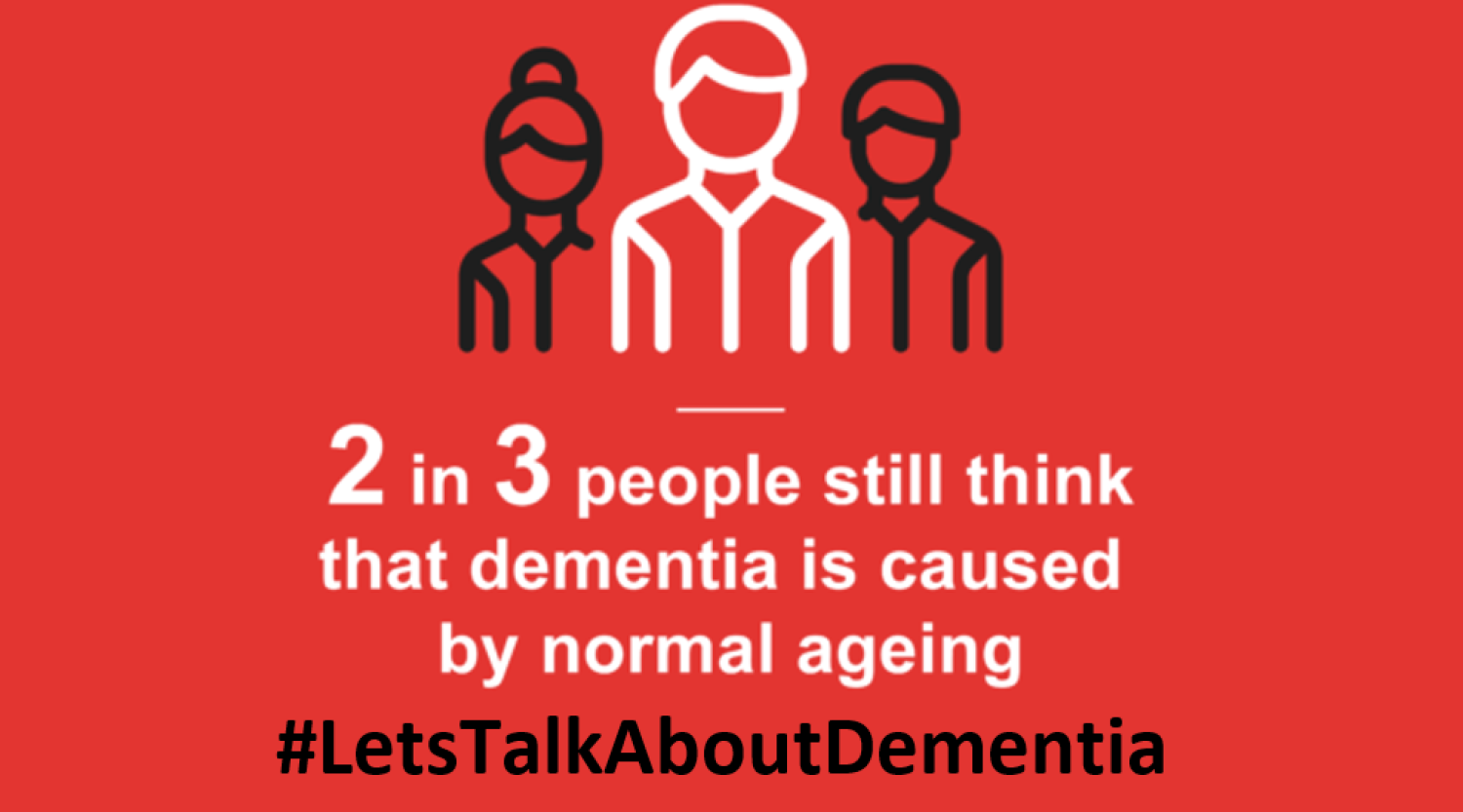
Dementia is one of the biggest challenges we face, with nearly 50 million people living with dementia worldwide. Yet 2 out of every 3 people globally believe there is little or no understanding of dementia in their countries.The impact of World Alzheimer's Month is growing, but the stigmatisation and misinformation that surrounds dementia remains a global problem. To tackle this challenge, we need to collaborate and share best practice with one another.
In support of this year’s theme – ‘Let’s talk about dementia’ - Elsevier presents a curated, open access collection of 25 journal articles and book chapters focused on challenging the fear and stigma associated with dementia.
Together, we can help people live well with dementia.
Elsevier, Journal of Aging Studies, Volume 44, March 2018
The importance of stigma in shaping the experiences of people living with dementia and challenging their social citizenship emerges repeatedly as a powerful and negative force. In a recent participatory action research (PAR) study focused on understanding what people with dementia need to know to live well, this link between stigma, discrimination and social citizenship emerged once again. A group of people living with dementia (n = 8) met monthly for 16 months to discuss their experiences and advise on the curriculum of a proposed self-management program.
Elsevier, Ageing Research Reviews, Volume 58, March 2020
Chronological age is a commonly-used time metric, but there may be more relevant time measures in older adulthood. This paper reviews change point modeling, a type of analysis increasingly common in cognitive aging research but with limited application in applied research. Here, we propose a new application of such models for cognitive training studies.
Elsevier, Mechanisms of Ageing and Development, Volume 190, September 2020
Diagnosis of Alzheimer's disease (AD) is often difficult because of distinct and subjective clinical features, especially in the early stage. FOXO3a protein present in the cognitive centre of brain in inferior temporal region and parahippocampus. FOXO3a can be a potential novel target against AD. AD, Mild Cognitive impairment (MCI) and Geriatric Control (GC) were recruited after diagnosis by clinical assessment, MRI, TauPET and FDG-PET. We have quantified serum FOXO3a by surface plasmon resonance (SPR) and compare with TauPET between of AD, MCI patients and GC.
Elsevier, Neurobiology of Disease, Volume 139, June 2020
Objectives: The mechanisms leading to neurodegeneration in Alzheimer's disease (AD) may involve oxidative stress and neuroinflammation. Ceruloplasmin (Cp) is a circulating protein that intersects both these pathways, since its expression is increased during the acute phase response, and the protein acts to lower pro-oxidant iron in cells. Since the role of Cp in AD, and its potential for use as a biomarker is not established, we investigated CSF Cp and its association with longitudinal outcome measures related to AD.
Elsevier, Molecular and Cellular Neuroscience, Volume 97, June 2019
The aggregation of fibrils of hyperphosphorylated and C-terminally truncated microtubule-associated tau protein characterizes 80% of all dementia disorders, the most common neurodegenerative disorders. These so-called tauopathies are hitherto not curable and their diagnosis, especially at early disease stages, has traditionally proven difficult. A keystone in the diagnosis of tauopathies was the development of methods to assess levels of tau protein in vivo in cerebrospinal fluid, which has significantly improved our knowledge about these conditions.
Elsevier, Journal of Neuroscience Methods, Volume 337, 1 May 2020
Alzheimer's disease is the most common form of dementia and is a serious health problem. The disease is expected to increase further in the upcoming years with the increase of the elderly population. Developing new treatments and diagnostic methods is getting more important. In this study, we focused on the early diagnosis of dementia in Alzheimer's disease via analysis of neuroimages. We analyzed the data diagnosed by the Alzheimer's Disease Neuroimaging Initiative (ADNI) protocol.
Elsevier, Neurobiology of Aging, Volume 88, April 2020
We examined whether cognitive reserve (CR) impacts level of, or rate of change in, biomarkers of Alzheimer's disease (AD) and small-vessel cerebrovascular disease in >250 individuals who were cognitively normal and middle-aged and older at the baseline. The four primary biomarker categories commonly examined in studies of AD were measured longitudinally: cerebrospinal fluid measures of amyloid (A) and tau (T); cerebrospinal fluid and neuroimaging measures of neuronal injury (N); and neuroimaging measures of white matter hyperintensities (WMHs) to assess cerebrovascular pathology (V).
Elsevier, Journal of Neuroscience Methods, Volume 327, 1 November 2019
Background: Compared to previous neuropsychological investigations with standard paper-pen tests limited to test complex spatial learning and memory processes, 3-D virtual immersive technology might offer new tools for research purposes and for diagnosis in patients suffering from mild cognitive impairment or dementia. Comparison with existing methods: Current software proposes a customizable VR environment combined with an analyser module based on regions of interest and some parameters of analysis or pre-calibrated VR mazes with raw data.
Elsevier, American Journal of Geriatric Psychiatry, Volume 26, March 2018
Stigma negatively affects individuals with cognitive impairment and dementia. This literature review examined the past decade (January 2004 to December 2015) of world-wide research on dementia-related stigma. Using standard systematic review methodology, original research reports were identified and assessed for inclusion based on defined criteria. Initial database searches yielded 516 articles.
Elsevier, Environmental Psychology and Human Well-Being, Effects of Built and Natural Settings, 2018, Pages 365-386
This chapter addresses goal 3 by providing a better understanding of the way in which mental and physical well-being is affected by physical environments, along with insights into how the design of these environments might be improved to support better health outcomes.
Elsevier, Genetics, Neurology, Behavior, and Diet in Dementia, The Neuroscience of Dementia, Volume 2, 2020, Pages 633-645
This chapter addresses goal 3 by examining the stigma that exists around dementia and how this has contributed to patient mistreatment, caregiver burnout, and inadequate research funding.
Elsevier, Better Living with Dementia, Implications for Individuals, Families, Communities, and Societies, 2018, Pages 247-264
This chapter addresses goal 3 by discussing the transformative actions that need to occur at each level of our social ecological model to support or result in comprehensive dementia care.