By depleting soil nutrients, soil degradation (SD) threatens agricultural production and population growth in the Guinea savanna of Ghana. Awoonor et al., 2024 used multivariate statistical techniques on samples collected by using the Land Degradation Surveillance Framework (LDSF) to identify key SD processes, assess soil properties, and propose monitoring strategies. The authors highlight the need for integrated soil fertility management strategies, such as applying organic and inorganic fertilizers, to increase soil nutrient availability and promote sustainable agricultural practices.

World Environment Day on June 5 is the biggest international day for the environment. Countries across the globe participate in this UN international day, with millions of people in government, business, civil society, schools and celebrities engaging online and in-person to raise awareness and influence environmental action. World Environment Day in 2024 focuses on restoring land, building drought resilience and stopping desertification under the campaign slogan, “Our Land. Our Future.” To mark the occasion, Elsevier has curated a special collection of journal articles and book chapters to highlight content focused on #GenerationRestoration.
Elsevier, Earth-Science Reviews, Volume 252, May 2024
This article supports SDGs 13, 15 and SDG 11 by exploring the utilization of soil microbe based desertification management practices and highlighting emerging technologies in the field. It discusses the policy implications and strategies that can support sustainable land use practices.
Elsevier, Soil Security, Volume 14, March 2024
Mulwafua and Kamchedzera 2024 found that Malawi's soil laws lack strong priorities for Avoid, Reduce, and Reverse strategies regarding land degradation neutrality, contrasting with Uganda and Germany which incorporate these strategies in their soil-dedicated legal frameworks. By using Roscoe Pound's theory of social engineering, the authors suggest that Malawi's human-centred approach to soil conservation neglects eco-centric and deep ecology perspectives.
Elsevier, Geoderma, Volume 443, March 2024
Artificial grassland restoration can be an effective method when applied to severely degraded grassland in alpine areas, however, their effects on slope runoff and sediment yield are still unclear. Qian et al., 2024 studied the effects of artificial restoration and degradation on the runoff sediment process in three areas and found that artificial grassland can significantly reduce runoff and sediment yield compared to alpine meadows and severely degraded alpine meadows. The study underscores the importance of plant and soil characteristics in erosion processes, highlighting the effectiveness of artificial grassland in mitigating soil erosion through improved soil conditions and enhanced vegetation coverage, with implications for restoration efforts in alpine regions.
Elsevier, Soil Security, Volume 14, March 2024
Ginzky 2024 discusses the ongoing legislative process in Germany to amend the soil protection act, addressing climate change, biodiversity maintenance, and other challenges, with the support of the current government. The paper outlines the societal importance of soils, challenges, current legislation shortfalls, proposed regulatory approaches including ongoing EU deliberations, and strategies for gaining political support considering ecological and social services, as well as competing interests.
Elsevier, Geoderma Regional, Volume 36, March 2024
Grazing pressure in savannah rangelands increases the possibility of desertification and woody plant encroachment under different land management. As such, early warning shift indicators of degraded rangelands are required. Zimmer et al., 2024 conducted a study on the arid savanna rangelands on Arenosols in Namibia and focussed on soil organic carbon (SOC) and carbon isotopes (δ13C) as indicators. Results show lower SOC stocks on communal rangelands compared to freehold farms, with correlations between SOC stocks and vegetation cover types. The findings emphasize the importance of considering soil properties such as SOC in land management practices to assess and mitigate soil degradation risks in savanna ecosystems
Elsevier, Geoderma Regional, Volume 36, March 2024
A study by Snoussi et al., 2024 proposes a methodology for evaluating excavated material's environmental, geotechnical, and agronomical properties to determine its ecological reuse potential, particularly for constructing soil in urban green infrastructure. Through the SWOFI framework (Safety, Workability, Fertility, Infiltrability), the authors characterised a non-cohesive sedimentary parent rock with a sandy loam texture from Bou Argoub in Tunisia. The method successfully assessed the material’s pollution hazard, compaction sensitivity, and fertility showcasing a novel integrated approach for sustainable soil construction in urban landscapes.
Elsevier, Soil Security, Volume 14, March 2024
Soil systems play a key role in the fight against climate change. A paper, produced by Rubio et al., 2024, highlights the importance of soil management and land conservation for sustainable use of resources. It calls for a comprehensive vision recognizing soil's socio-economic benefits and ecological functions, urging for radical environmental, social, and economic shifts to address climate change responsibly for present and future generations, in alignment with initiatives like the European Green Deal and the United Nations Sustainable Development Goals.
Elsevier, Geoderma Regional, Volume 36, March 2024
Areas prone to drought and land degradation need effective water management plans to secure food production. Methods such as hydrological modelling and digital soil mapping can aid in evaluating water availability (water content and water stress). A study by Horta et al., 2023 examined the use of a global and local soil hydraulic properties (SHP) dataset to simulate soil-water balance at a regional scale in Portugal and found that the SHP dataset is a key factor to consider. The results showed that the choice between global and local SHP datasets significantly impacts the accuracy of soil-water balance simulations, influencing irrigation schedules and potentially jeopardizing crop production and soil quality, particularly in Mediterranean conditions.
Elsevier, Current Developments in Nutrition, Volume 8, February 2024
Contemporary global agrifood production systems are striving to feed a growing population of over 8 billion people. The growing population and fast economic growth in low- and middle-income countries (LMICs) are leading to shifts in dietary preferences. Climate change and other challenges also add pressure to the global food system. In this persepctive alternative protein (AP) foods are proposed to support a global protein transition. Whereas AP food innovation has been a strategy to promote consumption of protein sources with low environmental impact in high-income countries (HICs) diets, their relation to sustainable, high-quality diets in low- and middle-income countries (LMICs) remains to be established
Elsevier, American Journal of Clinical Nutrition, Volume 119, February 2024
The Planetary Health Diet Index (PHDI) is a novel measure adapted to quantify alignment with the dietary evidence presented by the EAT-Lancet Commission on Food, Planet, Health. This review aimed to examine how population-level health and sustainability of diet as measured by the PHDI changed from 2003 to 2018, and to assess how PHDI correlated with inadequacy for nutrients of public health concern (iron, calcium, potassium, and fiber) in the United States. Although there have been positive changes over the past 20 years, there is substantial room for improving the health and sustainability of the United States diet. Shifting diets toward EAT-Lancet recommendations would improve nutrient adequacy for iron, fiber, and potassium. Policy action is needed to support healthier, more sustainable diets in the United States and globally.
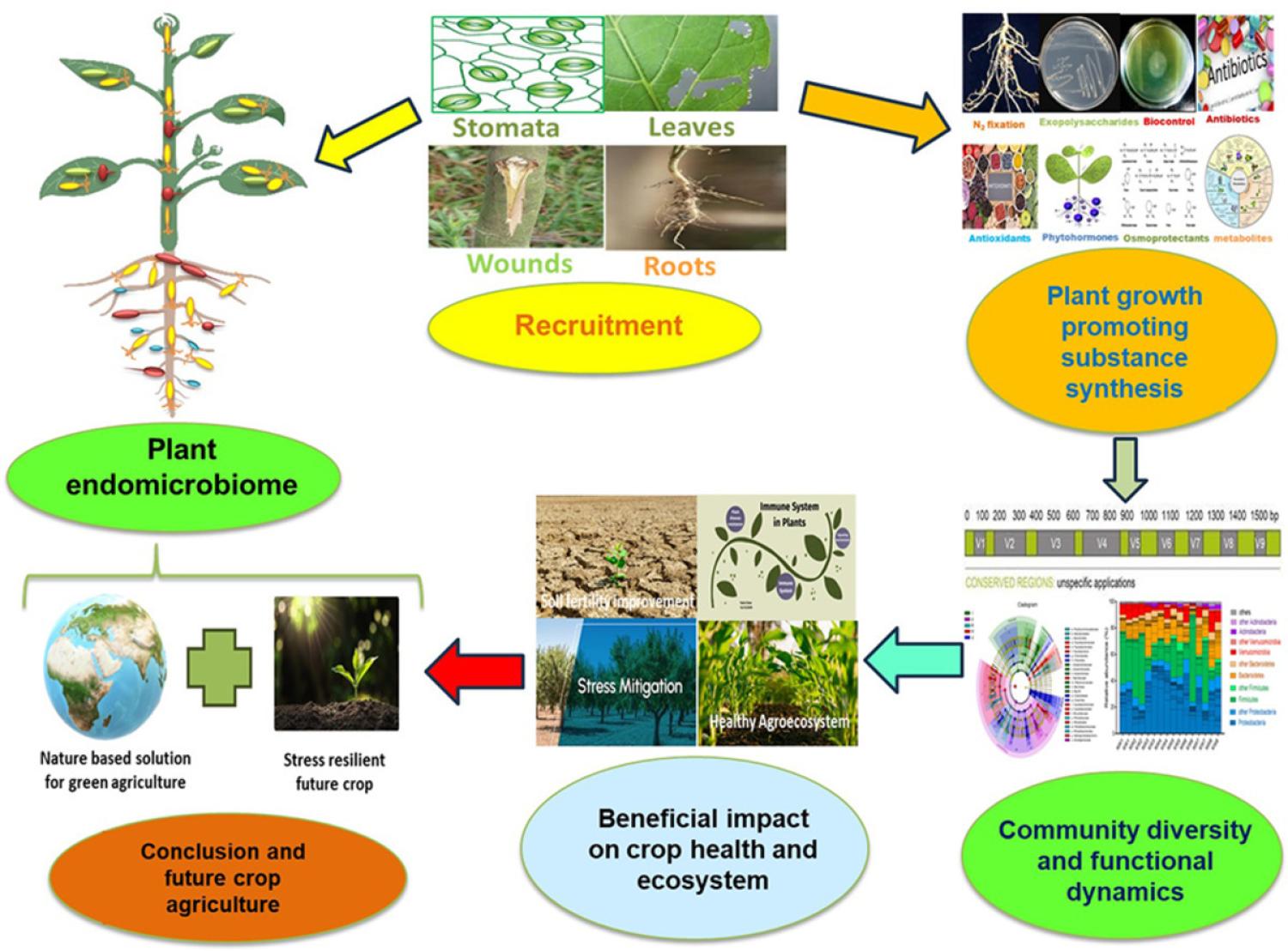
Elsevier, Current Research in Microbial Sciences, Volume 6, January 2024
Plants have a microbiome, a diverse community of microorganisms, including bacteria, fungi, and viruses, living inside and on their tissues. This review article contains deeper insight in endomicrobiome related research work in last years, recruitment, niche development, nutrient dynamics, stress removal mechanisms, bioactive services in plant health development, community architecture and communication, and immunity interplay in producing stress resilient future crop.
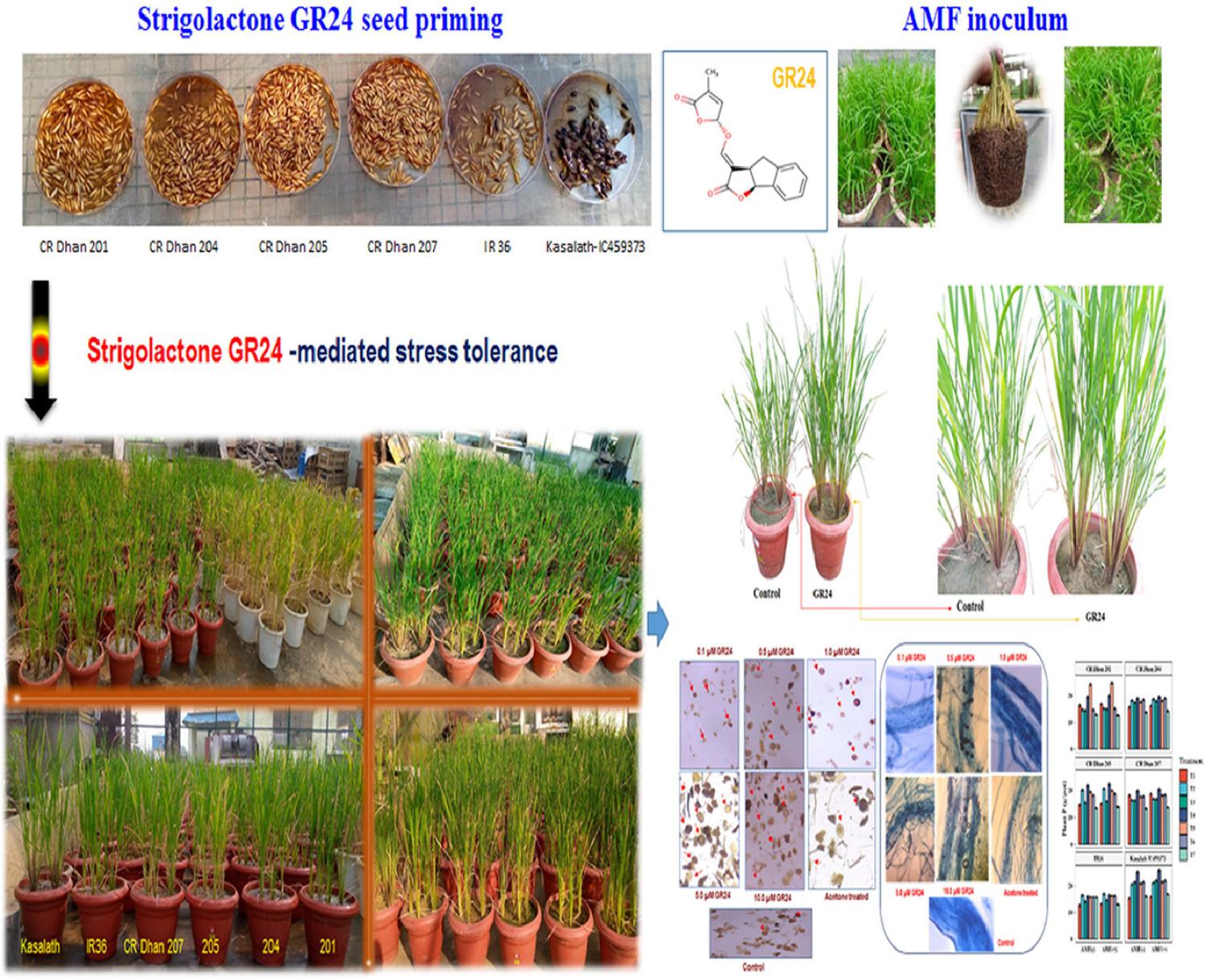
Elsevier, Current Research in Microbial Sciences, Volume 6, January 2024
Strigolactones (SLs) are a new class of plant hormones that play a significant role in regulating various aspects of plant growth promotion, stress tolerance and influence the rhizospheric microbiome. GR24 is a synthetic SL analog used in scientific research to understand the effects of SL on plants and to act as a plant growth promoter.
Elsevier, Geoderma Regional, Volume 35, December 2023
A study published by Mukhopadhyay et al., 2023 investigates the long-term impact of subsurface drainage (SSD) on soil quality restoration and sugarcane productivity in waterlogged saline Vertisols in India. By using soil and water samples together with a farmer field survey, the authors showed that SSD significantly reduced soil salinity and improved various soil properties, leading to increased sugarcane yields by up to 585.5%. Farmers' perceptions indicated that SSD technology could substantially improve soil conditions and crop yields, and large-scale adoption of the technology will support the Sustainable Development Goals related to Land, No Poverty, and Zero Hunger in saline soils of India.
Elsevier, American Journal of Clinical Nutrition, Volume 118, November 2023
The environmental burden of food consumption is high in affluent countries like Sweden, and the global food system is accountable for between 21 and 37% of the total anthropogenic global greenhouse gas emissions (GHGE). This paper claims that interventions to improve dietary intake and reduce dietary greenhouse gas emissions (dGHGE) are urgently needed and that adolescence presents a unique time in life to promote sustainable diets. Conclucsion are that food choices and dGHGE per calorie differ by sex in adolescents. Thus, intervention strategies to improve dietary sustainability need to be tailored differently to females and males. Diet quality should also be considered when promoting reduced GHGE diets.
Elsevier, Advances in Nutrition, Volume 14, November 2023
Improving diet quality while simultaneously maintaining planetary health is of critical interest globally. Despite the shared motivation, advancement remains slow, and the research community continues to operate in silos, focusing on certain pairings (diet–climate), or with a discipline-specific lens of a sustainable diet, rather than examining their totality. This review aims to summarize the literature on adherence to a priori defined dietary patterns in consideration of diet quality, metabolic risk factors for noncommunicable diseases (NCDs), environmental impacts, and affordability.
Elsevier, Geoderma Regional, Volume 33, June 2023
Castellanos-Barliza and León-Peláez 2023 investigated the recovery of physical-chemical and biological properties of Technosols in a chronosequence of drylands (over 7,10 and 21 years) in the El Cerrejón coal mine in Colombia. Their results showed significant improvements in soil properties, especially near the surface, with notable increases in soil N content and P solution after 7 years. Enhanced vegetation development over time contributed to higher soil organic matter, indicating successful rehabilitation and positive impacts of the restoration strategy in degraded mine spoils.
Elsevier, Geoderma, Volume 433, May 2023
Increasing plant productivity resilience to drought plays an important role in ecosystem services, and while soil organic matter (SOM) promotes plant growth, its role in mitigating aboveground biomass (AGB) loss as a result of drought in alpine grasslands is unclear. This study by Zhao et al., 2023 examined 209 alpine grassland sites on the Tibetan Plateau and revealed that AGB decreases with increasing aridity (above 0.37), and a stronger positive relationship between AGB and SOM is observed in more arid conditions, suggesting the significance of soil carbon sequestration strategies for biomass production and climate change mitigation in arid areas.
Elsevier, Geoderma Regional, Volume 32, March 2023
Soil organic matter (SOM) can be a helpful indicator of soil health in terms of the impact of land use changes. Kar et al., 2023 examined the soil health after land use conversion in India's North-West Himalayan region by using the stratification ratio (SR) of soil organic carbon and total nitrogen (TN) as indicators. The results indicate that land use change to conventional tillage (CT) significantly reduces SR and SOM, while conservation agriculture (CA) help restore the SR levels closer to those of forest land use. The authors suggest that CA is a suitable alternative to CT for improving soil quality and maintaining sustainable soil management practices.
Elsevier, Journal of Nutrition, Volume 153, February 2023
This paper concludes that ASF (animal-source foods) production generally has a large environmental impact; yet, when produced at an appropriate scale and in accordance with local ecosystems and contexts, livestock can play an important role in circular and diverse agroecosystems that, in certain circumstances, can help restore biodiversity and degraded land, mitigate Green House Gas emissions from food production, and contribute to food security and nutrition for populations worldwide.
Elsevier, Journal of Nutrition, Volume 153, January 2023
This study aimed to to examine the associations between dietary nutrient density and climate impact and MI and stroke HRs, thereby investigating the co-benefits and trade-offs between nutrition, dietary climate impact, and cardiovascular health, within a population-based prospective cohort in northern Sweden. Importantly, the results indicate an association between lower dietary climate impact and higher MI HRs for men, both when nutrient density was below median values and when nutrient density was not considered. For women, there was no significant association between dietary climate impact and MI HR, although a trend similar to that for men was noted when nutrient density was below median values. Furthermore, no association between nutrient density and MI or stroke HRs was observed, except for a protective effect against stroke among women with higher nutrient density when nutrient density was analyzed without considering climate impact.
Elsevier, Journal of African Earth Sciences, Volume 197, January 2023
This article supports SDGs 13, 15 and SDG 11 by exploring the utilization of soil microbe based desertification management practices and highlighting emerging technologies in the field. It discusses the policy implications and strategies that can support
Elsevier, Molecular and Cellular Endocrinology, Volume 555, 15 September 2022
Through this review, we highlight how harbours can be used as “in situ laboratories” given the variety of anthropogenic stressors (such as plastic, chemical, sound, light pollution, and invasive species) that can be simultaneously investigated in harbours over long periods of time.
Elsevier, Geoderma, Volume 421, 1 September 2022
With climate models predicting a decrease in soil moisture conditions in many regions in the future, it is crucial for soil ecology to comprehend how springtails respond to soil condition changes. A study by Wang et al., 2022 investigating the effects of soil moisture on the euedaphic springtail, Folsomia candida, found that reproduction was the most sensitive to soil water potential, suggesting that population recruitment is limited to periods of high soil moisture, while body growth and activities may continue in moderately dry soil, contributing to species resilience during drought.
Elsevier, Soil Security, Volume 6, March 2022
A research paper by Hannam 2022 underlines the complexities of soil and land degradation and the pursuit of Land Degradation Neutrality (LDN), emphasizing its integration into global policy frameworks like the United Nations' Sustainable Development Goal 15 and the Convention to Combat Desertification. It argues for essential reforms in soil governance, advocating for inclusive participation, legislative provisions, and practical guidance to ensure progress towards LDN targets while maintaining soil and ecosystem functions.
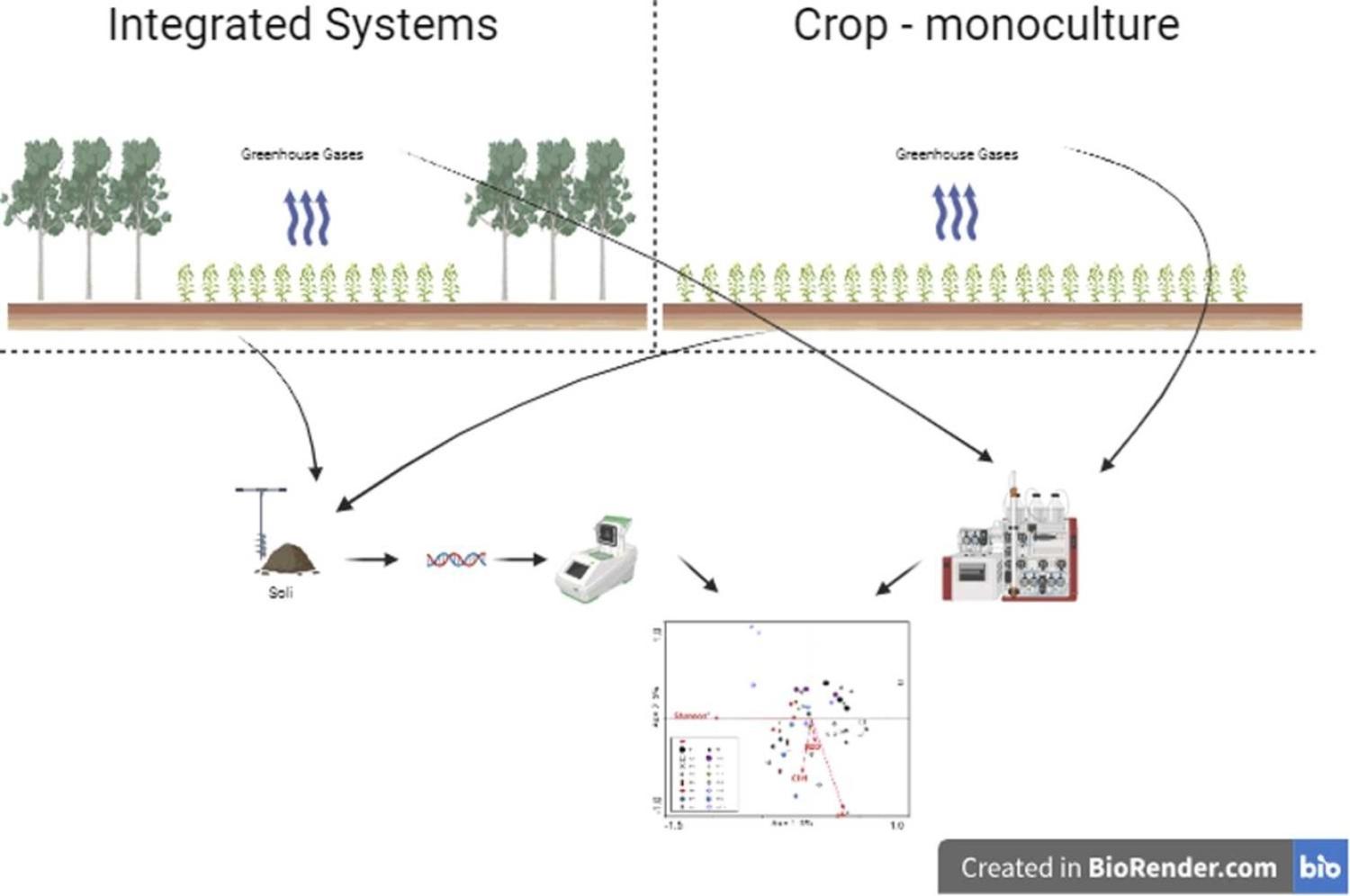
Elsevier, The Microbe, Volume 3, 2024, 100069, ISSN 2950-1946
The use of integrated production systems is widespread, mainly in tropical areas. This practice could contribute to soil conservation, increasing biodiversity and environmental services while reducing greenhouse gases emissions.
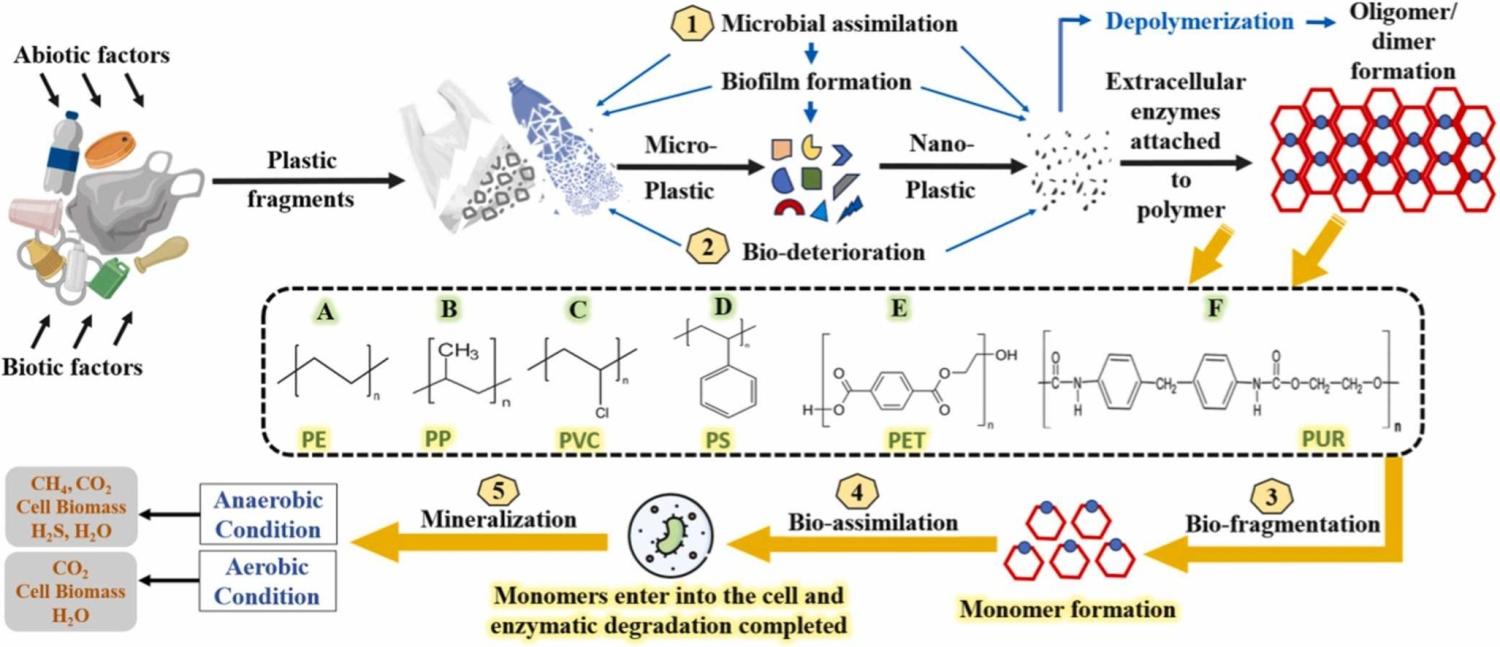
Elsevier, The Microbe, Volume 3, 2024, 100072, ISSN 2950-1946
The most significant threat to environmental components is the alarming increase of micro- and nano- plastics (MNPs) within the ecosystem. Among the several remediation techniques available to date, microbial remediation showed better promise to degrade or sustainably remove MNPs from the environment. Microorganisms have evolved genes that impact changes in plastic pollutants under stable ecophysiological processes that depend on biotic and abiotic elements.
Elsevier, Sustainablility and Toxicity of Building Materials, 2024, pages 3-14
This chapter aligns with Goals 9, 11, 12 by emphasizing the responsible disposal of toxic building materials and providing guidance on selecting materials that have a positive effect on the health of occupants and the environment.
Elsevier, Advances in Bionanocomposites, 2023, pages 55-90
This chapter aligns with goals 6 and 9 by highlighting improved sustainability practices in terms of preparation, lifecycle, and application of bionanocomposites, including their application in wastewater remediation, biomedicine, and agriculture.
Elsevier, Risk Assessment and Management for Ships and Offshore Structures, 2024, pages 163-178
This chapter aligns with Goals 9 and 14 by studying the risk-based assessment methods associated with health, safety, and environmental protection of engineering structures and infrastructure, discussing how to prevent and mitigate oil and gas leaks, fires, explosions, and more.
Elsevier, Earth Observation in Urban Monitoring Techniques and Challenges, 2024, Pages 339-358
This chapter aligns with Goals 6, 9 and 11 by detailing remote sensing for environmental considerations, water resource management, land use changes on urban heat islands, urban growth modeling and ecological monitoring
Elsevier, Future Forests: Mitigation and Adaptation to Climate Change, 2024, Pages 49-64
This chapter aligns with Goals 13 and 15 by providing a reminder of the wide range of essential ecological benefits of forests and of the many products and services humans derive from forests, and then summarize three hallmarks of healthy forests across ecosystems and conclude by leveraging what we know about forests in the past to propose five key principles for future forest management.
Elsevier, Future Forests: Mitigation and Adaptation to Climate Change, 2024, Pages 75-94
This chapter aligns with Goals 13 and 15 by reviewing the latest literature about plant–microbe and microbe–microbe interactions in coordinating the interlinked carbon, nutrient, and water cycles, and we estimate how these may respond to the key global change factors of CO2, temperature, and precipitation.
Elsevier, Wind Energy Engineering (Second Edition), A Handbook for Onshore and Offshore Wind Turbines, 2023, Pages 475-487
This chapter aligns with Goals 7, 9 and 12 by assessing the interconnections between - and environmental implications of - wind energy development and use of rare earth elements.
Elsevier, Agroforestry for Carbon and Ecosystem Management, 2024, Pages 403-417
This chapter aligns with Goals 2 and 11 by focusing on the potential for improved food production when agroforestry practices are exploited. Further, the use of Agroforestry enhances sustainability within food production systems by providing environmental protections and balances.
Elsevier, Functionalized Nanofibers: Synthesis and Industrial Applications, 2023, Pages 923-943
This chapter aligns with Goals 12 and 13 by reviewing the potential pathways of nanofibers’ release to the environment and discussing the impact of various types of nanofibers on human and animal health.
Elsevier, Synthesis of Bionanomaterials for Biomedical Applications, Micro and Nano Technologies Series, 2023, Pages 493-528
This chapter aligns with Goals 12 and 13 by reviewing the ongoing research and development activities on the positive and harmful effects of NPs on the environment. First, the emission of NPs is described, then legislation and later the advantages and disadvantages of NPs toward the environment are highlighted. The possible consequences on human health and the environment, both negative and positive, are crucial issues that need to be addressed.
Elsevier, Mxene-Based Hybrid Nano-Architectures for Environmental Remediation and Sensor Applications: From Design to Applications, Micro and Nano Technologies series, 2024, Pages 113-127
This chapter aligns with Goals 12 and 13 by highlighting the importance of various MXene-based hybrid nanomaterial types in the elimination of heavy metals from wastewater.
Elsevier, Water Treatment Using Engineered Carbon Nanotubes, Micro and Nano Technologies series, 2024, Pages 63-96
Aligns with Goals 12 and 13 by describing the role of carbon-based materials in water treatment, the challenges to progress, and the future of these carbon-based materials in this field.