The World Health organization (WHO) wants to bring hepatitis care closer to the primary health facilities and communities. They want people to have better access to treatment and care, no matter what type of hepatitis they may have. The WHO have a goal of eliminating hepatitis by 2030 and in order to achieve this they are calling on all countries to help achieve specific targets such as:
- Reducing new infections of hepatitis B and C by 90%;
- Reducing hepatitis related deaths from liver cirrhosis and cancer by 65%;
- At least 90% of people with hepatitis B and C virus should be diagnosed; and
- At least 80% of those eligible should receive appropriate treatment.
The theme for World Hepatitis Day 2022 is ‘I can’t wait’ as it serves to highlight the urgency and importance of testing and treatment for the real people who need it.
Background: Abatacept is a selective T-cell costimulation modulator approved for the treatment of rheumatoid arthritis, juvenile idiopathic arthritis, and psoriatic arthritis. Reports were recently published on hepatitis B virus reactivation (HBVr) in patients who were treated with abatacept. However, the literature is limited to case reports and series, and no study has investigated the relationship between HBVr and abatacept using extensive population-based databases.
Patients with liver diseases, especially those with cirrhosis, have an increased mortality risk when infected by SARS-CoV-2 and therefore anti-SARS-CoV-2 vaccine has been recommended by leading Scientific Associations for all patients with chronic liver diseases. However, previous reports have shown a reduced antibody response following the full course of vaccination in immunosuppressed patients, including liver transplant recipients and several rheumatic diseases.
Background: In autoimmune hepatitis (AIH), clinical practice and treatment guidelines frequently diverge as a reflection of disease heterogeneity and challenges in achieving standardised care. We sought to explore the utility of multiparametric (mp) MR in patients with AIH, and the impact of this technology on physicians’ decision making and intended patient management. Methods: 82 AIH patients, recruited from two sites between June and November 2019 as part of an observational cohort study, underwent non-contrast MRI alongside their standard clinical investigations.
Background: Hepatitis C is a preventable and treatable disease that has been declared a public health problem. In 2012, the prevalence of HCV serum anti-bodies in the Mexican adult population aged 20 to 49 years was 0·30%. Methods: We randomly selected a probabilistic sub-sample of 12,389 adults (20+ years) from adults participating in the National Health and Nutrition Survey (ENSANUT) 2018 who provided a venous blood sample. Anti-HCV antibodies and HCV RNA were determined for this sub-sample.
Background & Aims: HBV infects over 257 million people worldwide and is associated with the development of hepatocellular carcinoma (HCC). Integration of HBV DNA into the host genome is likely a key driver of HCC oncogenesis. Here, we utilise targeted long-read sequencing to determine the structure of HBV DNA integrations as well as full isoform information of HBV mRNA with more accurate quantification than traditional next generation sequencing platforms. Methods: DNA and RNA were isolated from fresh frozen liver biopsies collected within the GS-US-174-0149 clinical trial.
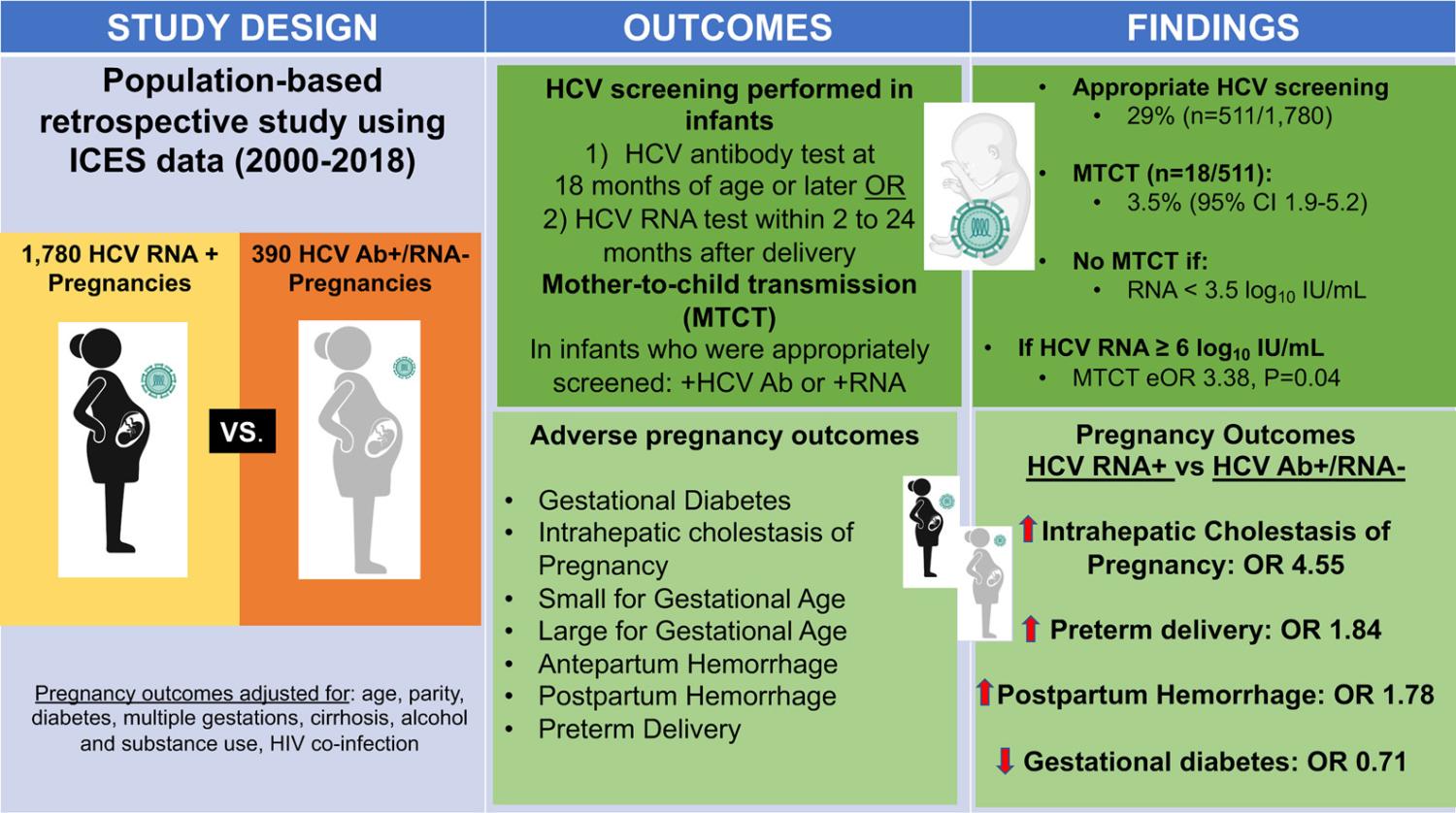
Hepatitis C has increased in women of childbearing age and has important implications in women who become pregnant and their infants. The effect that hepatitis C has on pregnancy outcomes was evaluated as well as the rate of hepatitis C transmission to infants in a large database with linked mother-infant records. It was found that active hepatitis C during pregnancy increased the risk of pregnancy complications. Also identified were very low rates of testing of infants born to mothers with hepatitis C but found higher rates of hepatitis C transmission to infants in mothers with higher virus levels.
Background: Many residents of the Bronx are from West Africa where chronic hepatitis B is endemic. Hepatitis B screening is low in West African immigrant communities due to multiple possible cultural and socioeconomic factors. Methods: A culturally sensitive educational program on hepatitis B with a special emphasis on the relevance for the West African community was developed.
Objective: To develop a new scoring system that more accurately predicts 30-day mortality in patients with alcohol-associated hepatitis (AH). Methods: A cohort of consecutive adults diagnosed with AH at a single academic center from January 1, 1998, to December 31, 2018, was identified for model derivation. Multivariate logistic regression was used to create a new scoring system to predict 30-day mortality. External validation of this score was performed on a multicenter retrospective cohort. Results: In the derivation cohort of 266 patients, the 30-day mortality rate was 19.2%.
This Article supports SDG 3 by showing the association between unstable housing (the lack of access to adequate or fixed housing) with HIV and HCV infection among people who inject drugs, finding that a substantial proportion of infections (11.2% of new HCV infections in the study period) and suggesting that the broader social needs of this population, including housing, should be addressed as part of efforts to reduce and eliminate these infections.
Background: China has the highest prevalence of hepatitis B virus (HBV) infection worldwide. Universal HBV screening might enable China to reach the WHO 2030 target of 90% diagnostics, 80% treatment, and 65% HBV-related death reduction, and eventually elimination of viral hepatitis. We evaluated the cost-effectiveness of implementing universal HBV screening in China and identified optimal screening strategies.
Background: Hepatitis C elimination may be possible with broad uptake of direct-acting antiviral treatments (DAAs). In 2016 the Australian government committed A$1.2 billion for five years of unlimited DAAs (March 2016 to February 2021) in a risk-sharing agreement with pharmaceutical companies. We assess the impact, cost-effectiveness and net economic benefits likely to be realised from this investment.
Background: To discuss a range of strategic options for China to improve the accessibility of direct antiviral agents (DAAs) as the treatment for hepatitis C. Methods: We adopted a narrative review approach for comprehensive comparisons and in-depth analyses of the country context, and barriers of increasing the DAA treatment rate of hepatitis C in Malaysia and China, and how the two countries have been navigating the hepatitis C agenda.
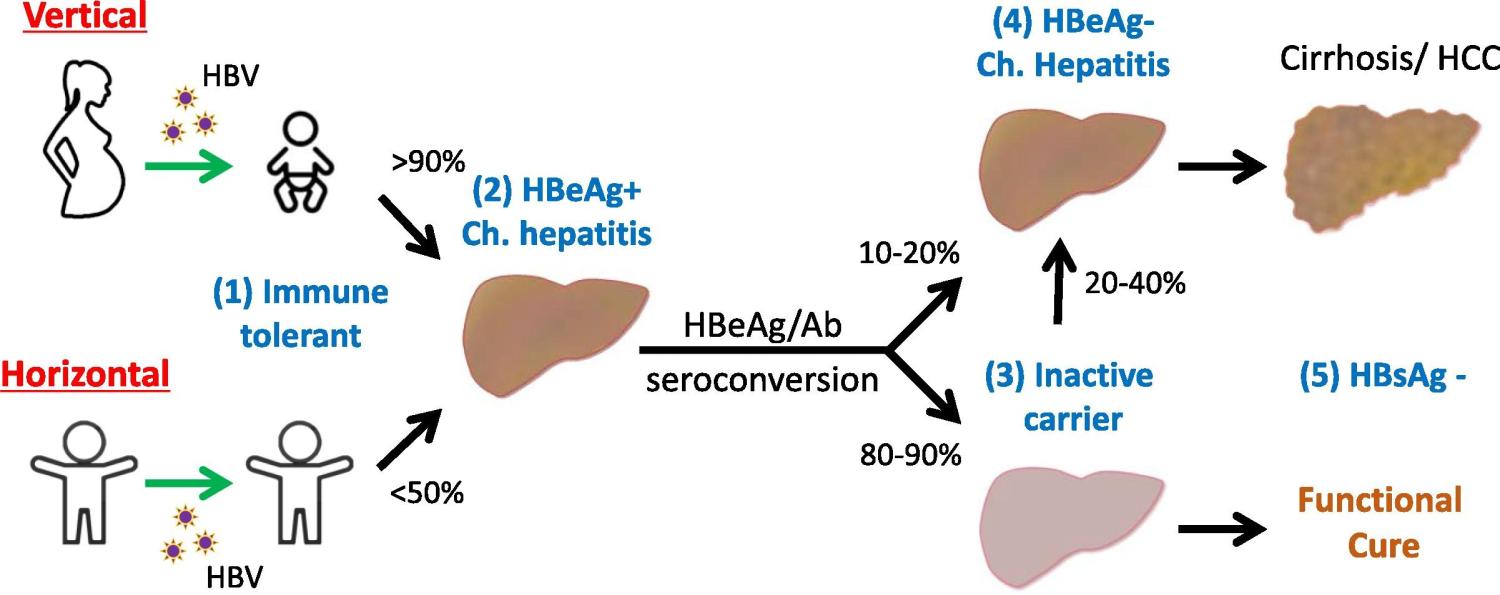
Hepatitis B (HB) vaccination plays a significant role in controlling HBV infection. Different immune mechanisms govern anti-HBs acquisition, titer, and maintenance. Host pre-vaccination immunological status could be targeted for vaccine efficacy.
Hepatitis B virus (HBV) infection is a major public health priority. In the present study, a lateral flow strip combined with the recombinase polymerase amplification (LF-RPA) assay was developed and evaluated for rapid HBV detection. A primer/probe pair targeting the conserved region of the HBV genome was designed and applied to the LF-RPA. TheRPA was achieved at the isothermal temperature of 39℃ for 30 min, and the RPA products were detected using the LF test. DNA extraction, RPA reaction and endpoint detection will take about 70 min.
Background: Increasing access to hepatitis C virus (HCV) care and treatment will require simplified service delivery models. We aimed to evaluate the effects of decentralisation and integration of testing, care, and treatment with harm-reduction and other services, and task-shifting to non-specialists on outcomes across the HCV care continuum.
Hepatitis B virus (HBV) poses a major global health burden with 260 million people being chronically infected and 890,000 dying annually from complications in the course of the infection. HBV is a small enveloped virus with a reverse-transcribed DNA genome that infects hepatocytes and can cause acute and chronic infections of the liver. HBV is endemic in humans and apes representing the prototype member of the viral family Hepadnaviridae and can be divided into 10 genotypes.
Background: In 2016, of the estimated 257 million people living with chronic hepatitis B virus (HBV) infection worldwide, only a small proportion was diagnosed and treated. The insufficiency of information on the proportion of people infected with HBV who are eligible for treatment limits the interpretation of global treatment coverage. We aimed to estimate the proportion of people with chronic HBV infection who were eligible for antiviral treatment worldwide, based on the WHO 2015 guidelines.
Background: Hepatitis B causes more than 800 000 deaths globally each year. Perinatal infections are a major driver of this burden but can be prevented by vaccination within 24 h of birth. Currently, only 44% of newborn babies in low-income and middle-income countries (LMICs) receive a timely birth dose. We investigated the effects and cost-effectiveness of implementing ambient storage of hepatitis B vaccines under a controlled temperature chain (CTC) protocol and the use of compact prefilled auto-disable (CPAD) devices for community births.
Background: Since 1979, mortality from hepatocellular cancer (HCC) has doubled in the United States (US). Lifesaving drugs, prohibitively expensive for some, were approved and marketed to treat hepatitis C virus (HCV), a major risk factor for HCC, beginning in 1997. After the prior introduction of other lifesaving innovations, including active retroviral drug therapy for human immunodeficiency virus and surfactant for respiratory distress syndrome of the newborn, racial inequalities in their mortalities increased in the US.
Background: The WHO elimination strategy for hepatitis C virus advocates scaling up screening and treatment to reduce global hepatitis C incidence by 80% by 2030, but little is known about how this reduction could be achieved and the costs of doing so. We aimed to evaluate the effects and cost of different strategies to scale up screening and treatment of hepatitis C in Pakistan and determine what is required to meet WHO elimination targets for incidence.
This study uses social network analysis to model a contact network of people who inject drugs (PWID) relevant for investigating the spread of an infectious disease (hepatitis C). Using snowball sample data, parameters for an exponential random graph model (ERGM) including social circuit dependence and four attributes (location, age, injecting frequency, gender) are estimated using a conditional estimation approach that respects the structure of snowball sample designs. Those network parameter estimates are then used to create a novel, model-dependent estimate of network size.
This chapter aligns with the SDG goal 3 of good health and wellbeing by showing how cells can be isolated from the liver of untreated animals and used to analyze the effects of mediators thought to be involved in the inflammatory process.
This chapter aligns with the SDG goal 3 of good health and wellbeing by showing the current knowledge on the origins and composition of KCs, their functions in maintaining hepatic homeostasis, and their involvement in both promoting and resolving liver inflammation, injury, and fibrosis.
This chapter aligns with the SDG goal 3 of good health and wellbeing by showing the rate of prevalence, pathophysiological mechanisms, diagnosis and risk stratification, and therapeutic options of NAFLD in women with PCOS.
This chapter aligns with the SDG goal 3 of good health and wellbeing by showing current approaches being used to modulate macrophage function in liver diseases and discuss the therapeutic potential of targeting macrophage subpopulations as a novel treatment strategy for patients with liver disorders.
This chapter aligns with the SDG goal 3 of good health and wellbeing by showing the current view of the pathogenesis of HBV and HCV along with the report on their relation to the genotypes.
This chapter aligns with the SDG goal 3 of good health and wellbeing by showing the role of nanotechnology in the diagnosis, treatment, and development of vaccines of these viral diseases. Nanotechnology could be a great ally for a new way to fight these viruses and treat these diseases.
This chapter aligns with the SDG goal 3 of good health and wellbeing by examining current efforts to treat patients who do not adequately respond to standard immunosuppressive treatments as well as to find novel noninvasive biomarkers that can reliably substitute liver histology in assessing liver fibrosis and in predicting hard long-term outcomes.
This chapter aligns with the SDG goal 3 of good health and wellbeing by examining all possible hepatoprotective activities of natural products and plant extracts that lessen hepatitis C.
This chapter aligns with the SDG goal 3 of good health and wellbeing by examining the properties of the enzyme, hepatitis C NS2/3 protease, with special emphasis on the catalytic components of its active site, and the mechanism by which it hydrolyzes peptide bonds.
This article aligns with the SDG goal 3 of good health and wellbeing and SDG 10 Reduced inequalities by showing the importance of continuing screening for hepatitis and early detection of liver damage, especially in high-risk population groups.