Ultrafiltration (UF) of rainwater with chlorination can produce water for potable purposes supporting SDG 6. Long-term tests demonstrate that the produced water meets the WHO standards. PV powered rainwater ultrafiltration cost ranges from 0.04 to 0.13 US$ m3. The developed technique can be implemented with economic viability even for small buildings. The technique can be a reliable alternative to traditional water supply approaches in remote areas across the world.

Elsevier, The Lancet, Volume 400, 5 November 2022
This Comment article supports SDGs 3, 6, and 13 by highlighting that Africa has suffered disproportionately from the climate crisis; extreme weather such as severe flooding has damaged the water and food supply, increased food insecurity and malnutrition, and led to loss of cultivated land, shelter, and livestock.
Elsevier, The Lancet Planetary Health, Volume 6, November 2022
This Article supports SDG 6, focusing on the variation in water insecurity between different sociodemographic groups in low-income and middle-income countries. The authors suggest that indiviudal-level measurements are needed to guide policy interventions that will serve those most in need.
Elsevier, The Lancet, Volume 400, 29 October 2022
This Article supports SDGs 3 and 6 by demonstrating that polio environmental surveillance by testing wastewater samples is a valuable tool for tracking the distribution of polio and non-polio enteroviruses, and could be instrumental for global poliovirus elimination efforts.
Elsevier, The Lancet Global Health, Volume 10, September 2022, e1326-e1335
This Article supports SDGs 3 and 6 by demonstrating the safety, tolerability, and immunogenicity of a typhoid conjugate vaccine in Malawian children aged 9 months to 12 years; this paper is relevant to World Water Day since S Typhi is transmitted by the faecal-oral route through ingestion of contaminated food and water, often resulting from inadequate hygiene and sanitation.
Elsevier, Journal of Water Process Engineering, Volume 48, August 2022
Blue energy recovery to increase water sustainability in wastewater treatment plants supporting SDG 6. Sustainable alternatives for water remediation in coastal wastewater treatment plants is discussed as well as the Influence of the main components and variables of a reverse electrodialysis stack.
Elsevier, The Lancet, Volume 400, 2 July 2022, Pages 48-59
This Article supports SDGs 3 and 6, focusing on the effects of water, sanitation, and hygiene interventions on childhood diarrhoea in low and middle income countries. Their findings support the higher service levels called for under SDG 6.
Elsevier, The Lancet Infectious Diseases, Volume 22, June 2022, P845-856
This study supports SDGs 3 and 6 by reporting findings from the first WHO global survey assessing infection prevention and control programme implementation at the facility level, and highlighting key gaps: for example, only 68% (302 of 446) of low-income countries had continuously available water services.
Elsevier, The Lancet Global Health, Volume 10, June 2022
This Article supports SDGs 3, 6, and 13 by showing consistent and positive correlations between cholera seasonality and precipitation and, to a lesser extent, between cholera seasonality and temperature and flooding in sub-Saharan Africa.
Elsevier, The Lancet Global Health, Volume 10, June 2022
Background: An alarming number of public health-care facilities in low-income and middle-income countries lack basic water, sanitation, hygiene (WASH), and waste management services. This study estimates the costs of achieving full coverage of basic WASH and waste services in existing public health facilities in the 46 UN designated least-developed countries (LDCs). Methods: In this modelling study, in-need facilities were quantified by combining published counts of public facilities with estimated basic WASH and waste service coverage.
Elsevier, The Lancet Infectious Diseases, Volume 22, June 2022
This Article supports SDGs 3 and 6 by assessing the level of hand hygiene implementation and its drivers in health-care facilities through a global WHO survey; 25% of health-care facilities in low-income and middle-income countries were found to lack basic hygiene services, including access to clean water.
Elsevier, The Lancet Planetary Health, Volume 6, April 2022
This Article supports SDGs 3 and 6 by developing estimates of regulated metals in community water systems, which can be used in future studies, and by showing that there are significant sociodemographic inequalities in public water uranium concentrations.
Elsevier, The Lancet Planetary Health, Volume 6, April 2022, e359-e370
This Review supports SDGs 3 and 6, focusing on the complex ways that multiple factors interact during droughts to influence HIV treatment adherence. The authors suggest that economic and livelihood challenges resulting from food and water insecurity during droughts have the biggest impact on adherence.
Elsevier, One Earth, Volume 5, 18 February 2022
To address the dual challenges of water scarcity and global climate change mitigation goals, China has committed to carbon neutrality by 2060 combined with strict water use restrictions. Modeling suggests that transitioning to carbon neutrality will potentially reduce industrial water use by a quarter in China.
Elsevier, Desalination, Volume 522, 15 January 2022
Results of ultrafiltration (UF) and reverse osmosis (RO) pilot plant on-site tests for wastewater reclamation are reported here with 90% and 65% water recovery achieved for UF and RO stages, respectively. RO achieved high quality requirements for industrial reuse supporting SDG 6.
Elsevier, The Lancet Global Health, Volume 10, January 2022
Background: WHO promotes the SAFE strategy for the elimination of trachoma as a public health programme, which promotes surgery for trichiasis (ie, the S component), antibiotics to clear the ocular strains of chlamydia that cause trachoma (the A component), facial cleanliness to prevent transmission of secretions (the F component), and environmental improvements to provide water for washing and sanitation facilities (the E component). However, little evidence is available from randomised trials to support the efficacy of interventions targeting the F and E components of the strategy.
Elsevier, Preventive Medicine Reports, Volume 20, 2020, 101209, ISSN 2211-3355
Over 43 million U.S. residents rely on private unregulated wells for their drinking water, raising public health concerns, particularly in regions like northern New England where widespread groundwater arsenic contamination is now recognized. Children are particularly vulnerable to adverse health effects from arsenic exposure.
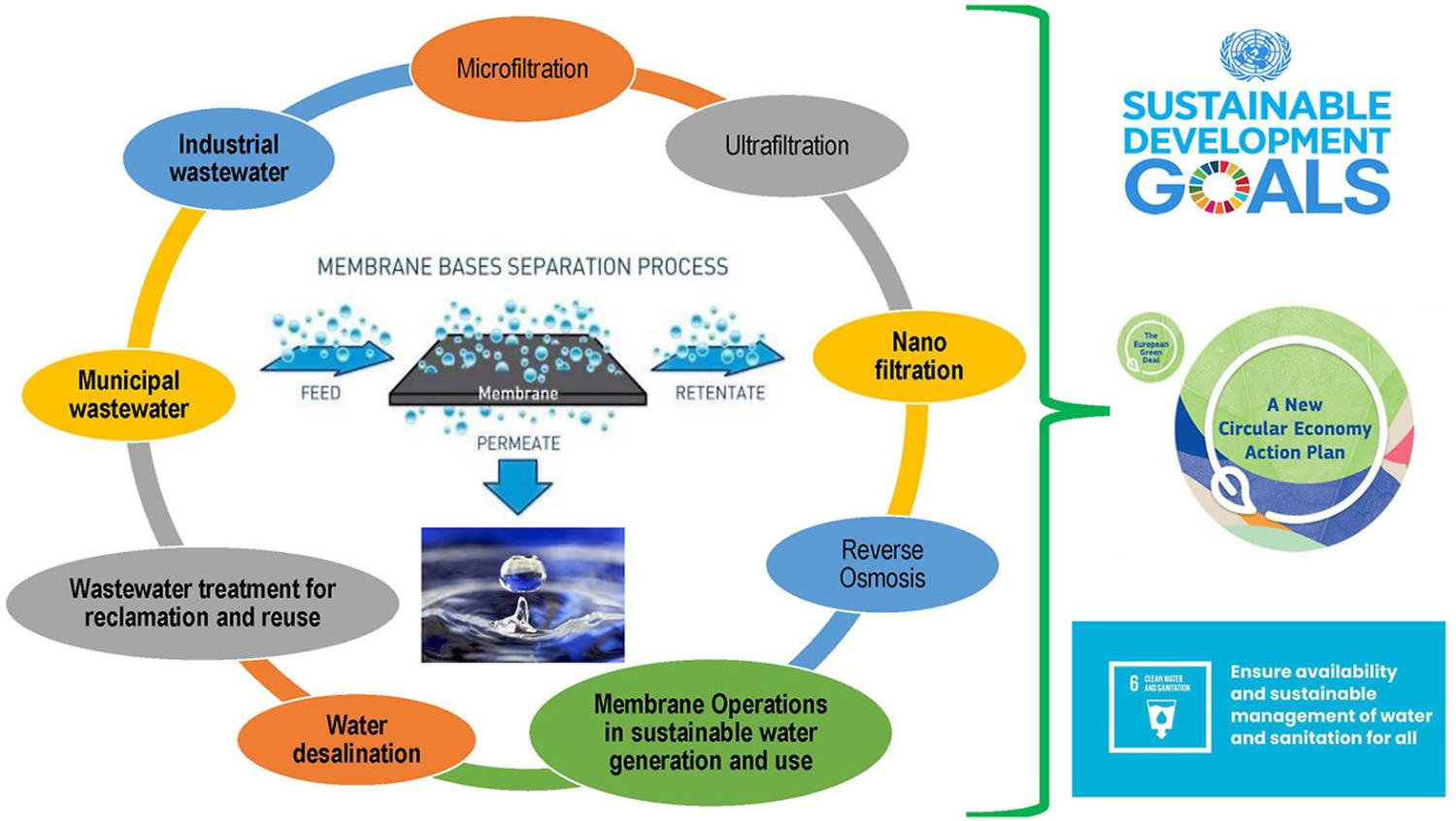
Elsevier, Sustainable Chemistry and Pharmacy, Volume 25, 2022, 100590
Clean water resources are crucial for societies in order to maintain safety as well as social, ecological and economic progress. As the population grows, agricultural, domestic and industrial activities produce large amounts of wastewaters that can be treated and reused in variety of purposes considering circular economy philosophy. This review presents the challenges and future prospects of wastewater treatment using membrane technologies and is related to SDG 6: Clean water and sanitation.
Elsevier, Engineering Applications of Artificial Intelligence, Volume 117, Part A, 2023, 105617
An examination of the challenges involved in water demand forecasting, with a particular focus on the impact of COVID-19 on the performance of various machine learning models designed for this purpose.
Elsevier, One Earth, Volume 5, Issue 10, 2022, Pages 1080-1084
In this Commentary, the increasing risk of pharmaceutical pollution to the world's rivers is discussed. To safeguard clean drinking water, crop irrigation, and biodiversity, the authors call for accellerated global collaboration.
Elsevier, The Lancet Regional Health - Western Pacific, Volume 31, 2023, 100597
This Article supports SDGs 3 and 6 by showing that the integration of a health education package for for the promotion of correct hygiene and sanitation practices into the school curriculum is an affordable and scalable approach to respond to the burden of soil-transmitted helminth infection among schoolchildren in the Philippines.
Elsevier, Marine Pollution Bulletin, Volume 181, August 2022
This review focuses on the potential exposure routes, human health impacts, and toxicity response of MPs/NPs on human health, through reviewing the literature on studies conducted in different in vitro and in vivo experiments on organisms, human cells, and the human experimental exposure models.
Elsevier, Marine Pollution Bulletin, Volume 181, August 2022
This paper discussed the development and testing of a gamma radiation dose rate calculation model for the marine environment, and evaluates the potential use for such a model in both short term nuclear emergency response management and emergency response planning.
Elsevier, Amita Nakarmi, Sushil Kanel, Mallikarjuna N. Nadagouda, Tito Viswanathan,
Chapter 7 - Applications of conventional and advanced technologies for phosphorus remediation from contaminated water,
Editor(s): Uma Shanker, Chaudhery Mustansar Hussain, Manviri Rani,
In Micro and Nano Technologies,
Green Functionalized Nanomaterials for Environmental Applications,
Elsevier,
2022,
Pages 181-213,
ISBN 9780128231371
This chapter contributes to SDG 6 by introducing technologies for phosphorus remediation from contaminated water.
Elsevier, Sai Karthik Cheemalamarry, Vinayak Sharma, Yaddanapudi Varun, I. Sreedhar, Satyapaul A. Singh,
10 - Recent advances of nanotechnology in water remediation,
Editor(s): Noel Jacob Kaleekkal, Prasanna Kumar S. Mural, Saravanamuthu Vigneswaran,
In Micro and Nano Technologies,
Nano-Enabled Technologies for Water Remediation,
Elsevier,
2022,
Pages 311-333,
ISBN 9780323854450
This chapter contributes to SDG 6 by providing up-to-date information on nanomaterial potential application in water remediation.
Elsevier, Julia Derx, Rita Linke, Domenico Savio, Monica Emelko, Philip Schmidt, Jack Schijven, Liping Pang, Regina Sommer, Margaret Stevenson, Harold van den Berg, Saskia Rutjes, Andreas H. Farnleitner, Alfred Paul Blaschke, From Groundwater to Drinking Water – Current Approaches for Microbial Monitoring and Risk Assessment in Porous Aquifers, Encyclopedia of Inland Waters (Second Edition), Elsevier, 2022, Pages 580-594, ISBN 9780128220412
This chapter supports SDG 6 by summarizing the current approaches for evaluating pathogen fate and transport in the environment, their removal during subsurface transport in porous aquifers and the needed infection protection to achieve safe drinking water.
Elsevier, Marc Rosen, Aida Farsi, CHAPTER ONE - Introduction to desalination and sustainable energy, Editor(s): Marc Rosen, Aida Farsi, Sustainable Energy Technologies for Seawater Desalination, Academic Press, 2022, Pages 1-44, ISBN 9780323998727
This chapter introduces key concepts of water desalination systems driven by sustainable energy sources, as we look to meet civilization's water needs through sustainable means - supporting SDG 6 (Clean Water and Sanitation) as well as SDG 7 (Clean and Affordable Energy)
Elsevier, Mohammad Mehdi Golbini Mofrad, Iman Parseh, Mokhtar Mahdavi,
Chapter 11 - Hazardous and industrial wastewaters: from cutting-edge treatment strategies or layouts to micropollutant removal,
Editors: Abdul Mohammad and Wei Ang,
Integrated and Hybrid Process Technology for Water and Wastewater Treatment,
Elsevier,
2021,
Pages 233-251,
ISBN 9780128230312
This chapter advances SDG 6 and 9 by identifying and investigating state-of-the-art remediation approaches and technologies that help the disposal of hazardous sewage for sustainable and safe reuse.
Elsevier, Wajid Umar, Muhammad Zia ur Rehman, Muhammad Umair, Muhammad Ashar Ayub, Asif Naeem, Muhammad Rizwan, Husnain Zia, Rama Rao Karri,
Chapter 10 - Use of nanotechnology for wastewater treatment: potential applications, advantages, and limitations,
Editor(s): Janardhan Reddy Koduru, Rama Rao Karri, Nabisab Mujawar Mubarak, Erick R. Bandala,
In Micro and Nano Technologies,
Sustainable Nanotechnology for Environmental Remediation,
Elsevier,
2022,
Pages 223-272,
ISBN 9780128245477,
https://doi.org/10.1016/B978-0-12-824547-7.00002-3
This chapter contributes to SDG 6 by introducing technologies for wastewater treatment.
Elsevier, Felix A. Diawuo, Roland Teye Amanor, Chapter 2 - Need for pumped hydro energy storage systems, Editor(s): Amos T. Kabo-Bah, Felix A. Diawuo, Eric O. Antwi, Pumped Hydro Energy Storage for Hybrid Systems, Academic Press, 2023, Pages 23-41, ISBN 9780128188538
This chapter provides information on the benefits of pumped hydro energy storage as a means of providing consisent renewable energy power generation, offering power network management including load balancing and peak shaving, and grid stabilization with emphasis on frequency and voltage regulation. Additionally, the chapter highlights some of the different pumped hydro energy storage hybrid designs for both off-grid and grid-tied applications while the impact of climate change is discussed.
Elsevier, COVID-19 and the Sustainable Development Goals, Volume , 1 January 2022
This chapter contributes to SDG 6 by introducing the impact of COVID-19 on water and sanitation, explaining Sustainable Development Goal-6 (clean water and sanitation) in the context of the COVID-19 pandemic, and highlighting lessons learned regarding the water and COVID-19.
Elsevier, J. Indu, Akhilesh S. Nair, Ankita Pradhan, Rohit Mangla, Sooraj Krishnan, Kaushlendra Verma, Vinayak Huggannavar; Radar Remote Sensing, 2022, Pages 123-148
This chapter contributes to SDG 6 by using radar remote sensing to measure terrestrial water budget elements such as precipitation, soil moisture, and surface water levels.
Elsevier, Gregory Lazarev, Chapter 8 - Pastoralism as a response to climate change and water security in Mediterranean mountains and forests, Editor(s): Nadia El-Hage Scialabba, Managing Healthy Livestock Production and Consumption, Academic Press, 2022, Pages 123-127,
This content advances SDGs 12 and 13 by promoting responsible water resource consumption in pastoral lands and working with the environment rather than against it to raise livestock. Raising livestock responsibly and sustainably promotes SDG 2 for zero hunger as well.
Priya Kanwar, Kanwar P. Singh. Chapter 4 - Impact of climate change on water resources,
Editor(s): Ashwani Kumar Tiwari, Amit Kumar, Abhay Kumar Singh, T.N. Singh, Enrico Suozzi, Gagan Matta, Stefano Lo Russo,
Current Directions in Water Scarcity Research,
Elsevier,
Volume 5,
2022,
Pages 45-57
Editor(s): Ashwani Kumar Tiwari, Amit Kumar, Abhay Kumar Singh, T.N. Singh, Enrico Suozzi, Gagan Matta, Stefano Lo Russo,
Current Directions in Water Scarcity Research,
Elsevier,
Volume 5,
2022,
Pages 45-57
This important chapter discusses the impact of climate change on water resources, and the measures adopted by various government agencies and NGOs trying to cope with the growing challenges. It advances SDG 13 by pointing out actionable goals and strategies.
Elsevier, Aaditya Chaturvedi, Bhanu Pandey, Aneet Kumar Yadav, Shubham Saroj,
Chapter 5 - An overview of the potential impacts of global climate change on water resources,
Editor(s): Binota Thokchom, Pengpeng Qiu, Pardeep Singh, Parameswar K. Iyer,
Water Conservation in the Era of Global Climate Change,
Elsevier,
2021,
Pages 99-120,
ISBN 9780128202005
Chapter 5 - An overview of the potential impacts of global climate change on water resources,
Editor(s): Binota Thokchom, Pengpeng Qiu, Pardeep Singh, Parameswar K. Iyer,
Water Conservation in the Era of Global Climate Change,
Elsevier,
2021,
Pages 99-120,
ISBN 9780128202005
This chapter advances SDG 6 and SDG 13 by highlighting the connection between climate change and water resources. It describes some of the most sinificant efforts taken to mitigate climate change.
Elsevier, The Lancet, Volume 400, 29 October 2022
This Article supports SDGs 3 and 6 by demonstrating that polio environmental surveillance by testing wastewater samples is a valuable tool for tracking the distribution of polio and non-polio enteroviruses, and could be instrumental for global poliovirus elimination efforts.
Elsevier, The Lancet Planetary Health, Volume 6, April 2022, e359-e370
This Review supports SDGs 3 and 6, focusing on the complex ways that multiple factors interact during droughts to influence HIV treatment adherence. The authors suggest that economic and livelihood challenges resulting from food and water insecurity during droughts have the biggest impact on adherence.