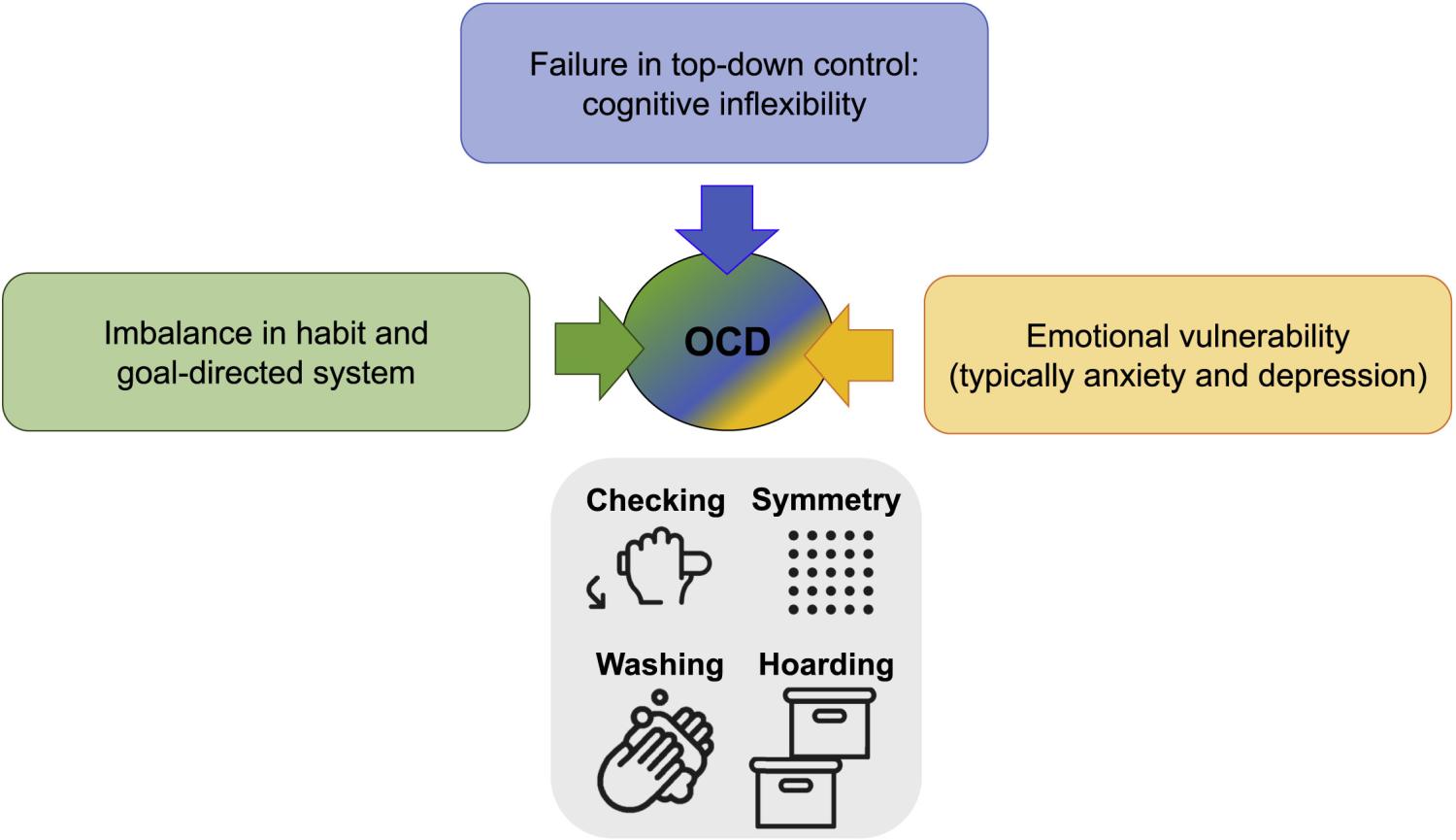
Obsessive-compulsive disorder is a severe and disabling psychiatric disorder that presents several challenges for neuroscience. Recent advances in its genetic and developmental causation, as well as its neuropsychological basis, are reviewed. Hypotheses concerning an imbalance between goal-directed and habitual behavior together with neural correlates in cortico-striatal circuitry are evaluated and contrasted with metacognitive theories. Treatments for obsessive-compulsive disorder (OCD) tend to be of mixed efficacy but include psychological, pharmacological, and surgical approaches, the underlying mechanisms of which are still under debate. Overall, the prospects for new animal models and an integrated understanding of the pathophysiology of OCD are considered in the context of dimensional psychiatry. Robbins et al. provide an interdisciplinary neuroscientific framework for understanding the nature and causation of obsessive-compulsive symptoms as a model psychiatric disorder. It illustrates how new treatments may potentially arise from an interaction of genetic, neurocognitive, and basic neuroscientific approaches.