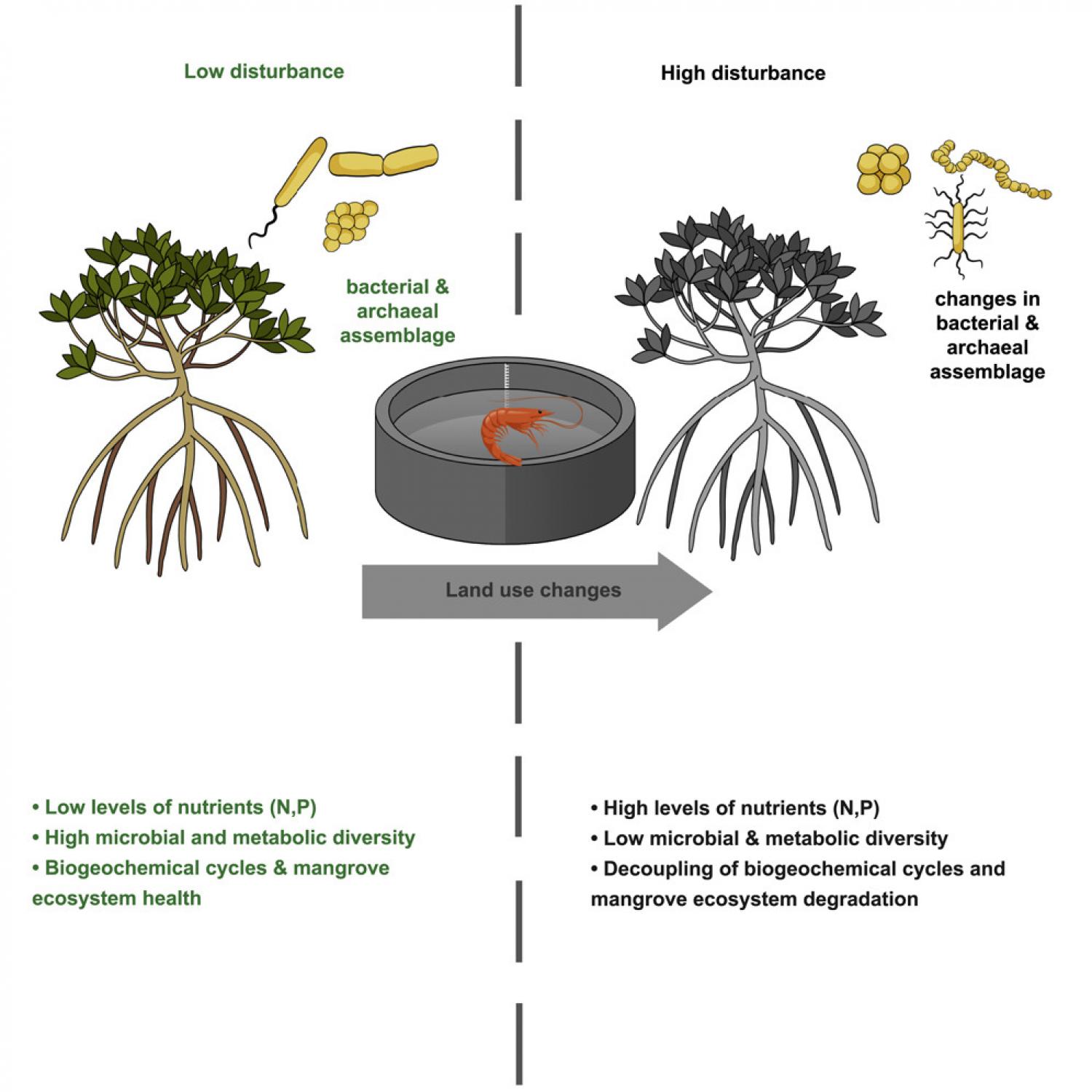
Mangrove-dominated estuaries host a diverse microbial assemblage that facilitates nutrient and carbon conversions and could play a vital role in maintaining ecosystem health. In this study, we used 16S rRNA gene analysis, metabolic inference, nutrient concentrations, and δ13C and δ15N isotopes to evaluate the impact of land use change on near-shore biogeochemical cycles and microbial community structures within mangrove-dominated estuaries. Samples in close proximity to active shrimp aquaculture were high in NH4+, NO3− NO2−, and PO43−; lower in microbial community and metabolic diversity; and dominated by putative nitrifiers, denitrifies, and sulfur-oxidizing bacteria. Near intact mangrove forests we observed the presence of potential nitrogen fixers of the genus Calothrix and order Rhizobiales. We identified possible indicators of aquaculture effluents such as Pseudomonas balearica, Ponitmonas salivibrio, family Chromatiaceae, and genus Arcobacter. These results highlight the sensitivity of the estuarine-mangrove microbial community, and their ecosystem functions, to land use changes.