COVID-19, Obesity, and Structural Racism.
This study supports SDG 3 and 10 by reporting that Māori and Pacific people with type 2 diabetes have consistently poorer health outcomes than European patients, indicating the need for specific policies and interventions to better manage type 2 diabetes in these subpopulations.
A framework for understanding water's many functions for supporting, regulating, and stabilizing hydro-climatic, hydro-ecological, and hydro-social systems.
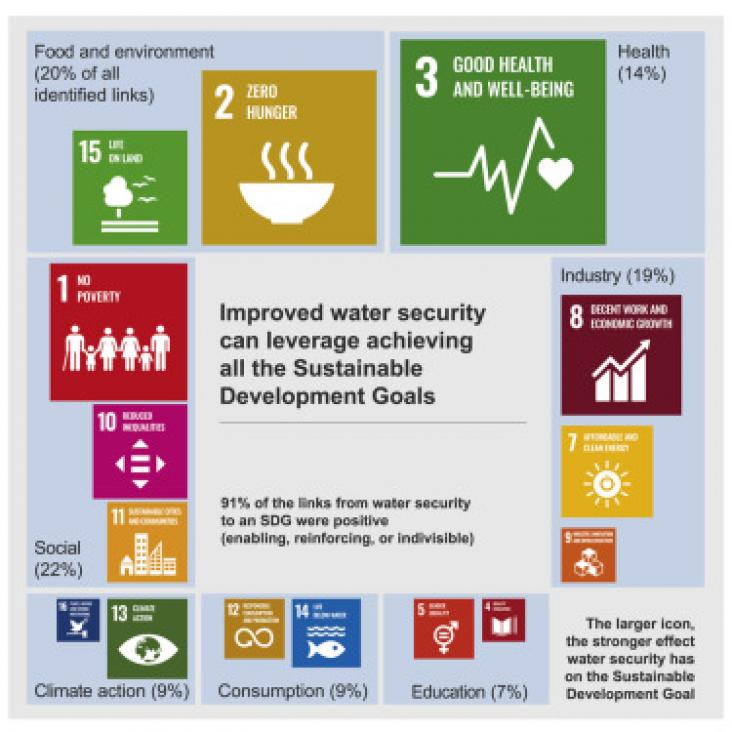
This article examines how improved water security affects the success of other SDGs, when all the goals are examined simultaneously.
This Lancet Global Health Commission advances addresses SDG 3 directly, and SDGs 1, 2, 4, 5, 8 and 10 indirectly, by comprehensively demonstrating how improving eye health by treating and preventing vision impairment and vision loss can not only advance SDG 3—improving health and wellbeing for all—but also contribute to poverty reduction, zero hunger, quality education, gender equality, and decent work and economic growth. The findings of this report frame eye health as a development issue and highlight that, with a growing ageing population globally, urgent and concerted action is needed to meet unmet eye health needs globally, including incorporating equitable eye care into countries’ universal health coverage plans.
HBV evolution and genetic variability: Impact on prevention, treatment and development of antivirals
Hepatitis B virus (HBV) poses a major global health burden with 260 million people being chronically infected and 890,000 dying annually from complications in the course of the infection.
Background: In 2016, of the estimated 257 million people living with chronic hepatitis B virus (HBV) infection worldwide, only a small proportion was diagnosed and treated.
A Research Paper on obesity, in the context of SDGs 3, 9, and 11, focusing specifically on the role of multi-level and multi-component interventions addressing healthy nutrition, physical activity, and education to mitigate the rising epidemic.
An Article in support of SDG 3, showing that the age-adjusted prevalence of blindness has reduced over the past three decades, yet due to population growth, progress is not keeping pace with needs and vision impairment remains an urgent and increasingly important public health priority.
This paper supports SDG 3 by analysing the current national action plans of ten ASEAN countries and their alignment with the Global Action Plan on antimicrobial resistance, highlighting five key themes: policy design, implementation tools, monitoring and evaluation, sustainability, and One Health engagement.