
This paper aims to contribute to the limited understanding and recognition of soil ecosystem services (SoES) in spatial planning. In light of its critical role in climate crises and due to its global degradation, soil has drawn considerable attention in the recent global agenda. As one of its vital services, soil serves as a terrestrial carbon pool, which significantly contributes to offset greenhouse gas emissions in the atmosphere (EEA, 2012).
Your search request returned 8466 results.
Elsevier, One Earth, Volume 4, 19 February 2021
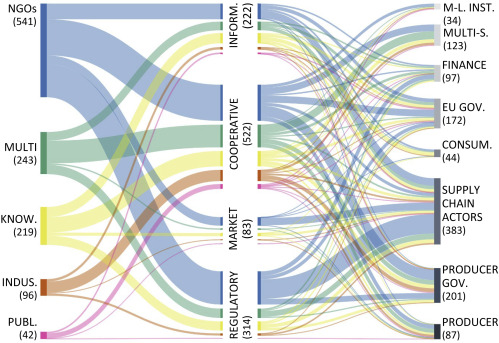
Despite the importance of tropical forest conservation in achieving global sustainability goals and the key role of forest-risk commodity trade in driving deforestation, consumer country policy options for reducing imported deforestation have received limited scholarly attention. Drawing on gray literature and a European Commission public consultation, we identify 86 policy options for the European Union to address deforestation.
Elsevier, One Earth, Volume 4, 22 January 2021
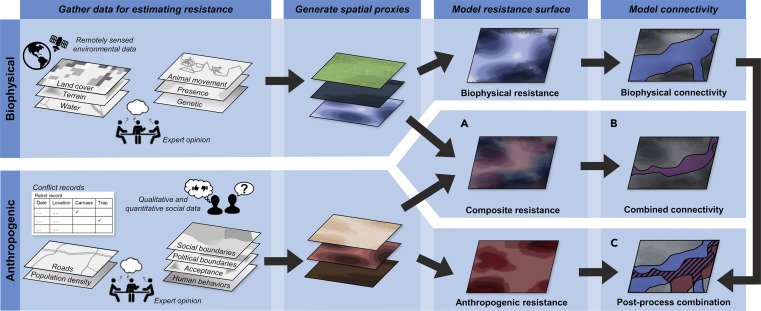
Maintaining or restoring connectivity among wildlife populations is a primary strategy to overcome the negative impacts of habitat fragmentation. Yet, current connectivity planning efforts typically assess landscape resistance, the ability of organisms to cross various biophysical elements in a landscape, while overlooking the various ways in which human behaviors influence connectivity. Here, we introduce the concept of “anthropogenic resistance” to capture the impacts of human behaviors on species' movement through a landscape.
Elsevier, Cities, Volume 26, August 2009
Urban forests are integral components of urban ecosystems, which could generate significant ecosystem services, such as offsetting carbon emission, removing air pollutants, regulating the microclimate, and recreation. These ecosystem services contribute to improving environmental quality, quality of life, and sustainable urban development. Despite a long history of inserting vegetation in human settlements in China, modern scientific study of this natural-cum-cultural resource did not start until the 1990s.
Elsevier, One Earth, Volume 1, 20 September 2019
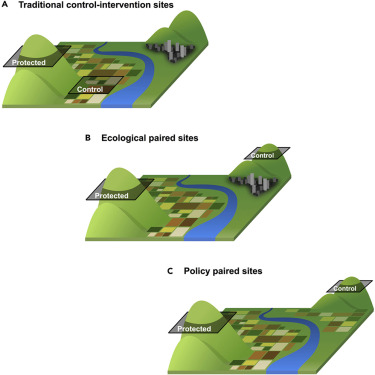
Conservation of biodiversity and ecosystem services in natural environments requires careful management choices. However, common methods of evaluating the impact of conservation interventions can have contextual shortcomings. Here, we make a call for counterfactual thinking—asking the question “what would have happened in the absence of an intervention?”—with the support of rigorous evaluation approaches and more thoughtful consideration of human dimensions and behavior.
Elsevier, One Earth, Volume 1, 25 October 2019
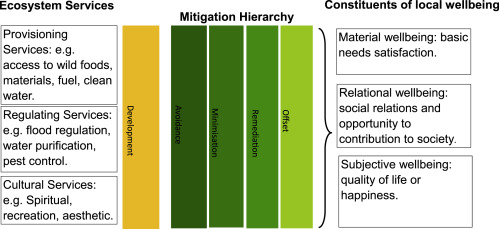
Economic development projects are increasingly applying the mitigation hierarchy to achieve No Net Loss, or even a Net Gain, of biodiversity. Because people value biodiversity and ecosystem services, this can affect the well-being of local people; however, these types of social impacts from development receive limited consideration. We present ethical, practical, and regulatory reasons why development projects applying the mitigation hierarchy should consider related social impacts.
Elsevier, One Earth, Volume 2, 24 January 2020
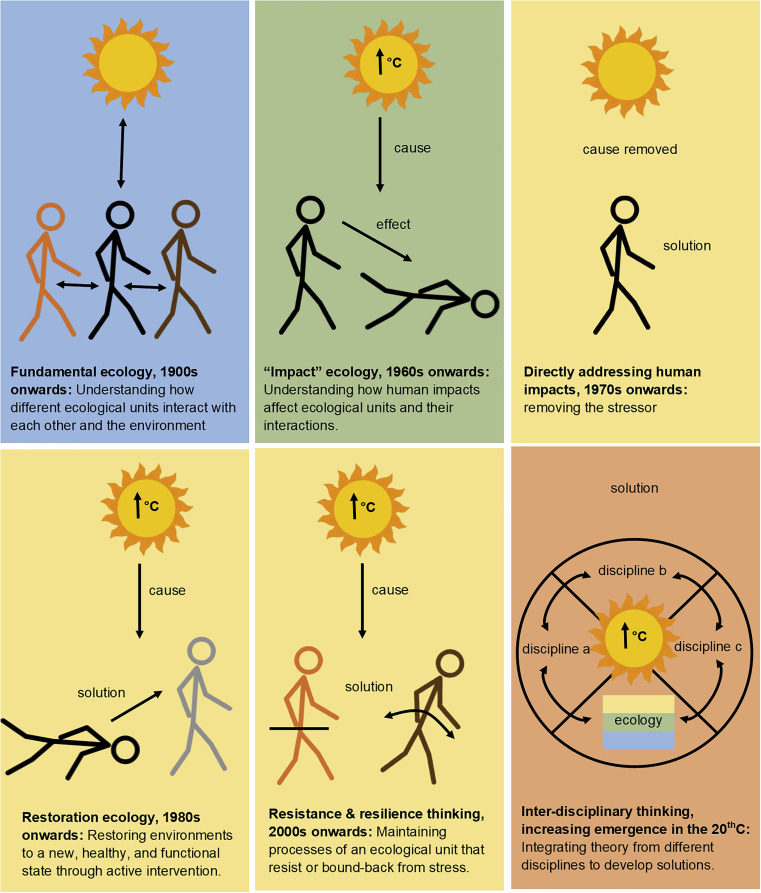
Is ecology, as a science, doing enough to address big environmental problems? Here, a review of the top 40 ecology journals suggests not. As ecologists, we have the opportunity to reinforce the relevancy of ecology to society through greater promotion and execution of solution-focused science.

Elsevier, Current Opinion in Green and Sustainable Chemistry, Volume 31, October 2021
Microplastic (MP) and nanoplastic (NP) pollution is among the global environmental concerns of the 21st century owing to its transboundary distribution and persistence. The number of studies focused on the determination of MPs in air, water, sediment, soil, and biota of an important number of ecosystems has increased exponentially. However, the impact that the methodologies used to isolate and determine MPs and NPs have on the environment owing to the consumption of reagents and energy and the generation of waste is not yet studied.
Elsevier, Developments in the Built Environment, Volume 6, May 2021
Urban regions in sub-Saharan Africa are growing significantly more rapid than their also growing rural counterparts. However, the employment perspectives in rural areas are decreasing, and thus the urban growth can become a driver for enhanced livelihoods in the rural areas.