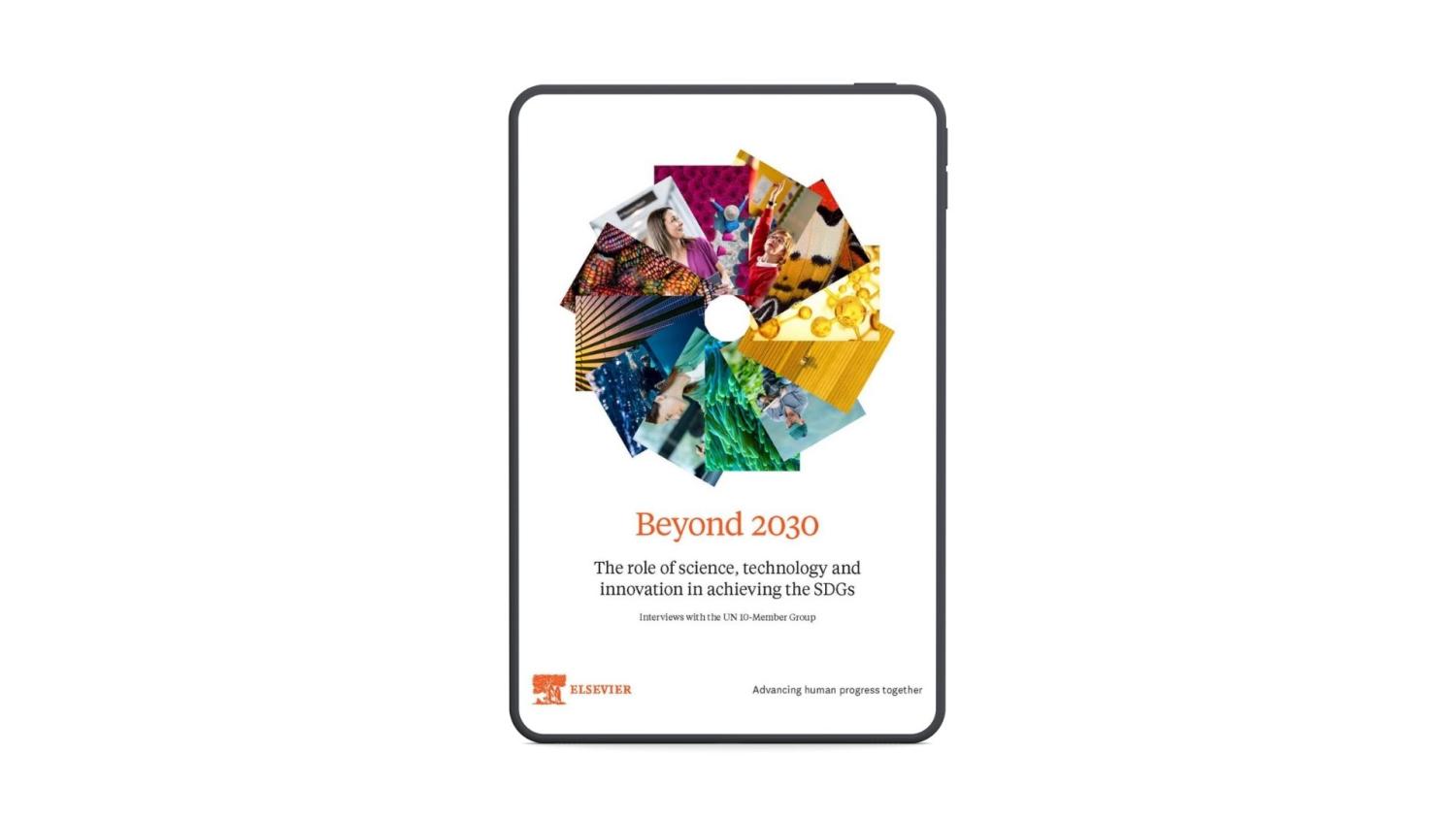
This new analysis complements Elsevier’s 2020 mapping of global research contributions to each SDG, bringing expert insight into how Science Technology and Innovation drives progress in society and outlines a vision for reshaping the Global Goals for the next generation.
Key findings include;
The SDGs have been successful in providing a unifying vision of a sustainable future:
Across the committee one message was clear: since 2015, the SDGs have provided a shared language and direction for tackling both global challenges such as climate change, and deeply local issues such as access to clean water, poverty reduction, and health equity.
The framework has helped illuminate how these issues intersect and why collaboration is essential.
“Its strength lies in fostering unprecedented collaboration across traditional divides, providing a vital global platform that, while imperfect, offers a solid foundation for future improvement”.
In terms of implementation on a national level, progress remains uneven. Some regions have integrated the goals into national planning; others face structural and financial barriers. Interviewees caution against viewing the SDGs too narrowly, such as focusing solely on environmental issues, or dismissing them altogether. They also emphasized the need to accelerate global impact, recognizing that public awareness of the SDG framework is still lacking, indicating the need for stronger societal engagement.
“Without the SDG framework, countries would have pursued their own agendas, but the SDGs unite us all.”
Science, Technology, and Innovation (STI) is critical in progressing the SDG agenda
From industrial transformation to urban development and the energy transition, the interviews confirmed how STI underpins many of the breakthroughs needed to accelerate progress.
But innovation alone is not enough. The report emphasizes the importance of bridging research and real-world application by strengthening collaboration between academia and industry. This can ensure that innovations move beyond theory and pilot projects to tangible, scalable solutions with real-world impact.
“An academic research system alone is insufficient; a robust industrial research and development ecosystem is essential.”
Two critical factors for this are funding and collaboration. Collaboration was seen as an exchange of both knowledge and resources while the 10-member group have already called for greater investments in SDG-aligned research, recommending governments increase spending on basic and applied research by 3.7% between 2025 and 2029.
Beyond Technology: The crucial role of inter and trans disciplinary research
The interviews revealed that true sustainable development is not just a technological challenge, it’s a human one. Interdisciplinary and transdisciplinary research is critical in shaping human behaviour, governance, and cultural shifts to drive sustainable practices. Technology alone cannot address the complex challenges of climate change, inequality, or resource management; societal acceptance and changes in behaviour are also needed.
“Technological advancements give us opportunities to better understand human behaviour. The next challenge is influencing that behaviour, to use technology for good, and encourage more sustainable choices and actions”
The interviewees stressed the need for academia to better understand the motivations, barriers, and social dynamics that affect how communities engage with sustainability efforts. By embedding these insights into future strategies, technological interventions will resonate culturally and socially, ensuring more equitable and effective outcomes.
“We can’t focus solely on developing new technologies without recognising that the country may lack the grid capacity and the trained workforce needed to install them.”
“If you try to introduce transformation or innovation to a community in ways that disrupt its cultural values, you may do more harm than good.”
The need to accelerate SDG momentum in a period of uncertainty
“The SDGs were once a natural, shared objective for everyone, but now we face a situation where many countries are building walls against research collaboration.”
The interviews also revealed how the SDG agenda can be vulnerable during periods of uncertainty. Fragmentation in international cooperation can stall research collaboration and policy alignment, while misinformation undermines public trust in science and hinders the adoption of critical innovations. Uncertainty and shifting priorities in STI can undermine the long-term commitment needed to build and sustain the shared cross-border research infrastructures and global data systems that are essential for tracking progress on the SDGs.
“Our aim should be to provide a global community with data, that has global coverage and addresses challenges with monitoring progress and non-progress”
The report also emphasizes that building a diverse, skilled workforce and strengthening public understanding of science are critical investments for the next decades.
Charting the Future: Recommendations for Post-2030
Looking toward 2050, the report calls for a more focused, accountable, and adaptable SDG framework. It recommends prioritizing actions on health, education, and gender equality, alongside enhancing measurement capabilities and assessing regional readiness. Additionally, it was hoped that a future 2050 agenda would recognise planetary bounadaries, the safe and just thresholds that will safeguard both livelihoods and the planet.
For STI, the report recommends deepening international research collaborations and increasing investment in sustainability-focused R&D. The group advocated for continuing efforts to integrate and track SDG research contributions that would provide further recognition and visibility of the vital role STI plays across all regions and sectors of society.
Finally, fostering public trust in science through improved literacy and inclusive engagement is essential for sustained progress. Expanding education, skills and job development, especially in low-resource settings, is also critical to preparing the next generation of innovators and leaders. This holistic approach will be essential to overcoming current challenges and realizing a just and resilient future.