
AI holds tremendous potential for advancing the United Nations Sustainable Development Goals (SDGs). AI, particularly generative AI, provides new opportunities to analyse data and trends at pace and scale to further knowledge, allocation of resources and action. Applications to address the global challenges presented by the SDGs such as poverty and hunger, human health, climate change, biodiversity and ocean degradation are potentially limitless. Upskilling and access to AI technology will be critical, but how can we avoid an AI divide between the West and the rest? This year’s RELX SDG Inspiration Day will bring together global AI leaders, corporate representatives, investors, government, and NGOs to explore issues, gain practical insights and be inspired to take action in support of the Global Goals.
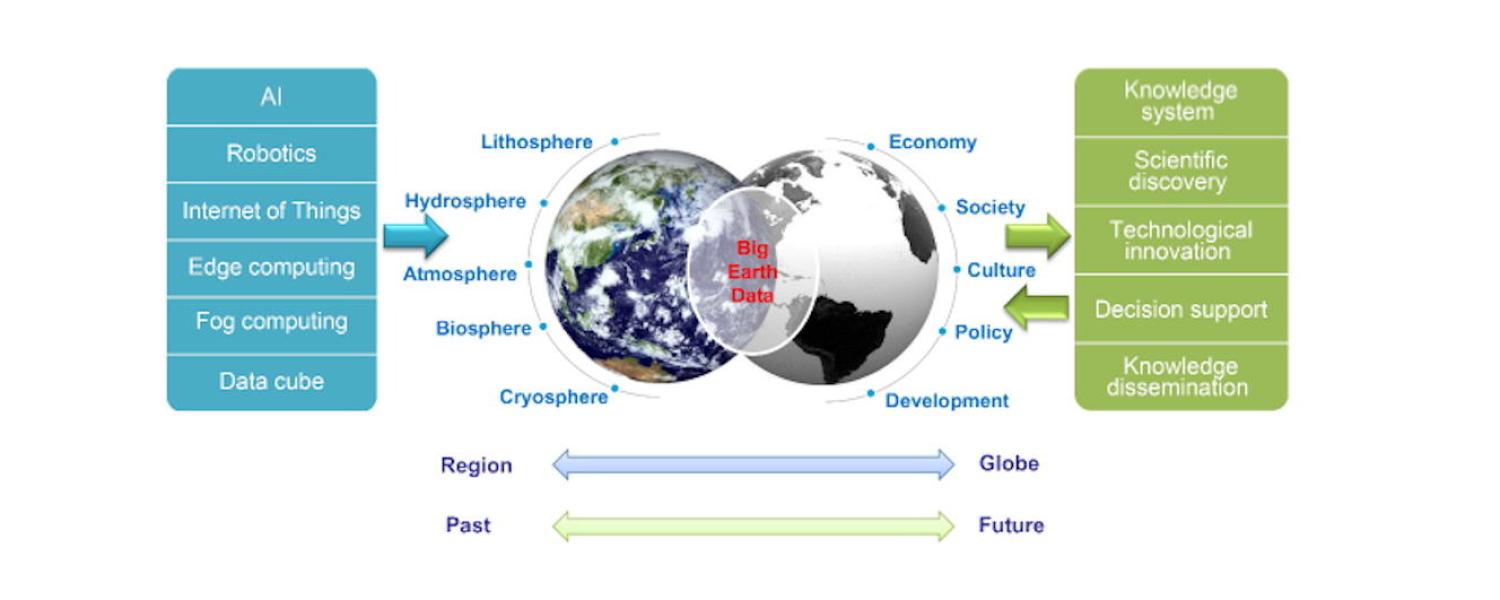
Big Earth Data infrastructure must further condense and abstract common workloads and application models with consideration for the features of Big Earth Data and the typical needs of SDG-related applications.Systems should be designed and built based on benchmarks, with integration and scheduling of services and resources as a central focus (e.g., high-performance, high-throughput, intelligent computing and cloud services). Focusing on transparent data access and efficient data circulation will help integrate software and hardware for increased performance, capacity, and flexibility.
Scientists and governments of South Asian countries can work together more efficiently in the future, not just to react to the urban socio-economic and environmental problems of today, but work with superior foresight today to make strong decisions for tomorrow.
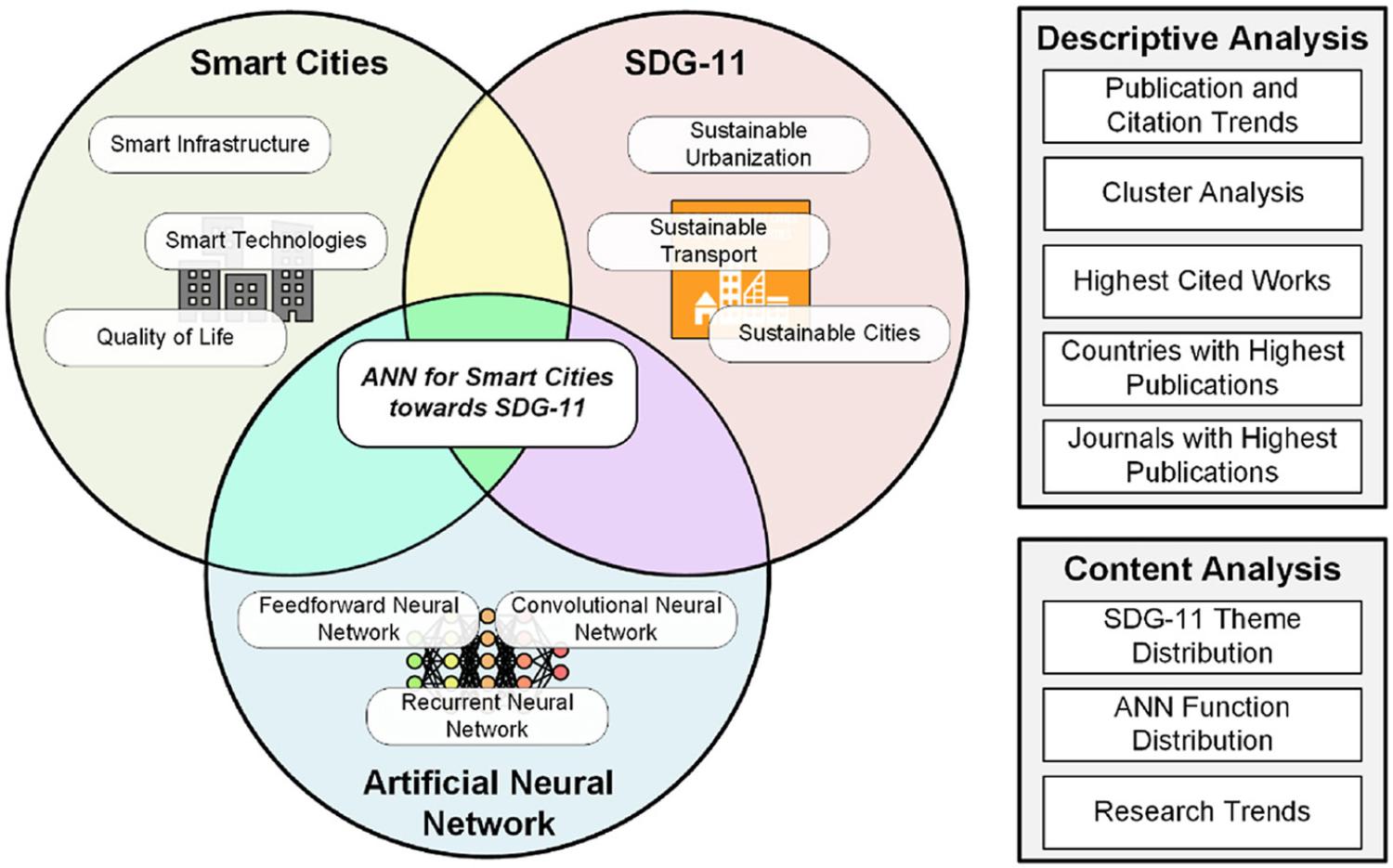
This review assessed the academic landscape on the use of ANN for Smart Cities towards SDG-11. A keyword-based methodological framework was used to retrieve the relevant documents. The documents were assessed using descriptive and content analysis. Results revealed significant research interest on the topic and is on an increasing trend. Research works on the topic are expected to increase as clusters on specific topics have formed. This review identified the SDG-11 themes Environmental Impact, Transport Systems, and Urbanization among the most prominent. Research gaps were identified in the SDG-11 themes on Green and Public Spaces, and Natural and Cultural Heritage.
We observe the link between Artificial Intelligence (AI) and Sustainable Development Goals (SDGs). We use automated methodologies to find insights and overlaps between AI and the SDGs. AI-Ethics frameworks need to give more attention to Society and Environment areas. Inclusive action is needed to balance the efforts for solving SDGs by using AI.SDGs 13, 14, and 15 (all related to the Environment area) are not sufficiently addressed.
In this context, the present study has a primary research objective: to develop a research agenda for entrepreneurial action, identifying key aspects related to STI and the SDGs, and to explore how both concepts are interconnected.
Given that we are halfway to 2030, there is a greater need to accelerate our progress to SDGs. To the data gap, which is still a huge barrier for SDGs, Big Earth Data provide strong support to measure the status and trend of progress. Using Big Earth Data with global data acquisition and analysis capability, China can and should make more contributions to fill the data gap and give more data-driven suggestions for decision-makers for the world’s SDG efforts.
The results of this study, which looks at the emissions and performance of the ICE fueled by ethanol, are in line with SDGs 7 and 13. Regarding optimization and prediction, the distinctive combination of ANN and RSM encourages sustainable industrialization, more conscientious consumption, and more ethical production patterns. All these are crucial components of SDGs 9 and 12. To make refined decisions and achieve improved performance and emissions, this research can benefit engine producers and researchers. This alliance between scholars and industry stakeholders supports SDG 17 (Partnerships for the Goals), which also encourages knowledge-sharing to advance the SDGs as a whole.
With technological advances, Artificial Intelligence tools are increasingly available in organizational environments, enabling greater processing and storage capacity and increasing the possibilities of analyzing other data formats. Therefore, in this work, Natural Language Processing (NLP) techniques were applied to verify, with an AI tool, the alignment of community outreach actions of an HEI to the SDGs and identify its actions with the greatest impact based on the titles and summaries of these actions.
Linkages between smart cities and SDGs are underexplored.A systematic literature review is conducted to address this gap. Existing research mainly focuses on SDG 6, SDG 7, and SDG 11.Responsible smart city solutions and technologies could contribute to SDGs.There is a bias toward reporting the benefits of smart cities and trade-offs are underexplored.
The study forecasts AI-based innovation's impact on SDGs in 22 countries from 2022 to 2030 using System Dynamics Modeling. In most of the 22 countries studied, AI-based innovation positively affects SDGs 1, 3, and 5. For half of the countries studied, AI-based innovation positively influences SDGs 2, 4, 6–8, 11, 13, and 16–17. AI-based innovation does not positively influence SDGs 10, 12, 14–15 for most countries studied.
The research questions explore the recent progress and technological advancements in Wireless Power Transfer (WPT), the reflection of global engagement within the WPT community through publication trends and geographical distribution, and the alignment of thematic clusters with SDG goals. Questions also investigate the contribution of AI to WPT, challenges and barriers to WPT adoption revealed by bibliometric analysis, ways WPT technology can democratize technology access in marginalized regions, and specific recommendations to ensure WPT technologies effectively accelerate progress towards achieving a broader set of SDGs.
In the pursuit of improving engine performance and mitigating emissions, researchers have explored the intriguing domain of fuel blends incorporating butanol and gasoline. This innovative study aims to unravel the intricate dynamics between butanol and gasoline when utilized as a blended fuel in internal combustion engines. The current study integrates cutting-edge techniques such as Artificial Neural Networks (ANN) and Response Surface Methodology (RSM) for the optimization of engine performance.
This chapter advances the UN SDG goals 9 and 13 by discussing the potential of AI tools to develop mitigation strategies to battle climate change in energy, land use, disaster response, and other sectors.
This chapter advances the UN SDG goals 9 and 11 by exploring the potential of AI tools to promote sustainable transportation in electric vehicles.
This chapter advances the UN SDG goals 9, 12, and 13 by discussing the potential of AI to overcome socioenvironmental challenges such as unsustainable resource consumption and poor management of natural disaster responses.