Every year, World Water Day raises awareness and inspires action to tackle the water and sanitation crisis. To mark World Water Day 2024, Elsevier has curated a free special collection of journal articles and book chapters. This year’s theme for World Water Day is Water for Peace. Discover research relating to clean water and sanitation from across a broad range of disciplines including the effects of racism, social exclusion, and discrimination on achieving universal safe water and sanitation in high-income countries and challenges faced by developing economics to mitigate the impacts of climate change on water resources.
This chapter aligns with SDGs 3 and 6 by examining the relative capacity and capability of developing nations to adapt to hydrological variability arising from climate change and to study the challenges faced by developing economies to mitigate the impact of climate change on water resources.
This chapter aligns with Goal 6: Clean water and sanitation by reviewing the role of nanostructured materials as a promising alternative to conventional methods and is effective in eliminating water and wastewater contaminants, such as inorganics (toxic metals), organics, and microorganisms.
This chapter aligns with SDGs 7 and 11, by describing the role and possibilities of wave energy to help support global (sustainable) energy systems.
With evident relevance to SDG 6, the research explores a water pollution control technology evaluation model based on the Pythagorean language neutrosophic set (PLNS) in the context of the pulp and paper industry. The authors' model aims to assist in the choice of appropriate water pollution control technology for those working within the paper industry. It is tested in an example based in China.
In this study, we introduced an integrated assessment framework, and estimated both quality and quantity-related Water Scarcity Index (WSI), local economic water scarcity risk (WSR), and the cascading virtual WSR observed in global trade markets across 40 major economies spanning from 1995 to 2010. Results show that developing countries had rapid growth in both quantity and quality-related WSI, while major developed economies experienced a modest increase in water stress but mitigated quality-related risks, suggesting imbalanced progress towards SDG 6 across countries.
This paper seeks to contribute to pipeline leakage detection research through collecting and simulating leakage signals under different pressure strengths by combining experiments with numerical simulation. The findings point towards better detection in a real noise environment. Such research is vital in the context of increasing worldwide demand for water and insufficient water supply caused by pipeline leakage.
The cascading effects of biodiversity decline on human well-being present a pressing challenge for sustainable development. Conservation efforts often prioritize safeguarding specific species, habitats, or intact ecosystems but overlook biodiversity's fundamental role in providing Nature's Contributions to People (NCP) in human-modified landscapes.
Pakistan's water resources experiencing mounting pressure. UN SDG 6 provides a roadmap for achieving sustainable water management. Long-term planning and community engagement are key to success. Policy recommendations include efficient pricing and climate change integration.
The authors put forward a mathematical model for examining the impact of water, sanitation and hygiene (WASH) services on reducing the transmission of waterborne diseases such as enteric diarrheal disease (EDD). It is found that wastewater and sewage treatment (WST) control has the most significant impact in terms of WASH interventions employed. The findings have could have very important public health potential and tie in strongly with the goals of SDG 6.
Water-smart society must highlight societal well-being and co-development across sectors. Furthermore, the article emphasizes the need for a long-term perspective, conserving nature, and maximising ecosystem services, while anticipating change. Finally, the article discusses how a more grounded conceptualisation of the water-smart society can guide utilities and urban policy design.
Water is a dwindling natural resource, and potable water is wrongly considered an unlimited resource. This review seeks to support policymakers in making informed decisions about water use, avoiding wasting, and finding solutions that may be planet friendly and patient friendly in dialysis, especially in hemodialysis treatments.
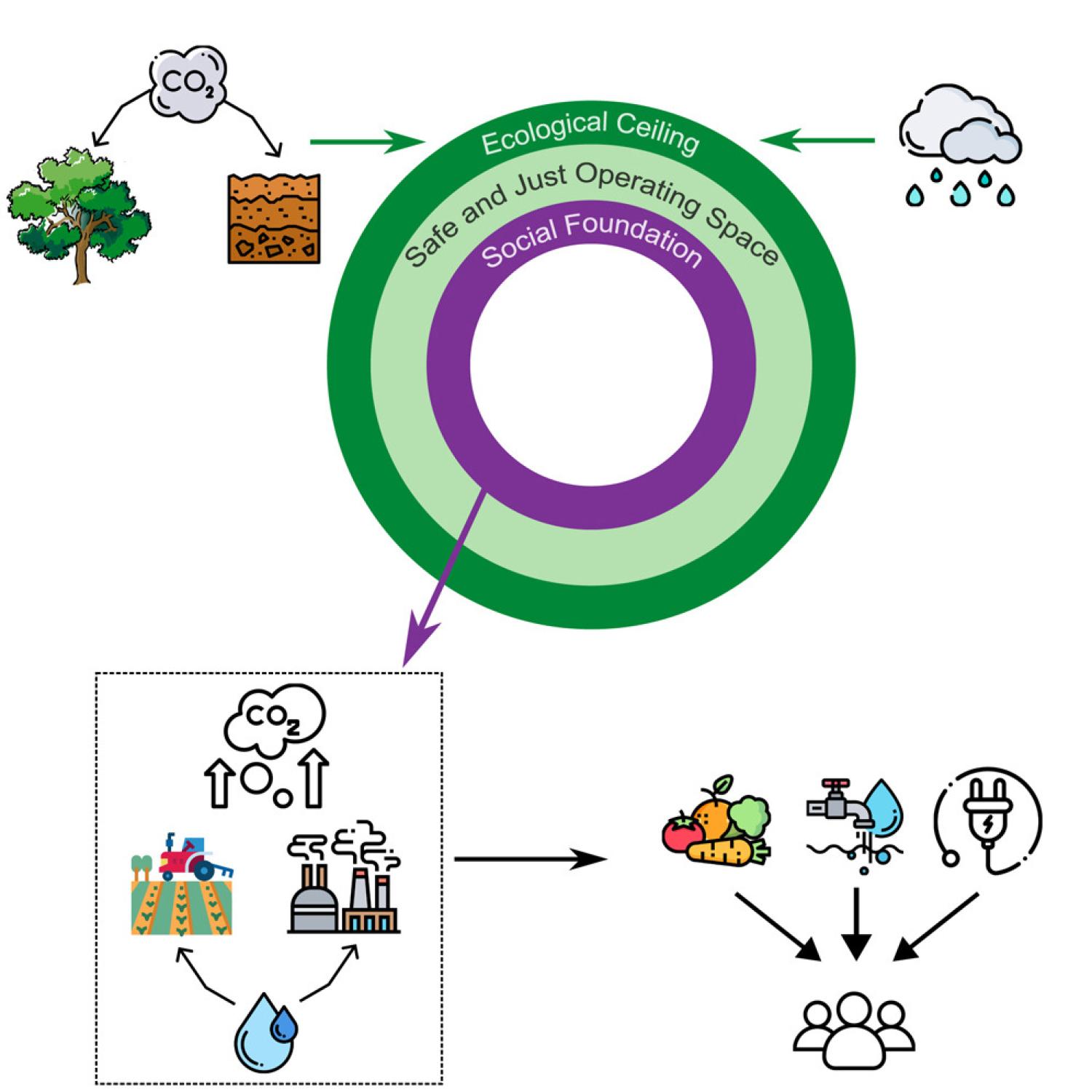
Decoupling has increasingly been recognized as a way to reconcile limitless economic growth with environmental pressures. This study assesses current and projected future decoupling factors of water withdrawals in relation to GDP.
This chapter aligns with Goal 6: Clean water and sanitation by discussing existing knowledge on different categories of biobased materials as biosorbents for wastewater treatment and giving future perspectives for the development of advanced biobased materials capable of overcoming drawbacks from the existing ones.
This chapter aligns with Goal 6, 3 and 11 by describing the leading methods for treating and maintaining the microbiological quality of drinking water at the household level. It reviews the challenges of optimizing uptake of effective household water treatment among vulnerable populations in low-income countries and potential risks associated with climate change.
Chapter 3 - Contaminated groundwater sampling and quality control of water analyses,
Editor(s): Benedetto De Vivo, Harvey E. Belkin, Annamaria Lima,
Environmental Geochemistry (Third Edition), Elsevier, 2024, Pages 35-62, ISBN 9780443138010
This chapter aligns with Goal 6: Clean water and sanitation by reviewing the tools available for the collection of groundwater samples, methods of on-site water-quality analysis, and the appropriate preservation and handling of samples. This work contributes to the anaylis of groundwater in efforts to monitor and improve water for populations.
This chapter aligns with Goal 11 and 6 by analysing the use of wastewater for irrigation, balancing positive outcomes and trade-offs. There is a large variation between developed and developing countries as well as among countries within different economic groups regarding safe management of wastewater.
This chapter aligns with SDG 6 by showing applications of mapping various data sources such as rainfall, temperature, soil moisture, and vegetation cover, based on several drought indices. The utilization of these maps can aid in the identification of drought-affected regions and, subsequently, prioritize the allocation of water resources accordingly.
Chapter 7 - Leaks,
Editor(s): Daniel A. Vallero, Trevor M. Letcher,
Unraveling Environmental Disasters (Second Edition),
Elsevier,
2024,
Pages 171-205
This chapter aligns with SDGs 3 and 6 by distinguishing hydrogeological plumes from atmospheric plumes in this chapter by referring to them as leaks, considering environmental or potential disasters from the perspective of groundwater contamination.
This study supports SDGs 3, 6, and 14 by highlighting the importance of freshwater biodiversity for human and planetary health, and suggesting that local and regional efforts for monitoring and improving ecosystem health are essential for reversing the current crisis in this area.
This study supports SDG 3, 6, and 16 by providing a comprehensive quantitative analysis of the association between conflict and the incidence of cholera in Yemen, highlighting how conflict-related destruction has compounded water, sanitation, and hygiene issues in Yemen.
This Comment article supports SDG 3, 6, and 16 by highlighting the structural and commercial determinants of water crises and their effects on health, and calls for international cooperation and solidarity to address power asymmetry, inequalities, and unaffordable access to water, putting human rights at the core of the water agenda.
This study supports SDGs 3 and 6 by showing that areas with better access to drinking water and sanitation had a lower abundance of antibiotic resistance genes, suggesting that increasing access to water and sanitation could effectively reduce the spread of antibiotic resistance in low-income and middle-income countries
Drinking water and sanitation services in high-income countries typically bring widespread health and other benefits to their populations. Yet gaps in this essential public health infrastructure persist, driven by structural inequalities, racism, poverty, housing instability, migration, climate change, insufficient continued investment, and poor planning.
This study analyses spatial distribution of water reservoirs in the Sota catchment with regards to livestock density, population density, rainfall distribution and geological structure of the Sota catchment, and assessed the state of these reservoirs.
Hemodialysis (HD) units require large quantities of water. To reduce water consumption without compromising the adequacy and safety of dialysis, we studied a novel HD prescription with high temperature and low flow dialysate.
The empirical analysis shows that unregulated water vending makes households without connection to pay higher tariffs for water. The paper among others recommends that tariffs at which vendors should sell water to customers should be set and closely monitored in order to ensure that households without connections have access to water at reasonable tariffs.