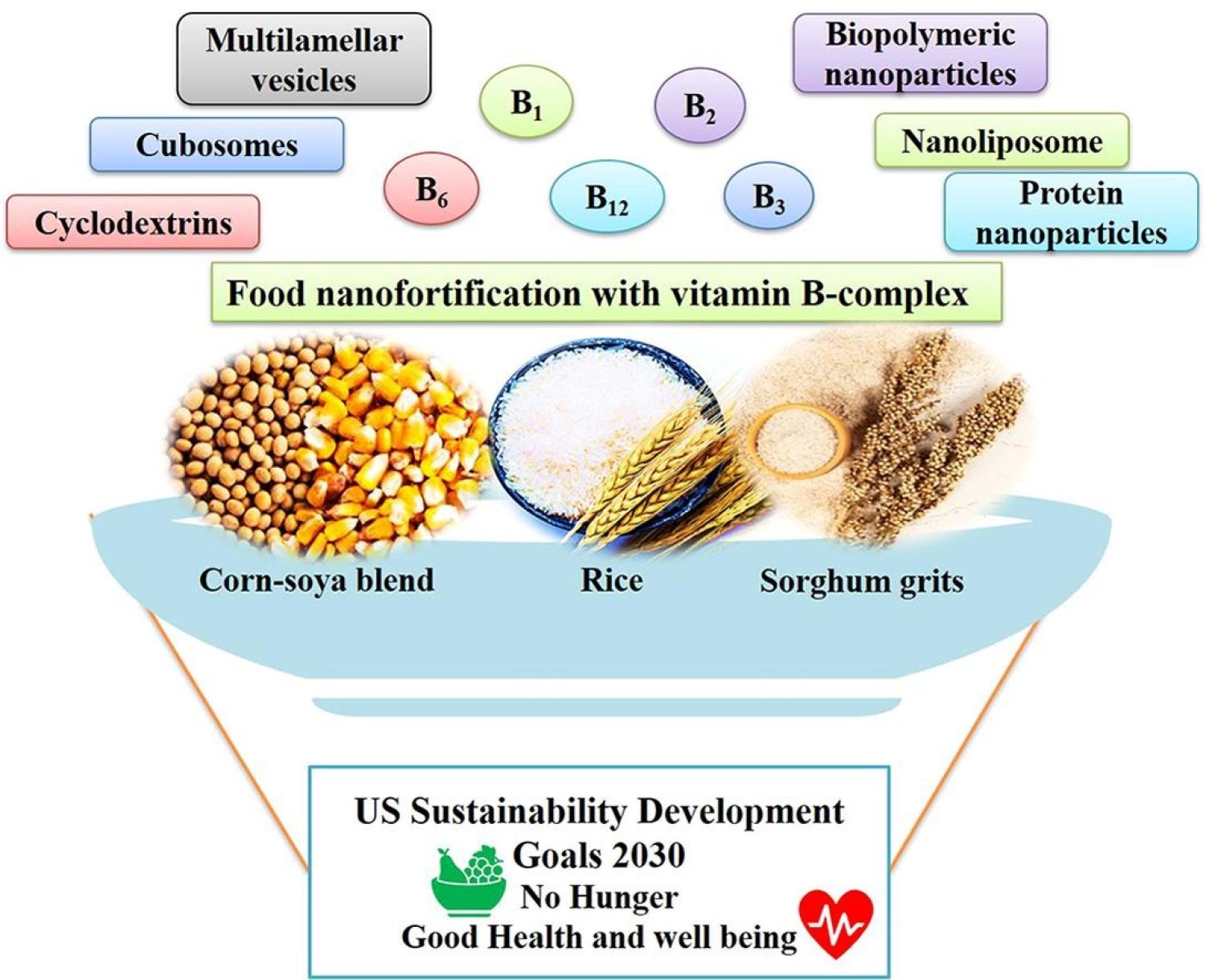
Micronutrient malnutrition (or hidden hunger) caused by vitamin B-complex deficiency is a significant concern in the growing population. Vitamin B-complex plays an essential role in many body functions. With the introduction of nanotechnology in the food industry, new and innovative techniques have started to develop, which holds a promising future to end malnutrition and help achieve United Nations Sustainable Developmental Goal-2 (UN SDG-2), named as zero hunger. This review highlights the need for nanofortification of vitamin B-complex in food matrix to address challenges faced by conventional fortification methods (bioavailability, controlled release, physicochemical stability, and shelf life). Further, different nanomaterials like organic, inorganic, carbon, and composites along with their applications, are discussed in detail. Among various nanomaterials, organic nanomaterials (lipid, polysaccharides, proteins, and biopolymers) were found best for fortifying vitamin B-complex in foods. Additionally, different regulatory aspects across the globe and prospects of this upcoming field are also highlighted in this review.