Background: Older adults are at increased risk of malnutrition compared to their younger counterparts. Malnutrition screening should be conducted using a valid malnutrition screening tool. An aim of the Healthy Diet for a Healthy Life (HDHL) Joint Programming Initiative (JPI) ‘Malnutrition in the Elderly Knowledge Hub’ (MaNuEL) was to review the reported validity of existing malnutrition screening tools used in older adults.
Your search request returned 8466 results.
Elsevier, Progress in Energy and Combustion Science, Volume 70, January 2019
In the last decades, energy scarcity has become an important issue globally. Renewable energy sources have gained importance due to limited fossil fuel reserves and increased concerns on climate change. In this regard, municipal wastewater is a remarkable energy source since huge amounts of wastewater are generated and treated all over the world every day. Conventional activated sludge (CAS) process, which has been in use for more than a century, is the most widely applied treatment method for municipal wastewater.
Elsevier, Progress in Energy and Combustion Science, Volume 70, January 2019
In the last decades, energy scarcity has become an important issue globally. Renewable energy sources have gained importance due to limited fossil fuel reserves and increased concerns on climate change. In this regard, municipal wastewater is a remarkable energy source since huge amounts of wastewater are generated and treated all over the world every day. Conventional activated sludge (CAS) process, which has been in use for more than a century, is the most widely applied treatment method for municipal wastewater.
Elsevier, Thermal Science and Engineering Progress, Volume 7, September 2018
Rural communities in developing countries often require small cold storage for vital medicines while having no access to electricity. The utilization of waste heat – produced in biomass burning cookstoves during daily cooking routines – to power a thermoacoustic engine driving a thermoacoustic refrigerator is investigated. The simplicity and affordability is met by the use of atmospheric air as working medium, cheap PVC ducting for acoustic waveguides and locally available blacksmithing technologies for simple heat exchangers.
Elsevier, Research Policy, Volume 45, 1 April 2016
Sustainability transitions have been studied as complex multi-level processes, but we still know relatively little about how they can be effectively governed, especially in transnational domains. Governance of transitions is often constrained by the equivocality of sustainability goals, the idiosyncrasy of niche experiments and the multiplicity of governance actors and interests. We study the role of transnational standard-setters in mitigating these challenges and governing sustainability transitions within a transnational sector.
Elsevier, Marine Pollution Bulletin, Volume 118, 15 May 2017
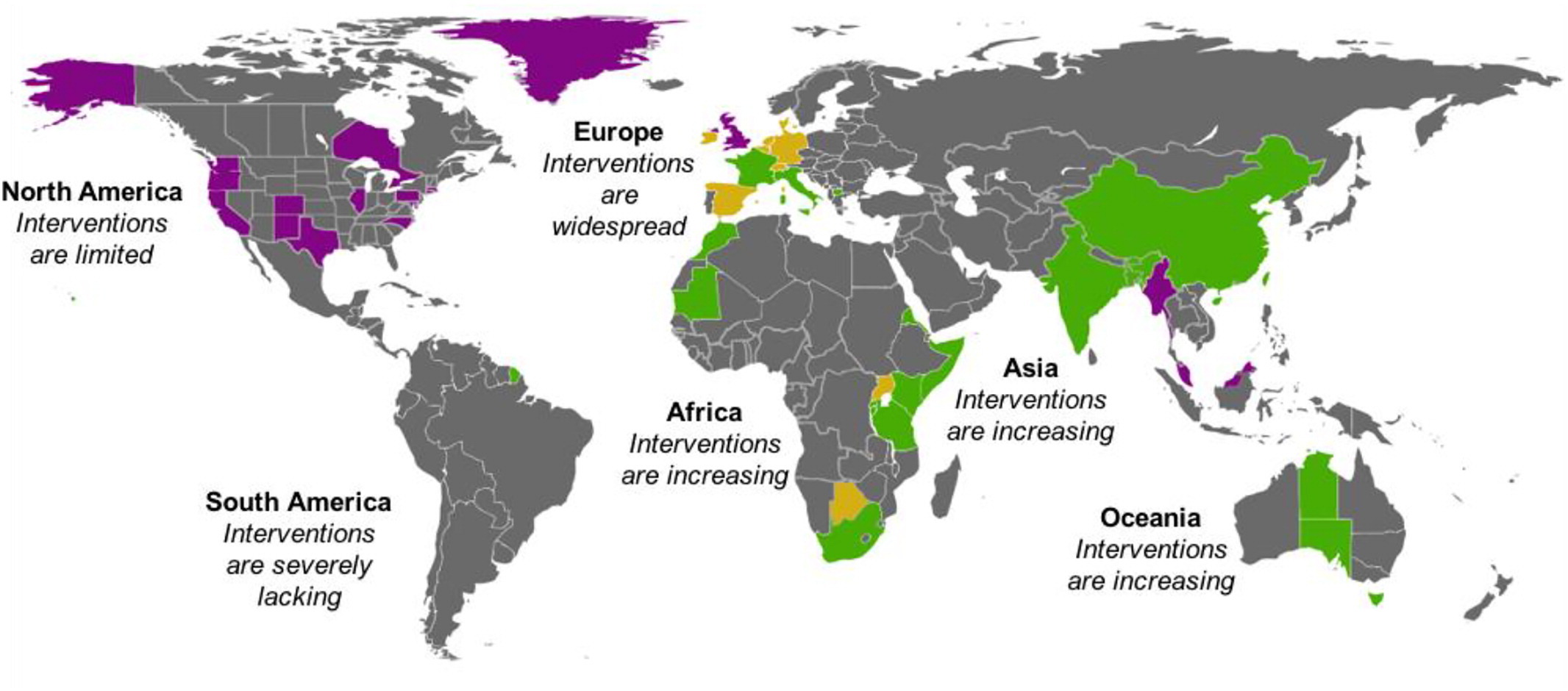
Marine plastic pollution has been a growing concern for decades. Single-use plastics (plastic bags and microbeads) are a significant source of this pollution. Although research outlining environmental, social, and economic impacts of marine plastic pollution is growing, few studies have examined policy and legislative tools to reduce plastic pollution, particularly single-use plastics (plastic bags and microbeads). This paper reviews current international market-based strategies and policies to reduce plastic bags and microbeads.
Brightmine, February 8, 2019
Advancing SDG 3, good health and wellbeing and goal 8, decent work economic growth, this podcast examines wellbeing in the workplace as an important focus for improved business performance.
Brightmine, January 25, 2019
This podcast highlights how the #MeToo campaign is tackling sexual harassment in the workplace and helping to empower women. It is advancing SDG 5, gender equality.