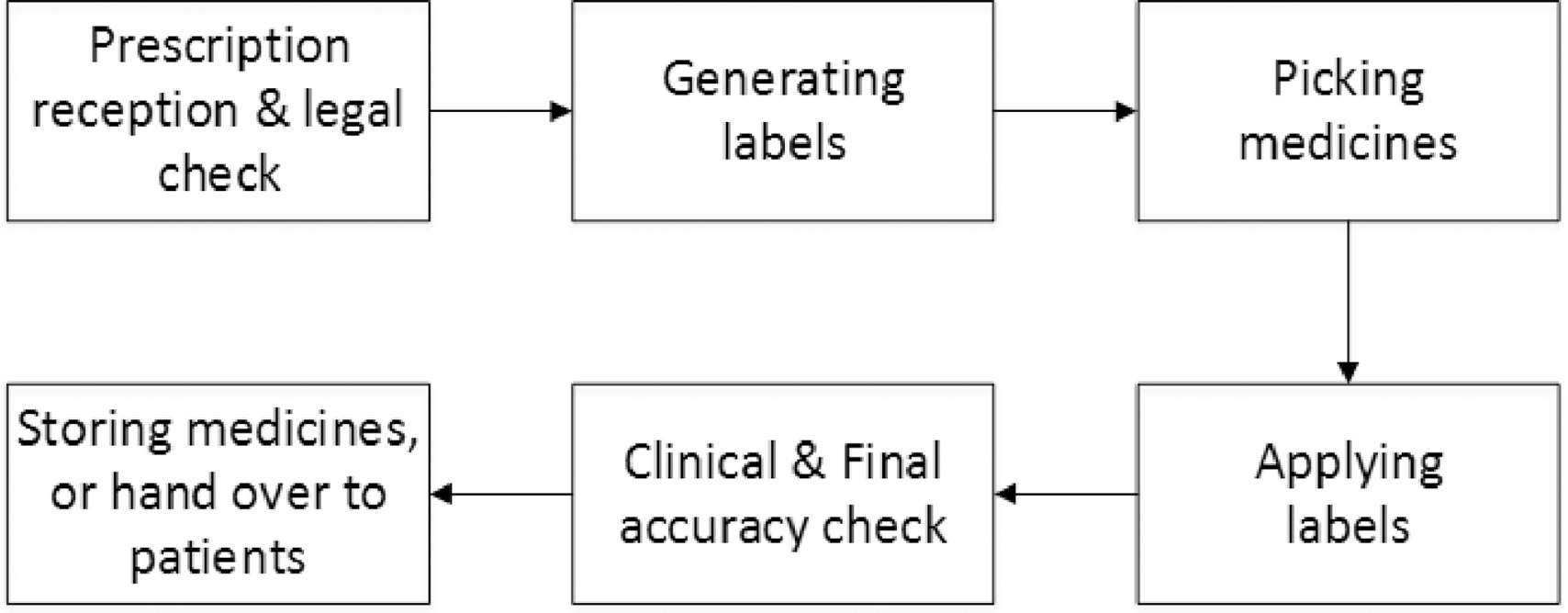
It has been estimated that European customers visit community pharmacies to access essential primary healthcare around 46 million times every day. Studies of dispensing error rates in community pharmacies have reported error rates of between 0.08% and 3.3% per item dispensed. While severe cases of dispensing inaccuracies often garner a high level of media coverage, less significant errors are also causing inefficiencies in primary healthcare delivery.
Your search request returned 8466 results.
Elsevier, Sustainable Cities and Society, Volume 41, August 2018
An increasing number of cities and local governments adhere to transnational initiatives on climate change mitigation, but quantification of their contribution to the Paris Agreement commitments is lacking. To address this, the climate mitigation trajectory to 2050 of Covenant of Mayors (CoM) signatories has been studied. As of October 2017 there are more than 7600 signatories covering 238 million inhabitants, mainly from European cities. Of these 533 have already reported on the implementation of their climate action plans and 207 signatories have declared a long term target beyond 2020.
Elsevier, Sustainable Cities and Society, Volume 46, April 2019
Key Performance Indicators are important instruments, both in defining high-level goals (international or national) and when planning smart energy communities. However, there is often a gap between the high-level goals, and possible and planned measures on the community level. Evaluation of development scenarios against a defined set of indicators and goals can help urban planners and other stakeholders understand the consequences of their strategies. This article presents a scenario calculator designed to link detailed measures with overall climate goals.
Elsevier, Journal of Hepatology, Volume 70, May 2019
Background & Aims: To date, evidence on the association between physical activity and risk of hepatobiliary cancers has been inconclusive. We examined this association in the European Prospective Investigation into Cancer and Nutrition cohort (EPIC). Methods: We identified 275 hepatocellular carcinoma (HCC) cases, 93 intrahepatic bile duct cancers (IHBCs), and 164 non-gallbladder extrahepatic bile duct cancers (NGBCs) among 467,336 EPIC participants (median follow-up 14.9 years).
Elsevier, Renewable and Sustainable Energy Reviews, Volume 56, 1 April 2016
Studies of waste-to-energy systems have applied a varying range of indicators to assess their sustainability. The sets of indicators prescribed were often based on the respective context and are therefore of varying emphasis. Through a literature review, this research aims to develop a framework of sustainability indicators that can serve as a reference for future research in waste-to-energy systems. Sustainability indicators and their underlying factors from the three pillars of sustainability were consolidated and structured under a proposed framework.

Elsevier, Internet of Things (Netherlands), Volume 5, March 2019
#SmartME has been one of the first initiatives in Italy to realize a Smart City through the use of open technologies. Thanks to the use of low cost sensor-powered devices scattered over the city area, different “smart” services have been deployed having the Stack4Things framework as the common underlying middleware. In this paper, we present the results obtained after 2 years of project highlighting the vertical solutions that have been proposed in different areas ranging from environmental monitoring to parking management.
Elsevier, Telematics and Informatics, Volume 34, 1 February 2017
This article analyzes the way in which the convergence of green attributes in multifunctional technological products influences consumers' purchase intentions. Due to the recent growth in convergent products, technology users and consumers must choose among numerous different applications that can be perceived as either utilitarian or hedonic. This article suggests that new products launched on the market include attributes that are connected to sustainability and provide added value to consumers in their process of decision making.
Elsevier, Biomedical Signal Processing and Control, Volume 41, March 2018
Fear of crime, which may be present without experiencing an actual crime, can restrict one's daily physical and mental activities and reduce quality of life. In previous research, fear of crime was measured by regional surveys. Though useful for confirming group characteristics, regional surveys cannot measure in real-time, assess individual characteristics, or provide an objective measure of anxiety.
Elsevier, Trends in Ecology and Evolution, Volume 34, February 2019
There is worldwide concern about the environmental costs of conventional intensification of agriculture. Growing evidence suggests that ecological intensification of mainstream farming can safeguard food production, with accompanying environmental benefits; however, the approach is rarely adopted by farmers. Our review of the evidence for replacing external inputs with ecosystem services shows that scientists tend to focus on processes (e.g., pollination) rather than outcomes (e.g., profits), and express benefits at spatio-temporal scales that are not always relevant to farmers.
Elsevier, Trends in Ecology and Evolution, Volume 34, February 2019
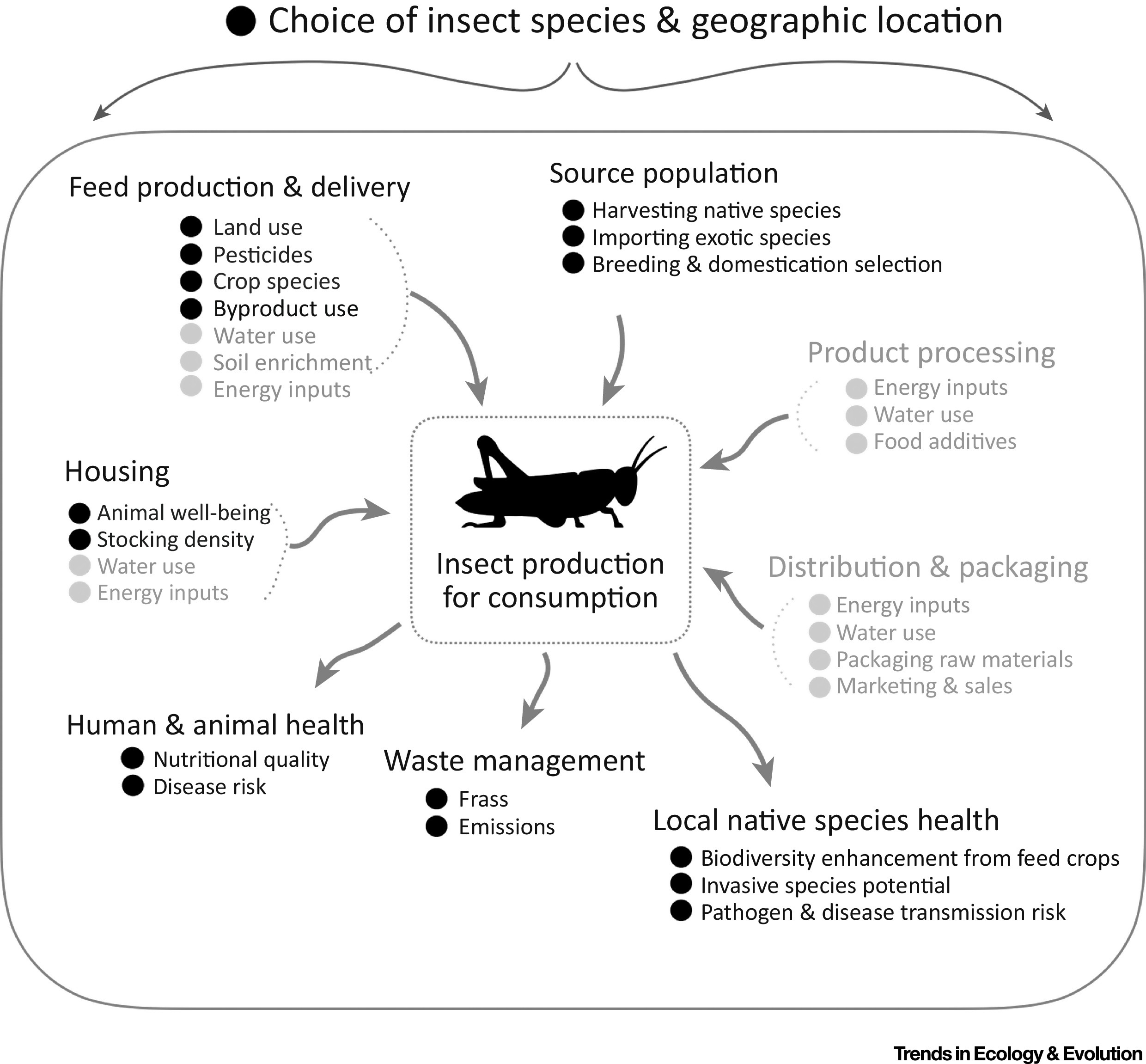
The emerging insects-as-food industry is increasingly promoted as a sustainable alternative to other animal protein production systems. However, the exact nature of its environmental benefits are uncertain because of the overwhelming lack of knowledge concerning almost every aspect of production: from suitable species, their housing and feed requirements, and potential for accidental release.