John A. Gladysz is a Distinguished Professor of Chemistry at Texas A&M University, where he holds the Dow Chair in Chemical Invention. He began his academic career at the University of California, Los Angeles and has also held appointments at the University of Utah and Universität Erlangen-Nürnberg. His group's current research centers around organometallic chemistry and branches into catalysis, organic synthesis, enantioselective reactions, stereochemistry, mechanism, and materials and green chemistry. John A.
Your search request returned 8466 results.
Elsevier, Chem, Volume 4, 13 September 2018
In 2007, John Warner and Jim Babcock founded the Warner Babcock Institute for Green Chemistry and, with Amy Cannon, founded the green chemistry education nonprofit organization Beyond Benign. John is the recipient of the 2004 Presidential Award for Excellence in Science Mentoring and the 2014 Perkin Medal. In addition, John is one of the founders of the field of green chemistry and is co-author of the defining textbook Green Chemistry: Theory and Practice.
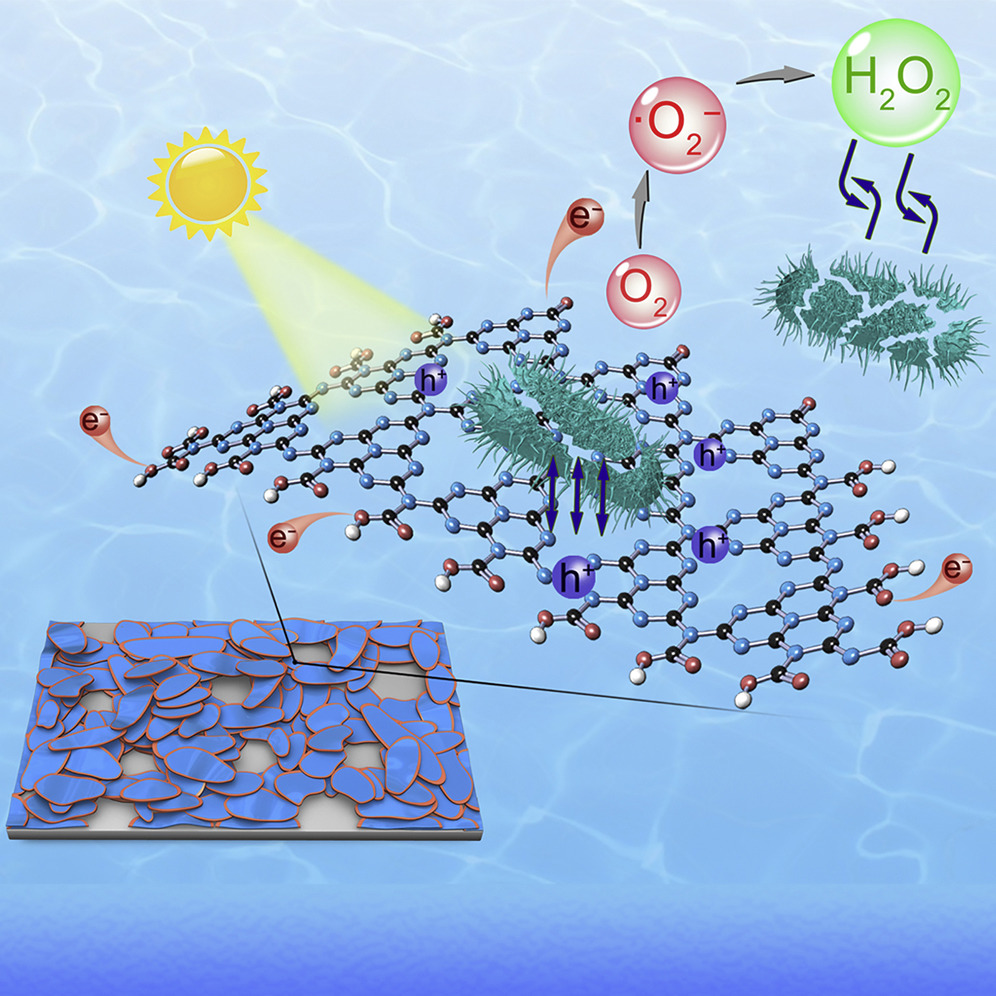
Elsevier, Chem, Volume 5, 14 March 2019
Solar water disinfection catalyzed by metal-free photocatalyst has emerged as a promising approach for clean water production. By using the edge-functionalized graphitic carbon nitride (g-C3N4) as photocatalytic disinfectants, we find that the pathogen-rich water can be rapidly purified in 30 min with a disinfection efficiency of over 99.9999% under visible-light irradiation, which meets the requirement for drinking water.
Elsevier, Energy Policy, Volume 38, Septemer 2010
This paper describes the methodology and data used to determine greenhouse gas (GHG) emissions attributable to ten cities or city-regions: Los Angeles County, Denver City and County, Greater Toronto, New York City, Greater London, Geneva Canton, Greater Prague, Barcelona, Cape Town and Bangkok. Equations for determining emissions are developed for contributions from: electricity; heating and industrial fuels; ground transportation fuels; air and marine fuels; industrial processes; and waste.
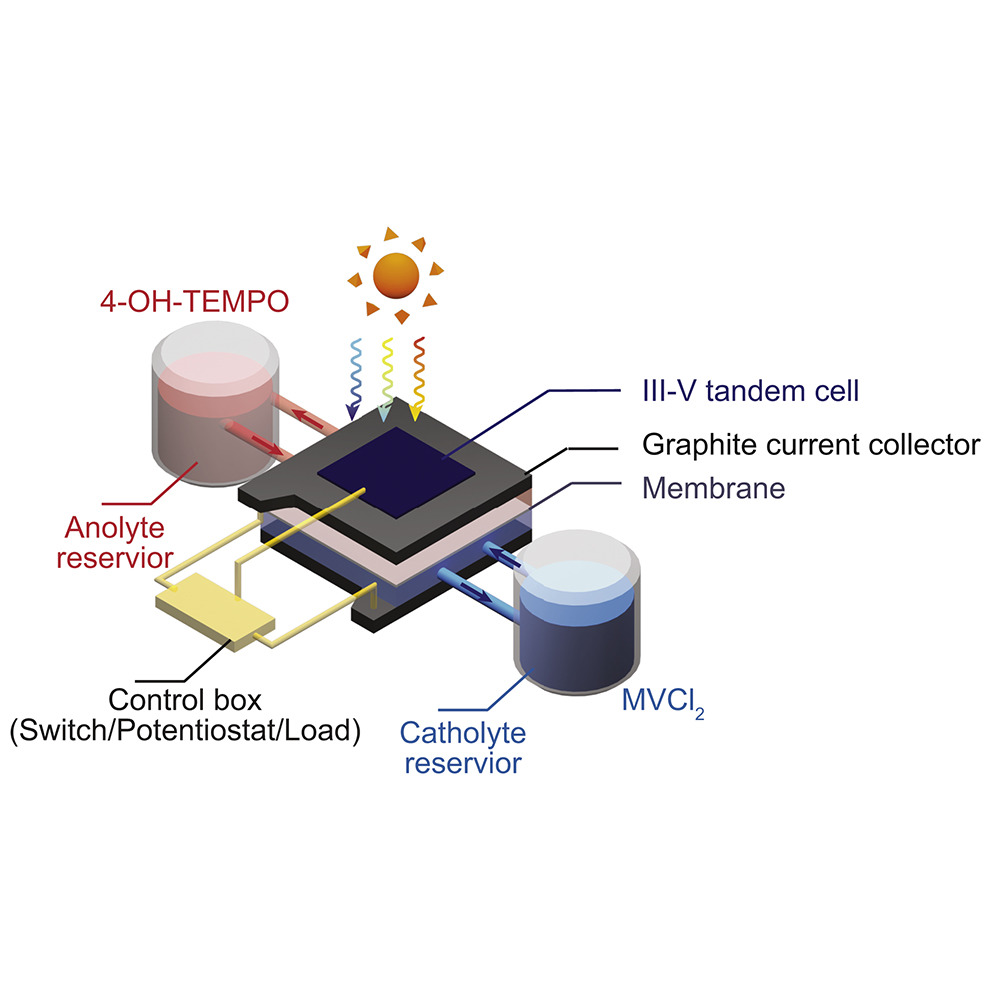
Elsevier, Chem, Volume 4, 8 November 2018
Challenges posed by the intermittency of solar energy source necessitate the integration of solar energy conversion with scalable energy storage systems. The monolithic integration of photoelectrochemical solar energy conversion and electrochemical energy storage offers an efficient and compact approach toward practical solar energy utilization. Here, we present the design principles for and the demonstration of a highly efficient integrated solar flow battery (SFB) device with a record solar-to-output electricity efficiency of 14.1%.

Elsevier, Sustainable Cities and Society, Volume 44, January 2019
There has recently been a conscious push for cities in Europe to be smarter and more sustainable, leading to the need to benchmark these cities’ efforts using robust assessment frameworks. This paper ranks 28 European capital cities based on how smart and sustainable they are. Using hierarchical clustering and principal component analysis (PCA), we synthesized 32 indicators into 4 components and computed rank scores. The ranking of European capital cities was based on this rank score.

Elsevier, Building and Environment, Volume 150, March 2019
Dementia can disturb the circadian rhythm more than in normal ageing people. And their biological clock is often not enough stimulated by light. Sleep disturbances form a high burden for informal caregivers and is the main reason for institutionalization. The effect of biodynamic lighting with varying intensity and colour resembling a daylight curve has hardly been objectively researched. In this study, we evaluate the exposure to biodynamic lighting on circadian functioning of 13 patients with dementia admitted to a psychiatric hospital.
Elsevier, Energy and Buildings, Volume 186, 1 March 2019
With growing health risks from rising temperatures in the Global South, the lack of essential indoor cooling is increasingly seen as a dimension of energy poverty and human well-being. Air conditioning (AC) is expected to increase significantly with rising incomes, but it is likely that many who need AC will not have it. We estimate the current location and extent of populations potentially exposed to heat stress in the Global South.
Elsevier, Energy and Buildings, Volume 180, 1 December 2018
Ground source heat pumps (GSHPs) have been suggested to replace gas-based heating in urban environments to reduce greenhouse gas emissions and help to comply with the Paris Agreement. The emission reduction from GSHP depends on the carbon intensity of the electricity generation mix. Moreover, grid capacity may be limiting the introduction of these high-electricity demand GSHP systems. Photovoltaics (PV) systems help to provide additional emission reductions for residential GSHP systems.
Elsevier, Journal of Building Engineering, Volume 18, July 2018
The European Union implemented Ecodesign and Labelling Directives to support the market diffusion of energy efficient products. Accurate signals for consumers on energy efficiency (EE) are essential, as disinformation might lead to sub-optimal market allocations. Considering complex devices such as heat pumps (HPs), a conflict between simplicity of calculation on the one hand and accuracy on the other hand arises.