Green economy

The Green Economy, as it is understood in the 21st century, is an economic model designed to function in harmony with the environment, as opposed to against it. It actively seeks to reduce environmental risks and ecological scarcities while aiming for sustainable development. It also champions the notion of not only economic, but also social well-being. Central to this model are two guiding principles – reducing emissions and minimizing waste, while increasing efficiency in the use of resources. Thus, the Green Economy and Sustainable Development Goals (SDGs) set by the United Nations (UN) are inextricably linked, both attempting to create an integrated approach to solving environmental, societal, and economic challenges.

The 17 SDGs are aimed at eradicating poverty, fighting inequality, and addressing climate change, among others. Many of these goals are directly linked to the principles of the Green Economy. For example, SDG 7 advocates for affordable and clean energy, which echoes the Green Economy's push for the efficient use of resources and lower emissions. Similarly, SDG 12, which is about responsible consumption and production, corresponds to the Green Economy's focus on minimizing waste and resource efficiency.

The Green Economy acts as a driving force to achieve these SDGs by fostering economic growth and job creation, through sustainable and environmentally-friendly practices. By directing investments into sectors such as renewable energy, sustainable agriculture, and green construction, it helps not only in achieving SDGs related to climate action and responsible consumption but also those associated with poverty eradication, zero hunger, and decent work, to name a few. Through this holistic approach, the Green Economy ensures the synergistic attainment of SDGs, promoting an inclusive, resilient, and sustainable future for all.

The relationship between the Green Economy and the SDGs is a symbiotic one, where each feeds into and strengthens the other. The Green Economy offers a practical pathway to reach the SDGs, while the SDGs provide a comprehensive framework that gives direction to the Green Economy. It’s a sustainable match made in heaven, where the implementation of one enhances the achievement of the other, making them two sides of the same coin in the quest for global sustainability and a better future for all.
This content aligns with SDG Goal 3 Good Health and Well being and Goal 12 Responsible Consumption and Production as it emphasizes distinct green strategies, solar production and more.
This article supports SDG 13. CO2 utilization conversion is increasingly important, but the conversion to valuable chemicals is often energy-intensive. This article is related to SDG13 and describes a new way of making oxalic acid from supercritical CO2 at lower temperatures.
This article supports SDG 9, 14 and 15 by looking at how to create sustainable infrastructure with the help of examples from nature.
This review compared the effects between bioplastics compared to conventional plastics. It found that bioplastics caused less harm and will help policymakers to determine whether bioplastics is beneficial to the environment.
This book chapter advances SDGs 9 and 12 by reviewing and discussing the current status, ecological and socio-economic importance of seaweed farming.
Elsevier,

Methods in Sustainability Science, Assessment, Prioritization, Improvement, Design and Optimization, 2021, Pages 13-26

This book chapter advances SDGs 11 and 13 by providing useful information for multisector institutions, especially for governments on how to plan future programs for socializing and promoting SDGs as one tool for creating sustainable businesses, as well as for protecting the environment, and improving society’s welfare.
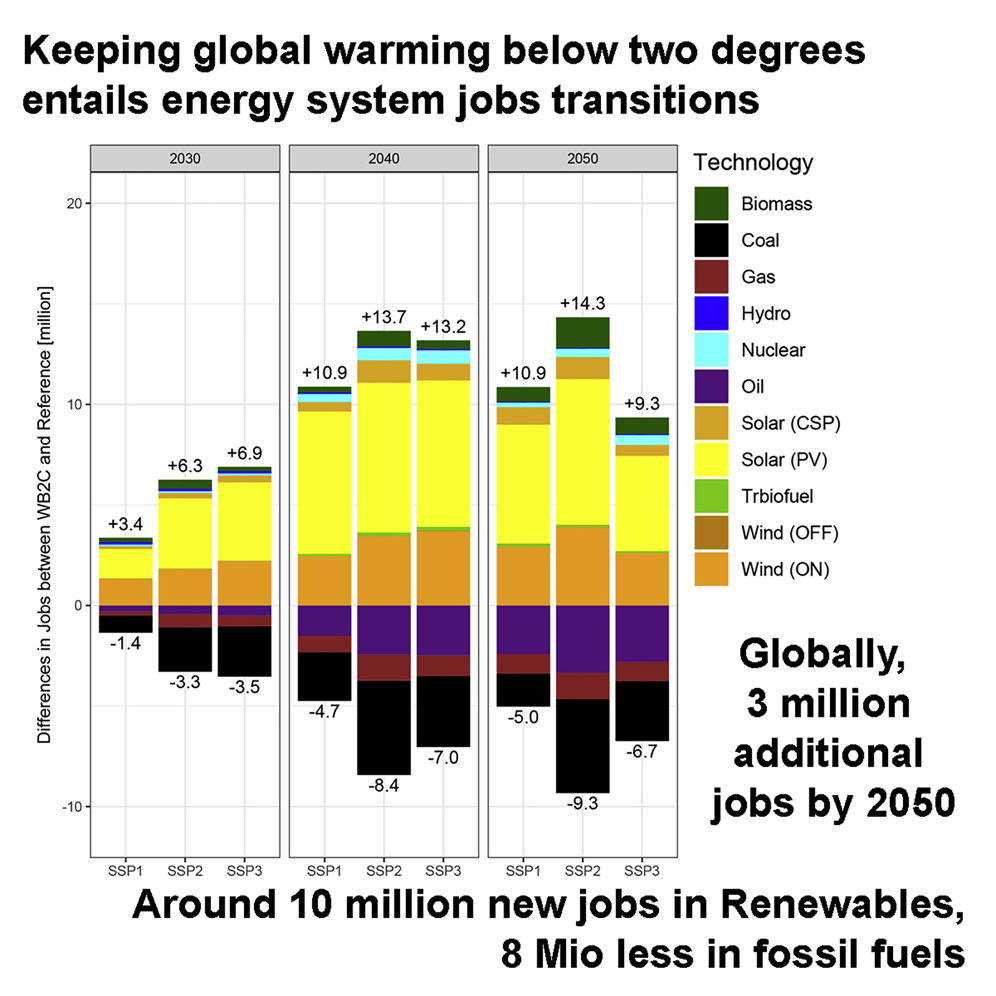
To limit global warming to well-below 2°C (WB2C), fossil fuels must be replaced by low-carbon energy sources. Support for this transition is often dampened by the impact on fossil fuel jobs. Previous work shows that pro-climate polices could increase employment by 20 million net energy jobs, but these studies rely on Organisation for Economic Co-operation and Development (OECD) jobs data, assumptions about jobs in non-OECD countries, and a single baseline assumption.
Elsevier and the International Solar Energy Society (ISES) are pleased to announce the third biennial Renewable Transformation Challenge. If you have an innovative proposal which contributes to the goal of transitioning to 100% renewable energy, submit your application for a chance to win €20,000.
Elsevier,

Sustainable Resource Management, Modern Approaches and Contexts, 2021, Pages 289-315

This book chapter advances SDGs 9, 13, and 15 by using several economic indicators of sustainable resource management to help answer questions such as what extent is it possible to know whether the available resources are being managed in a sustainable way? Could it be said that current generations are using the resources to meet their needs without compromising the ability of future generations to meet their own?
Elsevier,

Preparing a Workforce for the New Blue Economy, People, Products and Policies, 2021, Pages 3-16

This book chapter advances SDGs 9, 13, and 15 by explaining how the blue economy of the future will be heavily dependent on national investments in ocean sciences, ocean-related technologies, and intelligent national policy creation about the national interest in the world ocean.

Pages