Technology

Technology plays a central role in achieving the Sustainable Development Goals (SDGs), particularly SDG 9 (Industry, Innovation, and Infrastructure), SDG 4 (Quality Education), SDG 3 (Good Health and Well-being), and SDG 13 (Climate Action). The transformative power of technology can accelerate progress towards all the SDGs by driving economic growth, reducing inequalities, enhancing access to basic services, and promoting sustainability.

Under SDG 9, technology, particularly in terms of Information and Communication Technology (ICT), is a key enabler of industrial innovation and infrastructure development. ICT has the potential to drive economic growth by enhancing productivity, creating jobs, and fostering entrepreneurship. Moreover, it can contribute to making industries more sustainable by facilitating the transition towards smart manufacturing and circular economy models.

Regarding SDG 4, technology can greatly enhance access to quality education. Digital technologies, including e-learning platforms, can break down barriers to education, such as geographical distance, socio-economic status, and physical disabilities. They can also enrich the learning process by enabling personalized, student-centered learning experiences.

In the context of SDG 3, technology has a profound impact on health outcomes. Medical technologies, from simple devices like thermometers to complex systems like MRI machines, have revolutionized healthcare delivery. Furthermore, digital health technologies, such as telemedicine and mobile health apps, can enhance access to health services, improve patient outcomes, and reduce healthcare costs.

For SDG 13, technology offers powerful tools for mitigating and adapting to climate change. Renewable energy technologies can help to reduce greenhouse gas emissions, while climate information services can enhance resilience to climate impacts. Furthermore, digital technologies can facilitate the monitoring and reporting of climate actions, contributing to greater transparency and accountability.

However, the benefits of technology are not automatic, and there are significant challenges to overcome, including the digital divide, cybersecurity threats, and ethical issues related to privacy and data ownership. Thus, policy interventions and multi-stakeholder partnerships are needed to ensure that technology serves as a catalyst for sustainable development and does not exacerbate inequalities.

Elsevier, Building and Environment, Volume 97, February 15, 2016
Heat map of simulated annual heating demand for South Boston using UMI (a) and daily gas and electricity demand profiles for the highlighted building in South Boston (b).
Over the past decades, detailed individual building energy models (BEM) on the one side and regional and country-level building stock models on the other side have become established modes of analysis for building designers and energy policy makers, respectively. More recently, these two toolsets have begun to merge into hybrid methods that are meant to analyze the energy performance of neighborhoods, i.e. several dozens to thousands of buildings. This paper reviews emerging simulation methods and implementation workflows for such bottom-up urban building energy models (UBEM).
Multidisciplinary, innovative and high values development of high performance, cost-effective and environmentally acceptable separation systems is highly desired to tackle the sustainability challenges that facing current desalination technology. Owing to their versatility and immense potentials to evolve scientific and technical innovations, nanotechnology is probably one of the most prominent strategies that has gained growing scientific and public recognition to provide solutions that can extend the limits of sustainability in membrane desalination technology.
Recent research on CO2 capture is focusing on the optimization of CO2 absorption using amines (mainly monoethanolamine-MEA) in order to minimize the energy consumption of this very energy-intensive process and improve the absorption efficiency. Process optimization is always required and this research is worth and necessary. However, the main concern arises when thinking of the overall process: solvent production, solvent use and regeneration, and environmental effects related to its use/emissions.
This paper presents a review of exergy analysis of solar thermal systems. It includes both various types of solar collectors and various applications of solar thermal systems. As solar collectors are an important technology when sustainability is considered, exergy analysis, which gives a more representative performance evaluation, is a valuable method to evaluate and compare possible configurations of these systems. It should be noted that this review is based on literature published in the last two years.
Elsevier, Separation and Purification Technology, Volume 156, 17 December 2015
This short review summarizes our understanding and perspectives on FO and PRO processes and meaningful R&D in order to develop effective and sustainable FO and PRO technologies for water reuse and osmotic power generation.
Elsevier, International Journal of Refrigeration, Volume 57, 1 October 2015
In recent years, several emerging technologies in the domain of solid-state physics have been investigated as serious alternatives for future refrigeration, heat pumping, air conditioning, or even power generation applications. These technologies relate to what is called caloric energy conversion, i.e., barocalorics, electrocalorics, magnetocalorics, and elastocalorics. Of these technologies, the greatest progress has been observed in the domain of magnetic refrigeration.
Elsevier,

Energy and Buildings, Volume 103, 15 September 2015

It is well known that there is a need to develop technologies to achieve thermal comfort in buildings lowering the cooling and heating demand. Research has shown that thermal energy storage (TES) is a way to do so, but also other purposes can be pursued when using TES in buildings, such as peak shaving or increase of energy efficiency in HVAC systems. This paper reviews TES in buildings using sensible, latent heat and thermochemical energy storage.
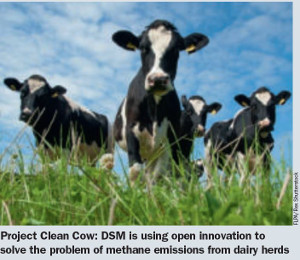
Project Clean Cow
This special report focuses on getting the most out of your innovation effort. A close focus on several key areas can help. Product innovation can open up new markets for producers and enable them to maintain competitiveness in increasingly competitive global markets. This fits well with the SDG 9 of Industry Innovation, also Technology, Production & Consumption.
LexisNexis Legal & Professional,

the International Bar Association with support from LexisNexis Legal & Professional, June 2015

EyeWitness logo
LexisNexis Legal & Professional partnered with the International Bar Association to launch eyeWitness to Atrocities, an Android mobile phone app that allows users to report human rights atrocities. The free app enables citizens to contribute to bringing perpetrators to account for crimes against humanity and therefore contributes directly towards the advancement of SDG target 16.3 to promote the rule of law at the national and international levels and ensure equal access to justice for all.
In 2014, University College London and Elsevier established the UCL Big Data Institute, a collaboration to empower researchers to explore innovative ways to apply new technologies and analytics to scholarly content and data. The institute is co-staffed with UCL and Elsevier researchers and is based at Elsevier’s London Mendeleys headquarters. Projects include investigation of the role and impact of researchers in academic networks, citation models, adaptive user modeling, knowledge graphs and predictive modeling.

Pages