
Protecting the ocean has become a major goal of international policy as human activities increasingly endanger the integrity of the ocean ecosystem, often summarized as “ocean health.” By and large, efforts to protect the ocean have failed because, among other things, (1) the underlying socio-ecological pathways have not been properly considered, and (2) the concept of ocean health has been ill defined. Collectively, this prevents an adequate societal response as to how ocean ecosystems and their vital functions for human societies can be protected and restored.
Your search request returned 8466 results.
Elsevier, One Earth, Volume 2, 22 May 2020
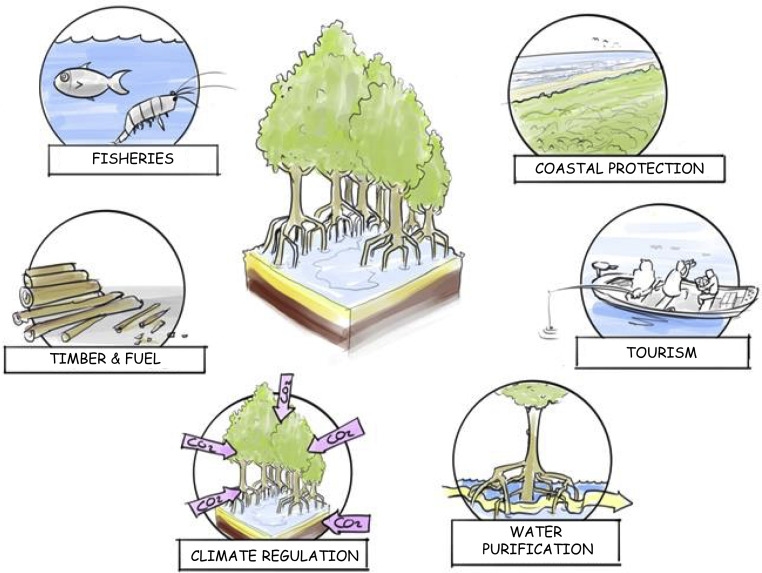
Mangrove forests are found on sheltered coastlines in tropical, subtropical, and some warm temperate regions. These forests support unique biodiversity and provide a range of benefits to coastal communities, but as a result of large-scale conversion for aquaculture, agriculture, and urbanization, mangroves are considered increasingly threatened ecosystems.
Elsevier, Agriculture, Ecosystems and Environment, Volume 292, 15 April 2020
Nitrous oxide (N2O) is the most important greenhouse gas produced by agricultural soils and is a byproduct of microbial nitrification and denitrification processes. The N2O emission rates depend on soil, climatic and management factors. The objectives of this study were i) to evaluate N2O emissions during a barley crop period and its subsequent barley-maize interperiod, under two management systems, and ii) to relate the N2O flux rates with soil mineral N content, waterfilled pore space (WFPS) and soil temperature.
Elsevier, Remote Sensing of Environment, Volume 239, 15 March 2020
The natural world has multiple, sometimes conflicting, sometimes synergistic, values to society when viewed through the lens of the Sustainable Development Goals (SDGs), Spatial mapping of nature's contributions to the SDGs has the potential to support the implementation of SDG strategies through sustainable land management and conservation of ecosystem services. Such mapping requires a range of spatial data.
Elsevier, Remote Sensing of Environment, Volume 239, 15 March 2020
In the face of the growing challenges brought about by human activities, effective planning and decision-making in biodiversity and ecosystem conservation, restoration, and sustainable development are urgently needed. Ecological models can play a key role in supporting this need and helping to safeguard the natural assets that underpin human wellbeing and support life on land and below water (United Nations Sustainable Development Goals; SDG 15 & 14).
Elsevier, Remote Sensing of Environment, Volume 237, February 2020
Sustainable Development Goal (SDG) indicator 15.1.1 proposes to quantify “Forest area as a proportion of total land area” in order to achieve SDG target 15.1. While area under forest cover can provide useful information regarding discrete changes in forest cover, it does not provide any insight on subtle changes within the broad vegetation class, e.g. forest degradation. Continental or national-level studies, mostly utilizing coarse-scale satellite data, are likely to fail in capturing these changes due to the fine spatial and long temporal characteristics of forest degradation.
Elsevier, Global Environmental Change, Volume 60, January 2020
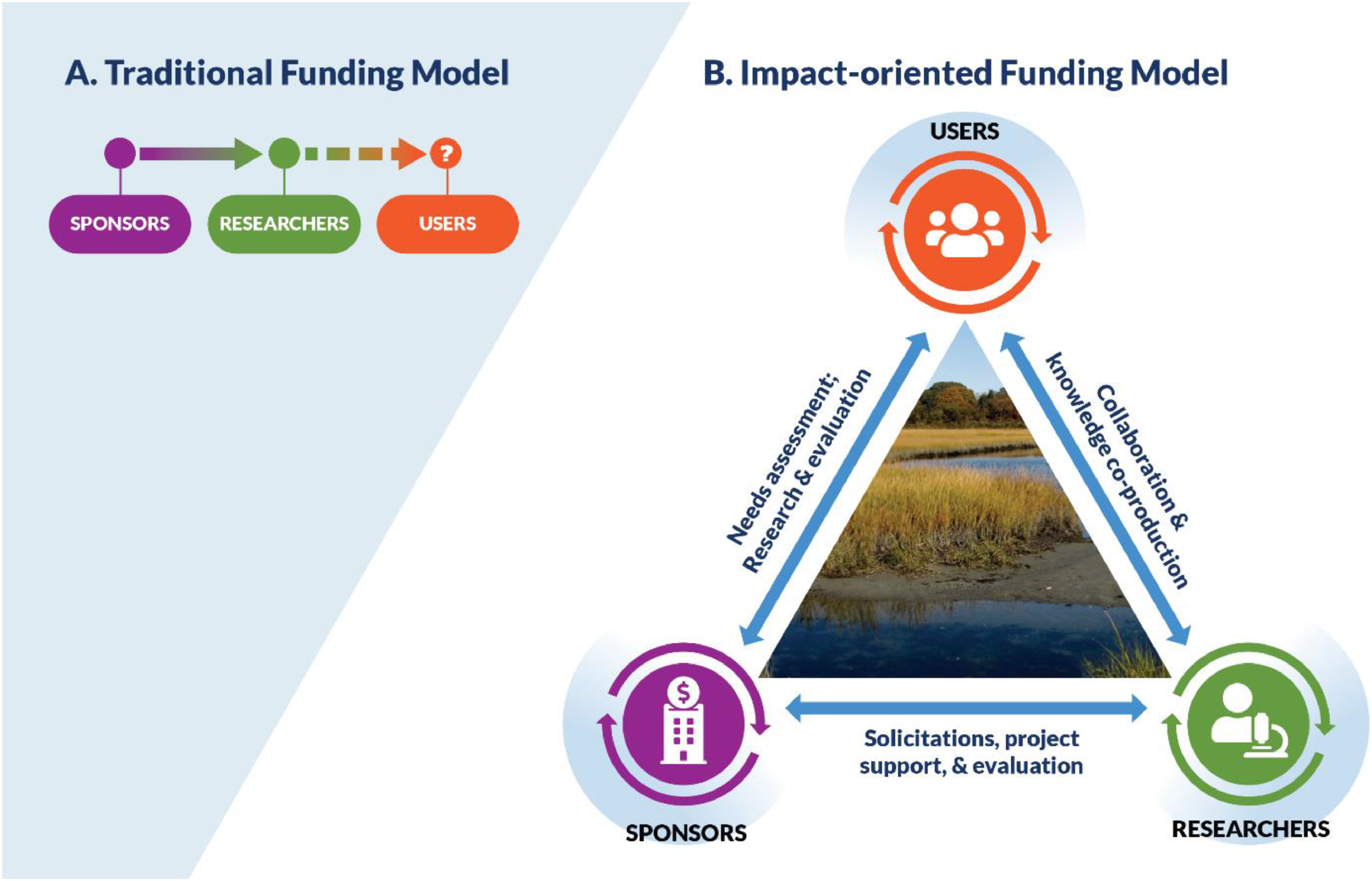
There is widespread belief that meaningful interaction between scientists and practitioners, or co-production, increases use of scientific knowledge about sustainability and environmental change. Although funders are increasingly encouraging co-production, there have been few empirical studies assessing the outcomes of these efforts in shaping knowledge use. In this study, we systematically analyze research project reports (n = 120) and interview project participants (n = 40) funded by the U.S. National Estuarine Research Reserve System from 1998 to 2014 to support coastal management.
Elsevier, One Earth, Volume 1, 22 November 2019
Over US$60 trillion is predicted to be spent on new infrastructure globally by 2040. Is it possible to meet UN Sustainable Development Goal (SDG) 9 (develop infrastructure networks) without sacrificing goals 14 and 15 (ending biodiversity loss)? We explore the potential role of “no net loss” (NNL) policies in reconciling these SDGs.
Elsevier, Agriculture, Ecosystems and Environment, Volume 254, 15 February 2018
Globally, agriculture has intensified during the past 50 years due to increased mechanization, changes in the timing of farming operations, grassland conversion to cropland, and increased agrochemical inputs. Birds associated with farmlands and grasslands in North America have experienced severe declines over the last several decades, prompting the need for a comprehensive review of the drivers, mechanisms and magnitude of effects on bird populations.
Earth Day is widely recognised as the largest secular observance in the world, marked by more than a billion people every year as a day of action to change human behaviour and provoke policy changes. This day recognises and celebrates the Earth and its ecosystems as our home and highlights the need to protect earth to enhance people’s livelihoods, counteract climate change, and stop the collapse of biodiversity. To raise awareness of Earth Day 2021, Elsevier presents a curated list of free access journal articles and book chapters in support of this year's theme - Restore our Earth.