Global

This study identified over 2,000 proteins in cerebrospinal fluid that change at different stages before Alzheimer's symptoms appear, revealing key biological processes involved in the disease. Using machine learning, the researchers developed highly accurate models to predict Alzheimer's biomarker status, clinical diagnosis, and future disease progression.

Elsevier, Advances in Kidney Disease and Health, Volume 32, May 2025
Pregnancy in women with kidney disease is high risk and associated with adverse maternal and fetal outcomes. Kidney disease in pregnancy continues to remain under-recognized and underdiagnosed, and disparities exist in access to kidney care for pregnancy patients. Health disparities with kidney disease and pregnancy are connected to differences in social, economic, cultural, and environmental factors; geographical location; and race/ethnicity. The review discusses health disparities in conditions related to kidney disease and pregnancy.
Elsevier, Advances in Kidney Disease and Health, Volume 32, May 2025
Sex refers to biological traits, while gender involves socially constructed roles and behaviors. Globally, women face disparities in access to kidney transplants, and outcomes, driven by sociocultural and systemic factors. Females have a higher prevalence of kidney disease, start dialysis at lower glomerular filtration rates, and receive lower dialysis doses than males. Fewer females are refered for kidney transplants than males, and females have lower rates of preemptive transplantation than males.
This content aligns with Goal 3: Good Health and Wellbeing and Goal 9: Industry, Innovation, and Infrastructure by providing an overview of the cholinergic hypothesis of Alzheimer's Disease and potential innovations in cholinergic therapies.

The Future of Philanthropy: Stepping up for the UN Sustainable Development Goals
Join us for RELX SDG Inspiration Day 2025 - a free, online event to explore issues, gain practical insights and be inspired to take action in support of the N SDGs.

The protein-enriched oral nutritional supplement helped maintain lean body mass and prevent fat gain in middle-aged and elderly women. This suggests its potential role in preventing frailty and musculoskeletal disorders associated with female aging.

This review article explores advancements in 3D models using human iPSC-derived microglia to study neurodevelopment and neurological disorders, highlighting the potential of these models to enhance understanding of microglial functions and their roles in various diseases. The article also discusses the challenges and future directions in developing more physiologically relevant brain organoid models.
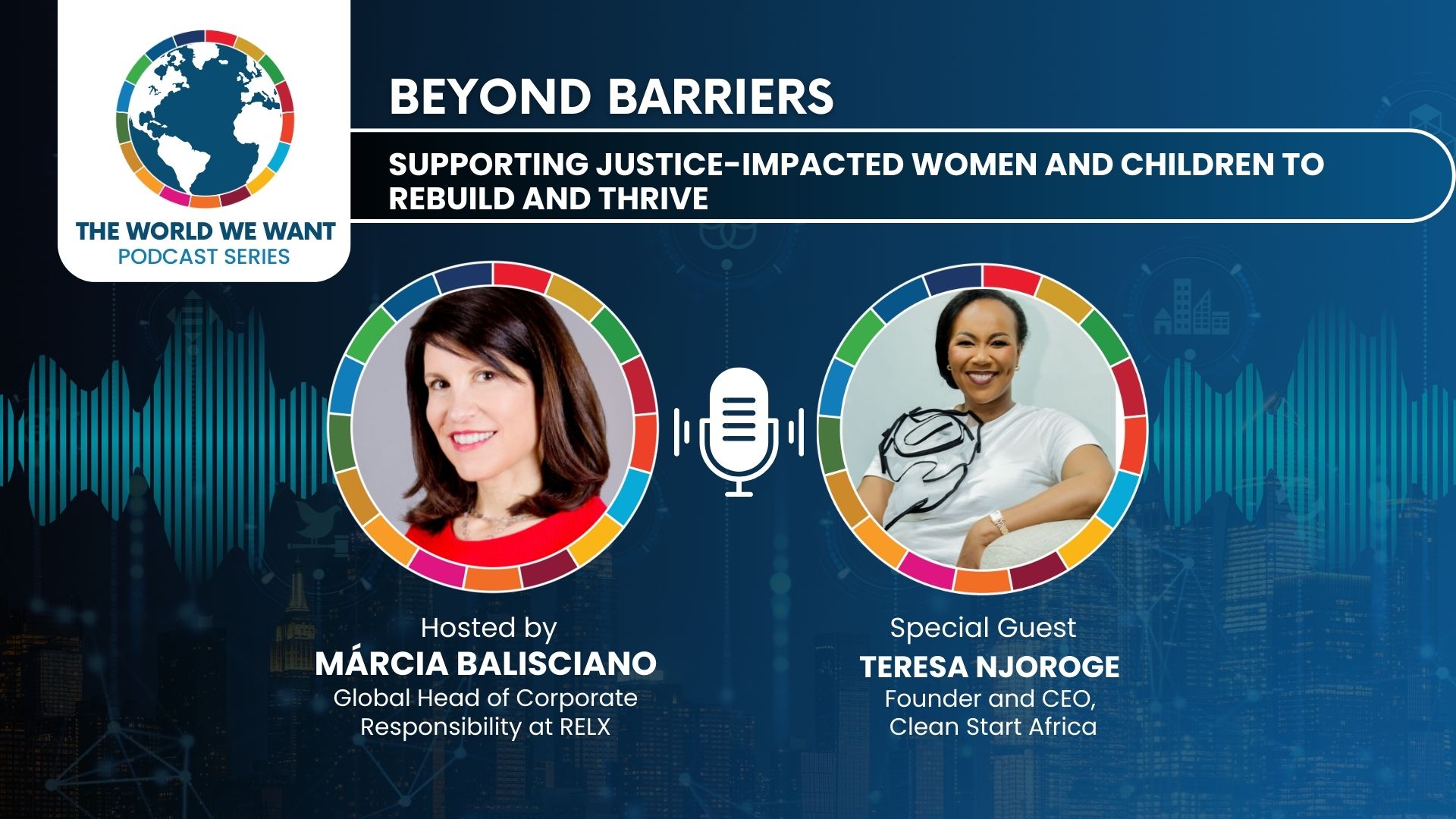
Image of podcast host and guest on a blue background with the World We Want podcast logo
In this episode of the "World We Want" podcast, Márcia Balisciano interviews Teresa Njoroge, Founder and CEO, Clean Start Africa. They discuss about Clean Start Africa’s efforts to provide employment training, psychological support, and vocational and entrepreneurship programs to communities affected by the justice system, helping them build sustainable livelihoods after release.

This article outlines a theory of goodness, coupled with some of its practical implications for impact-making, governance and lives more generally. The theory proposes that goodness consists of positive feelings and whatever promotes them, such as the joy of a meaningful conversation or the satisfaction of eating food, for instance. Although it is a version of ethical hedonism, the theory is also called welfarism since it allocates a central role to affect and since affect is central to some prevalent measures of 'subjective wellbeing'.

This paper reviews and compares four leading healthy diet metrics: GDQS, GDR score, MDD-W, and Nova UPF score, for their accuracy, ease of use, and global applicability in monitoring dietary quality. The findings highlight that the Minimum Dietary Diversity for Women (MDD-W) offers the strongest predictive accuracy for nutrient adequacy using a simple, scalable method, while also emphasizing the need for further research on metrics assessing moderation and cross-country comparability.

Pages