Energy is a central component of the United Nations' Sustainable Development Goals (SDGs), explicitly reflected in SDG 7: Affordable and Clean Energy. However, the theme of energy cuts across multiple SDGs, demonstrating the interconnectivity of these global goals.
SDG 7's objective is to ensure access to affordable, reliable, sustainable, and modern energy for all. Energy, in its various forms, is a vital driver of economic growth and is pivotal to nearly all aspects of development. Without a steady and reliable supply of energy, societies can hardly progress. However, millions of people around the world still lack access to modern and clean energy services. The emphasis on "affordable and clean" energy within this goal shows the need to transition from traditional energy sources, often characterized by high environmental costs, to more sustainable ones like wind, solar, and hydropower.
Energy's role is also significant in achieving other SDGs. For example, SDG 9: Industry, Innovation, and Infrastructure, emphasizes the need for sustainable and resilient infrastructure with increased resource-use efficiency and greater adoption of clean technologies. It is almost impossible to achieve this without a sustainable energy framework. Similarly, SDG 11: Sustainable Cities and Communities, calls for making cities inclusive, safe, resilient, and sustainable, and one of its targets (11.6) directly refers to the environmental impact of cities, for which energy is a key factor.
Furthermore, energy is a crucial player in SDG 13: Climate Action. The energy sector represents the largest single source of global greenhouse gas emissions. Transitioning to a sustainable energy future, therefore, is critical for tackling climate change. Efforts to reduce emissions and promote clean energy sources are crucial to mitigate climate change and its impacts.
This report examines how existing power system structures are misaligned with the needs of a renewable-based energy system. It analyzes wholesale pricing, electricity valuation, retail tariffs, and distributed energy integration, and proposes structural changes to support flexibility, fairness, and long-term system efficiency.

This report reviews the state of the solar industry across the Middle East and North Africa, focusing on market growth, falling costs, project pipelines, storage, green hydrogen, and country-level solar development. It presents solar as an increasingly competitive and resilient technology despite the disruptions caused by COVID-19 and lower oil prices, while highlighting the policy, financial, and technical conditions shaping the region’s next phase of solar expansion.

This report examines the expanding role of artificial intelligence across major infrastructure and sustainability sectors, including energy, water, waste management, smart cities, and climate and environment. It presents AI as a foundational enabler of digital transformation, operational efficiency, predictive decision-making, and large-scale system optimization, with particular relevance for the GCC and wider MENA region.
This report examines how global water sector trends are influencing the GCC market, with a particular focus on digital transformation, non-revenue water reduction, operational efficiency, and wastewater reuse. It highlights the region’s infrastructure challenges, policy drivers, and technology opportunities across smart metering, analytics, sensors, leak detection, and water recycling systems.

This report outlines the major trends shaping clean energy globally and across the GCC, focusing on decentralization, decarbonization, and digitalization. It examines the growth of renewables in the region, the rise of distributed energy models, and the commercial opportunities emerging across storage, digital grids, hybrid systems, and related low-carbon technologies.

This report outlines the major trends shaping clean energy globally and across the GCC, focusing on decentralization, decarbonization, and digitalization. It examines the growth of renewables in the region, the rise of distributed energy models, and the commercial opportunities emerging across storage, digital grids, hybrid systems, and related low-carbon technologies.
This report analyzes the growing water security challenges in the Middle East and outlines key opportunities across desalination, wastewater treatment, and digital water management. It highlights climate-driven risks, infrastructure gaps, and investment priorities shaping the region’s transition toward resilient and sustainable water systems.
This report reviews the main developments shaping the solar sector across the Middle East and North Africa, combining market updates, technology analysis, and country-level progress. It examines renewable investment trends, PV module innovation, distributed solar, digital energy management, green hydrogen, storage, and the outlook for leading solar markets across the region.

This report examines the role of green hydrogen in global decarbonization, outlining production pathways, technology developments, deployment trends, and strategic opportunities. It highlights hydrogen’s potential across industry, power, transport, and storage, while emphasizing the importance of cost reduction, electrolyzer innovation, and regional advantages such as those found in the GCC.
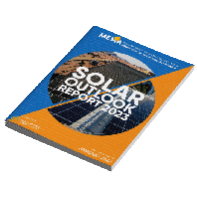
This report examines the evolving solar landscape across the Middle East, assessing policy shifts, investment trends, market development, and the technologies shaping regional deployment. It highlights how solar power is intersecting with carbon credits, green hydrogen, electric vehicles, digitalization, storage, and country-level energy strategies across leading MENA markets.