Sustainable Chemistry for Climate Action, Volume 2, January 2023
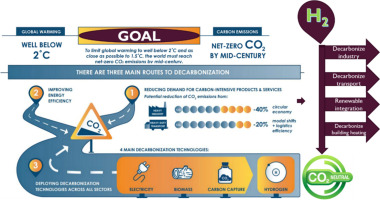
A rapid switch from non-renewable carbon-based sources of energy to clean and low-carbon sources of energy is required to accomplish ambitious carbon neutrality goals. The prospects of hydrogen in achieving net-zero emissions by 2050 are promising, but the article describes the challenges and uncertainties that need to be addressed.
Elsevier,
iScience, Volume 26, 20 January 2023
In this article, the authors used an Energy Transition Index to characterize the city-level energy transitions from energy system performance and transition readiness dimensions for 282 cities in China. They estimate that China’s energy and carbon intensity could decrease by 34% and 32%, respectively, and that carbon per capita could fall by 17% if each city modestly follows the sustainable development path forged by the best performing cities with similar economic structures.
Elsevier,
Advances in Nutrition, Volume 14, January 2023
The article discusses the urgent need for alternative food sources due to growing food security challenges exacerbated by overpopulation, pandemics, political conflicts, and climate change. Microalgae are highlighted as promising alternative protein sources due to their high protein content, essential amino acids, and environmental benefits. However, challenges like cultivation costs, protein extraction, and sensory qualities need to be addressed. The article advocates for the use of systems biology and artificial intelligence (AI) to optimize the growth and protein yield of microalgae, leveraging omics data and computational models for improved outcomes.
Elsevier,
Neuroscience & Biobehavioral Reviews,
Volume 145,
2023
This article ties to SDG 3. Analyzing relations among neuronal, endocrine, immune, and biochemical signatures of trauma and internalizing and externalizing behaviors, including the role of personality traits in shaping these conducts, this review highlights that the marked effects of traumatic experience on the brain/body involve changes at nearly every level of analysis, from brain structure, function and connectivity to endocrine and immune systems, from gene expression (including in the gut) to the development of personality.
Elsevier,
Molecular and Cellular Endocrinology, Volume 559, 1 January 2023
Lactation invokes homeorhetic processes to ramp up and supply milk synthesis components to fulfil nutritional, immunological and microbiological requirements of developing offspring, overseen by complex neuroendocrine networks. The maternal gut meets these intense metabolic demands, supported by hyperphagia and rapid adjustments to process larger food quantities. This research seeks to help mothers and clinicians better understand the hormonal components of their diet, gastrointestinal and other biological drives toward essential nutrient flow to their infants via lacatation.
Elsevier,
International Journal of Educational Development, Volume 96, January 2023
This paper aims to extend the discussion on intersectionality by focusing on the intersection between gender and religiosity while addressing the main challenges which face young religious Jewish women in Israel who have chosen the STEM path.