This Article supports Sustainable Development Goal 3 by estimating the proportion of dementia attributable to hypertension, finding an overall global population attributable fraction of 15.8%. Results were also broken down by region and age. The authors note that the estimates from this study could help to inform public health policy at global and national levels.
This Comment article supports SDG 3 and 16 by highlighting how complex humanitarian settings have become fertile environments for spreading misinformation, disinformation, and malinformation, and how the 2021 release of the Oxford Statement on International Law Protection in Cyberspace, which touches on sovereignty, incitement, human rights, criminal law, general rules of international humanitarian law, and international criminal law, is an important first step to address this type of disinformation.
Elsevier,
Overcoming Obstacles in Drug Discovery and Development, Surmounting the Insurmountable—Case Studies for Critical Thinking 2023
Racial and ethnic disparities among clinical trial participants is a long-standing issue demanding attention in the research community as advances in precision medicine increase. This exclusion from clinical trial enrollment has tangible consequences, preventing traditionally underserved populations from benefitting from health innovation and cutting-edge technologies. Aggregation of populations into a generalized treatment population lends to the evident healthcare inequities we see today and support SDG3
This review supports SDG 3 as despite available antiviral therapy, hepatitis C virus (HCV) remains a global health burden and a prophylactic vaccine would help to eliminate the risk to develop chronic liver diseases. This paper uses data to draw a simplified model of virus entry, which highlights gaps in our current knowledge that warrant further research to fully understand this process at the atomic level.

In this episode of the “World We Want” podcast series, the editors of the new book Oceans and Human Health: Opportunities and Impacts talk to Márcia Balisciano about about the fascinating connections between the ocean and human health, spanning from wellbeing and mental health, to medicinal resources, plastics, food and nutrition, and the health risks of polluted oceans.
World Oceans day is celebrated every year on June 8th and this year the theme is "Planet Ocean: tides are changing". Elsevier is proud to share this special collection of impactful and freely accessible journal articles and book chapters in support of this important event.
The authors explore automatic and early detection methods for Alzheimer’s disease (AD) using deep learning techniques in order to improve the speed and accessibility of current testing methods. They propose a deep transfer learning model as a new approach for accurately detecting categories of Alzheimer's disease. The research serves SDG 3's aim in highlighing and seeking better treatment for AD, an increasingly serious global public health issue.
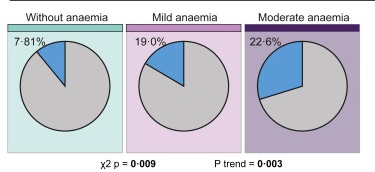
Tuberculosis is often reported in people with HIV. In this secondary post-hoc analysis of the A5274 REMEMBER clinical trial, the authors identified that people with HIV and moderate-to-severe anaemia had a higher incidence of TB than those with HIV who did not have anaemia. Addressing two key diseeases listed in SDG 3.3 (HIV and TB), the authors call for close monitoring of people with HIV and anaemia.

This study underscores a novel mechanism(s) underlying HIV-1 Tat-mediated ferroptosis and microglial activation involving miR-204–ACSL4 signaling.
SCFA contribute to the glutamate-glutamine shuttle by acting on glutamine synthetase. Long-term SCFA diet alleviates cognitive and spatial memory defeat in APP/PS1 mice. Long-term SCFA diet reduces Aβ deposition and abnormal phosphorylation of tau. SCFA promote astrocyte-neuron metabolic coupling to reduce oxidative damage.