Neurobiology of Brain Disorders (Second Edition), Biological Basis of Neurological and Psychiatric Disorders, 2022, Pages 313-336
This book chapter advances SDG #3 and #10 by reviewing several key topics that influence our understanding of pathogenic mechanisms and lead to the identification of novel therapeutic strategies. These include the diagnostic spectrum of MCI and AD, genetic risk alleles associated with late-onset AD, structures of gamma-secretase and tau, imaging and fluid biomarkers, the role of microglia and neuroinflammation, and novel animal models of AD.
Nanomedical Drug Delivery for Neurodegenerative Diseases, 2022, Pages 17-39
This book chapter advances SDG #3 and #10 by presenting drug delivery systems based on nanotechnology to treat Alzheimer’s disease.
Nanomedical Drug Delivery for Neurodegenerative Diseases, 2022, Pages 223-242
This book chapter advances SDG #3 and #10 by highlighting a few newly updated nano drug delivery technologies implemented in Alzheimer’s disease therapies and prospects for the future regarding potential molecular mechanisms of nano drug delivery methods
This book chapter advances SDG 3 and 10 by presenting that (1) some of these depression scales do not correlate, suggesting that they assess different aspects of depression; (2) reports of depression in dementia vary based on depression in dementia scale used; and (3) severe memory impairment may impact the ability to assess depression in the patients using self-reports.
This book chapter advances SDG #3 and #10 by reviewing studies that showed treatments with multiple sessions of rTMS can influence cognition in people with neurodegenerative diseases. The chapter also considers novel therapeutic approaches based on the clinical use of rTMS.
Modern agricultural systems are heavily energy-dependent at all stages of operation. It is assessed that global food production is responsible for 30% of the total energy usage. Though there are various energy sources available, at present, global food production mainly depends on fossil fuels for the needed energy fulfillment. Being fossil fuel, a limited nonrenewable energy source and considering its negative impacts on the environment thrive the necessity for reliable renewable energy sources. Wind power, solar power, micro-hydro-power, and biomass energy are some of the well-established renewable energy sources that could substitute fossil fuel usage in agriculture. However, these renewable energy sources also have constraints that reduce their full adaptability. For instance, higher demand for biomass energy could cause complications in land use patterns in agriculture and also lead to deforestation. Therefore, increasing the energy use efficiency (EUE) of the whole agricultural production process sustainably is essential. Legume crop cultivation and integration of legumes for the other cropping systems through crop rotations, cover crop cultivations, or intercropping can be recommended for the reduction of input energy usage without compensating the yield. In this regard, key abilities of legumes as biological nitrogen fixation, improvement of soil organic matter and soil moisture contents, reduction of soil moisture evaporation, improvement of agro-biodiversity are contributing to higher energy use efficiencies of legume incorporated farming systems. For instance, ≈ 4890 MJ ha-1 of energy for N application could be conserved with the integration of soybean for corn cultivation. Furthermore, soybean used 50% lesser energy for machinery than in wheat cultivation, and save approximately 1720 MJ ha-1 of energy in land preparation through incorporating the legumes with cereals, which indicates its potential in energy saving. Therefore, popularizing the intercropping systems of legume–cereal, legume-root crop, the introduction of legume crops for the marginal lands where it needs more energy to cultivate other nonlegume crops, practicing rotational crop cultivation included with a legume crop will be more effective in terms of energy-saving. Energy-saving efficiency of legume can be further improved with effective use of microbial inoculum, efficient management of soil moisture content, applying conservation agricultural practices for economical legume cultivation, selection of suitable legume variety for the particular agro-ecological region, and application of precision agriculture for needed crop management. However, revisiting available agricultural policies and formulating practical implementation mechanisms are needed locally, regionally, and globally to publicize legume-based farming for higher EUE in the future.
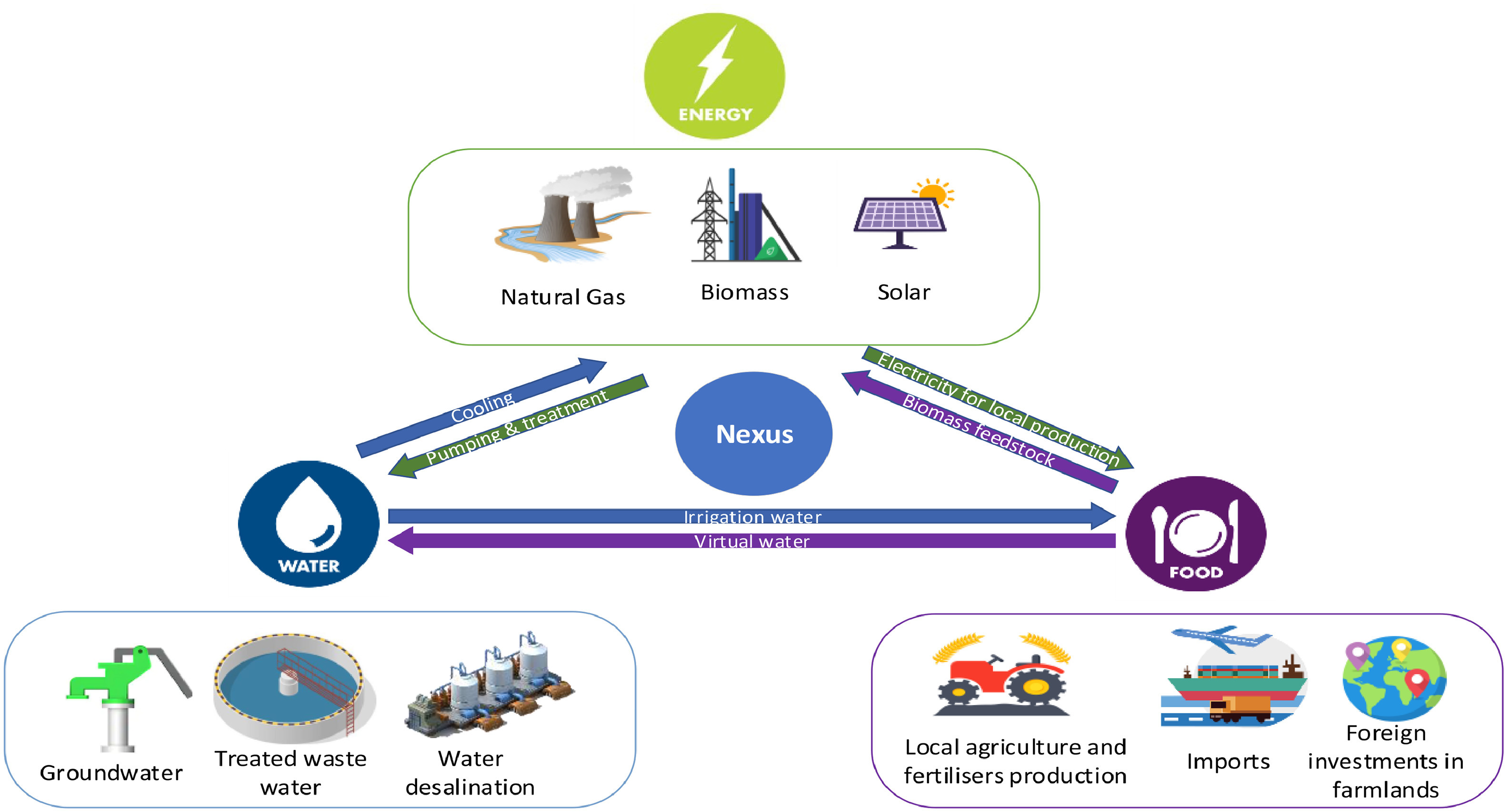
Efficient resource management and the development of resilient societies begins with an accurate identification of strengths and weaknesses of systems involved. Conducting a holistic performance analysis considering multiple assessment criteria permits the detection of discrepancies hindering systems productivity. In this study, an integrative assessment tool, based on the analytical hierarchy process (AHP) and the energy, water, and food (EWF) nexus is used to design a decision-making scheme that guides policymakers in establishing national priorities and sectorial strategies.

Human Caspases and Neuronal Apoptosis in Neurodegenerative Diseases, 2022, Pages 69-151
This book chapter advances SDG #3 and #10 by reviewing the latest developments in the field of clinical diagnosis and pharmacotherapeutics have provided hope to ameliorate the behavioral changes and cognitive disturbances associated with the disease.
Climate change mitigation requires energy transition supported by public to maximize policy acceptance. We examine if transiency of residence and life satisfaction affect climate change perceptions and opinions on energy sources. We find that transiency of residence and life satisfaction have significant effect in shaping views towards climate change. Results indicate that individuals concerned about local impact of climate change are supportive of renewable energy sources.