This chapter intends to systematize the trends and approaches that will inspire local policymaking in response to climate change challenges and to meet European guidelines and recommendations for sust
Climate change is accepted as the biggest challenge for the European Union (EU) and for this reason being a climate-neutral continent by 2050 is a priority for Europe.
Elsevier,
Encyclopedia of Sustainable Technologies, Second Edition: Volumes 1-4, Volume 1-4, 1 January 2024
This chapter addresses global water scarcity by turning wastewater into a safe and reusable water source and promotes circular water systems.
Elsevier,
Encyclopedia of Energy, Natural Resource, and Environmental Economics, Volume , 1 January 2024
Aligns most closely with SDGs 11 and 6, looking at factors affecting water governance and supply, environmentally sustainable allocation and use of water, water markets as a tool to reallocate water in ways which promote efficiency and social equity.

In this episode of the "World We Want" podcast, Márcia Balisciano interviews Filip Neele, Lead Scientist at TNO in Utrecht, the Netherlands. They discuss carbon capture and storage (CCS) technology as a “key” in energy transition and its role in supporting global sustainability.
This study seeks the view of ten school principals on the pathways of incorporating environmental education into the school curriculum in South Africa.
The authors evaluate shifts in water reservoirs (i.e. atmospheric versus terrestrial and underground water storage). Projections indicate water storage deficits in most Southern Hemisphere basins during the summer.
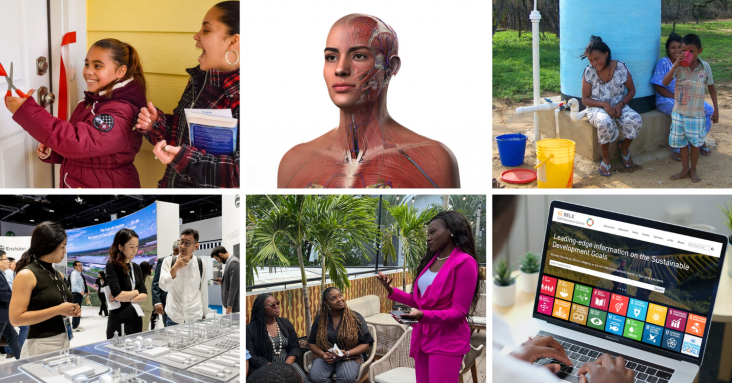
As we pass the halfway point for the SDGs, many of the goals are worryingly off track and progress on 85% of the target indicators has stalled or even reversed. Through our information, products and people, RELX remains committed to advancing the Goals. Here are some of the ways that we continue to support their achievement.
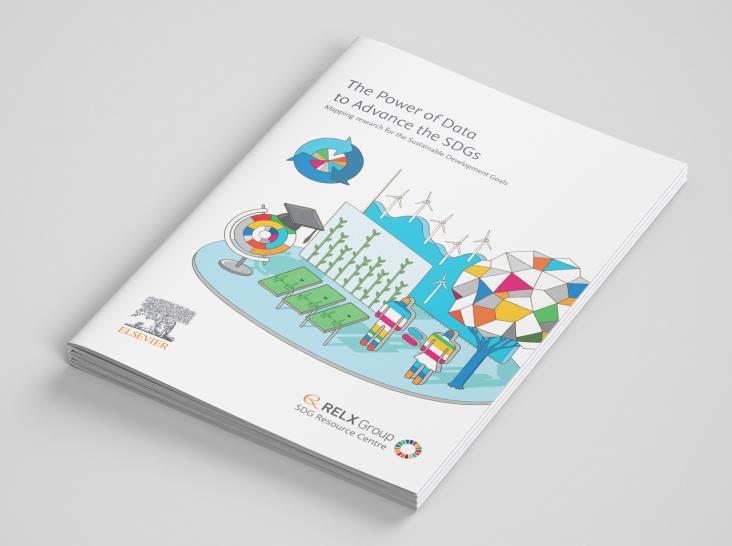
Access to information is critical in achieving the SDGs - empowering the public to make decisions, informing policy making and enabling effective implementation and monitoring. RELX businesses regularly produce and publish free to download reports and analytics that draw upon vast amounts of information and data in support of the SDGs. Explore some of the reports and tools developed to date.
This article explores how assuming lower economic growth ratesaligned with secular stagnationbroadens feasible climate mitigation pathways consistent with 1.5°C2°C warming, reducing reliance on unprecedented low-carbon infrastructure buildout. However, lower growth raises concerns about equity and stability, highlighting the need to evaluate novel post-growth policies in future scenarios.