This chapter advances SDG goals 7 and 13 by highlighting future prospects for green energy production of hydrogen.
The article highlights the significant threat climate change poses to global food security and micronutrient availability, particularly in low- and middle-income countries. It emphasizes that rising temperatures, elevated CO2, and extreme weather events will likely reduce the yield and quality of essential crops and fisheries. Effective mitigation strategies, such as biofortification, plant breeding, and genetic modifications, are critical to enhance crop resilience and nutritional content, ensuring food security and addressing micronutrient deficiencies amidst changing climate conditions.
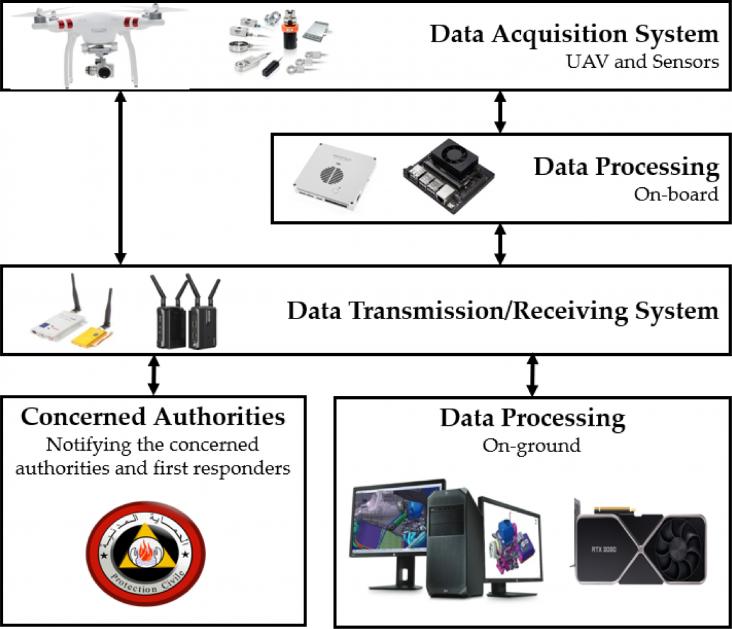
Wildfire is one of the most critical natural disasters that threaten wildlands and forest resources.
As evidence of the health impacts of transportation investments has grown, planners have increasingly used health impact assessments (HIAs) to evaluate transportation plans, projects, and policies.
Fruits and vegetables are responsible for about 22% of food losses and wastes along the supply chain (not including the retail level).
Proteins serve as an imperative macronutrient in human nutrition and well-being.
This Comment supports SDGs 3 and 10 by explaining how people with disabilities are more likely to suffer adverse health effects from climate change, for a variety of reasons, and emphasising that people with disabilities should be considered, and included in planning of, climate change mitigation and adaptation efforts.
Modern agricultural systems are heavily energy-dependent at all stages of operation. It is assessed that global food production is responsible for 30% of the total energy usage. Though there are various energy sources available, at present, global food production mainly depends on fossil fuels for the needed energy fulfillment. Being fossil fuel, a limited nonrenewable energy source and considering its negative impacts on the environment thrive the necessity for reliable renewable energy sources. Wind power, solar power, micro-hydro-power, and biomass energy are some of the well-established renewable energy sources that could substitute fossil fuel usage in agriculture. However, these renewable energy sources also have constraints that reduce their full adaptability. For instance, higher demand for biomass energy could cause complications in land use patterns in agriculture and also lead to deforestation. Therefore, increasing the energy use efficiency (EUE) of the whole agricultural production process sustainably is essential. Legume crop cultivation and integration of legumes for the other cropping systems through crop rotations, cover crop cultivations, or intercropping can be recommended for the reduction of input energy usage without compensating the yield. In this regard, key abilities of legumes as biological nitrogen fixation, improvement of soil organic matter and soil moisture contents, reduction of soil moisture evaporation, improvement of agro-biodiversity are contributing to higher energy use efficiencies of legume incorporated farming systems. For instance, ≈ 4890 MJ ha-1 of energy for N application could be conserved with the integration of soybean for corn cultivation. Furthermore, soybean used 50% lesser energy for machinery than in wheat cultivation, and save approximately 1720 MJ ha-1 of energy in land preparation through incorporating the legumes with cereals, which indicates its potential in energy saving. Therefore, popularizing the intercropping systems of legume–cereal, legume-root crop, the introduction of legume crops for the marginal lands where it needs more energy to cultivate other nonlegume crops, practicing rotational crop cultivation included with a legume crop will be more effective in terms of energy-saving. Energy-saving efficiency of legume can be further improved with effective use of microbial inoculum, efficient management of soil moisture content, applying conservation agricultural practices for economical legume cultivation, selection of suitable legume variety for the particular agro-ecological region, and application of precision agriculture for needed crop management. However, revisiting available agricultural policies and formulating practical implementation mechanisms are needed locally, regionally, and globally to publicize legume-based farming for higher EUE in the future.
The COVID-19 pandemic has devastated communities throughout the world. However, the negative impacts of another pandemic, affecting cities worldwide, arguably rival those of COVID.
An article focused on (i) understanding how climate change is decreasing ocean biodiversity and (ii) identifying the planetary health impacts accelerated by ocean biodiversity erosion.