Food security and nutrition and sustainable agriculture

Food security, nutrition, and sustainable agriculture constitute fundamental elements that contribute significantly to the attainment of the United Nations' Sustainable Development Goals (SDGs). These goals are a globally shared blueprint that calls for peace and prosperity for all people and the planet. Focusing on food security and nutrition is directly linked to SDG 2 which seeks to "End hunger, achieve food security and improved nutrition, and promote sustainable agriculture." Beyond SDG 2, these themes also relate to other SDGs such as Goal 3 - Good Health and Well-being, Goal 12 - Responsible Consumption and Production, and Goal 13 - Climate Action. The relationship between sustainable agriculture and these goals is profound; by promoting eco-friendly farming methods, we reduce the environmental footprint, mitigate climate change, and ensure the long-term sustainability of food production systems.

Moreover, sustainable agriculture is vital in fostering biodiversity, improving soil health, and enhancing water use efficiency, which are critical aspects related to Goals 14 and 15 - Life below Water and Life on Land respectively. By safeguarding our ecosystems, we not only ensure food security but also the preservation of the natural environment for future generations. In turn, better nutrition is a conduit to improved health (SDG 3), and it can also influence educational outcomes (SDG 4), given the known links between nutrition and cognitive development.

Furthermore, it is worth noting that the interconnections go beyond these goals. There's an important nexus between sustainable agriculture, food security and issues of poverty (SDG 1), gender equality (SDG 5), clean water and sanitation (SDG 6), and economic growth (SDG 8), among others. Sustainable agriculture creates job opportunities, thus reducing poverty levels. By empowering women in agriculture, we can help achieve gender equality. Proper water and sanitation practices in agriculture can prevent contamination, ensuring clean water and sanitation for all. Therefore, the triad of food security, nutrition, and sustainable agriculture, while being a significant goal in itself, is also a vehicle that drives the achievement of the wider Sustainable Development Goals.
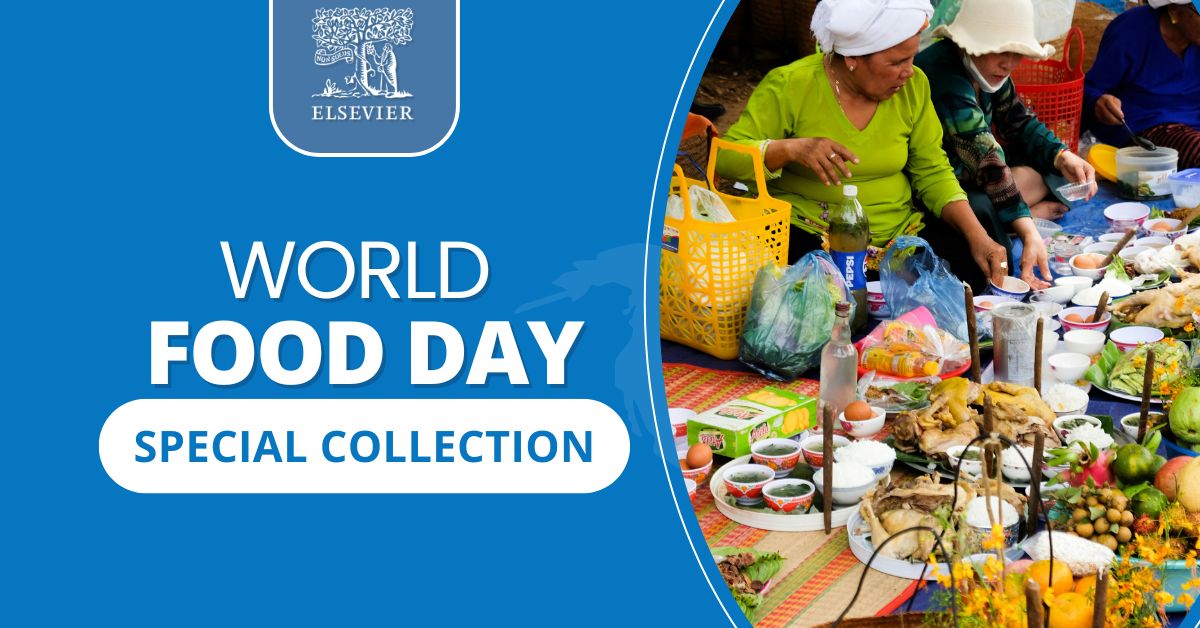
Celebrated annually on October 16, World Food Day is a key global event focused on raising awareness about food security and hunger. Established by the United Nations Food and Agriculture Organization (FAO) in 1979, this day highlights the ongoing challenges of hunger, malnutrition, and the need for sustainable food systems.

Elsevier,

Strategies for Sustainable Shrimp Aquaculture, Academic Press, 2026, Pages 43-70

This content aligns with SDG 3 and 12: This chapter discusses the potential use of microorganisms (bacteria, microalgae, and zooplankton) to substitute high value foods such as fish meal, fish oil, and plant-based supplements.

This content aligns with SDG 2 and 3 by discussing the availability and nutritional qualities of pomegranate.

Elsevier,

Sustainable Applications of Pomegranate Peels, 2022, Pages 187-199

This content aligns with SDG 2 and 3 by discussing the availability and nutritional qualities of pomegranate.

This content aligns with Goal 12: Responsible Consumption and Goal 13: Climate action by outlining strategies for a negative carbon footprint in raising small ruminants for meat and dairy, producing protein-rich food without harm to the environment.

This chapter aligns with UN SDG goal 3, emphasizing the link between a healthy diet and disease prevention

Agriculture faces the increasing demands of a growing global population amid simultaneous challenges to soils from climate change and human-induced contamination. Cover plants are vital in sustainable agriculture, contributing to soil health improvement, erosion prevention, and enhanced climate resilience, but their role in contaminant management is underexplored. Herein we review the utilization of cover plants for remediating contaminants such as metals, organic pollutants, nitrate, antibiotics, antimicrobial resistance genes, plastics, and salts.

In rural Malawi, the use of on-farm trees for food�rather than just for fuel or income�is strongly associated with improved micronutrient adequacy (vitamin A, zinc, iron, and folate) in women�s diets across seasons. This suggests that food-producing trees play a key role in supporting nutrition in low- and middle-income countries.

This chapter aligns with UN SDG goals 2 and 3 by underscoring the vital role of functional foods for promoting health and well-being.
Agriculture is key to global food security and is a pivotal component of the United Nations' Sustainable Development Goals. However, the increasing utilization of fossil fuels to power farm machinery is a source of concern due to the established negative consequences of greenhouse gas (GHG) emissions on climate variability, with dire consequences for plants, animals, human settlement, and social and economic activities. Therefore, a revolutionary campaign is needed for innovative, intelligent, and clean technological advancement in the agricultural sector, such that carbon emissions can be mitigated with increased penetration of renewable energy sources (RESs). The solar photovoltaic (PV) system offers tremendous advantages in reducing carbon emissions among land-based RESs. The usage of RES to power agricultural equipment has significantly reduced carbon emissions in the agricultural sector. Farmers are now adopting biogas - produced from wastes of organic materials like plants and animals, for cooking and powering farmhouses and equipment. Solar-powered water pump irrigation systems can reduce carbon emissions by 97%–98% compared to conventional fossil fuel-powered systems. A solar powered tractor was found to produce a carbon footprint of 5.75 kg CO2 eq kg−1 vehicle annually, showing a potential 90% reduction in emissions. Also, a RES-based water pump system, RES-based maize sheller, and RES-based incubator revealed a potential reduction in GHG emissions up to 98%, 89.61%, and 97%, respectively. This chapter, therefore, discusses the pursuit of net zero emission from the viewpoint of land-based renewable energy deployment and carbon-neutral agriculture drivers and tools. The chapter also addresses the issues associated with fossil-based energy sources in agriculture, modern and current trends in agriculture energy supply, carbon neural agriculture drivers, and future agricultural energy supply perspectives, including research and development considerations.

Pages