Europe

Elsevier, Research Policy, Volume 46, 1 June 2017
The paper contributes to the literature on gender gap in research investigating whether there is a gender gap in research evaluation. We use detailed data on 180,000 research papers evaluated during the Italian national research assessment (VQR 2004–2010) conducted by the Agency for the Evaluation of Universities and Research Institutes (Anvur). The data are merged with information on individual researchers and characteristics of referees. The most important empirical finding is that there is a significant gender gap in research evaluation.
John Dale left and Derek Burgoyne
Finishing 3,000 dairy-bred beef cattle on waste food while producing green energy and fertiliser as by-products is the sustainable model for one Cambridgeshire farmer and his business partner. This approach helps meet the criteria for SDG 7 of access for all to affordable, reliable, sustainable and modern energy and SDG 12 which promotes responsible consumption and production.

Neurochemical Aspects of Alzheimer's Disease Risk Factors, Pathogenesis, Biomarkers, and Potential Treatment Strategies, 2017, Pages 47-91

This book chapter advances SDG #3 and #10 by reviewing the risk factors for Alzheimer’s Disease, including normal aging, diet, sedentary lifestyle, sleep disturbances, genes [amyloid precursor protein (APP), presenilin 1 (PSEN1), PSEN2, and APOE], environmental factors, and epigenetic factors.

Land Degradation (LD) in socio-environmental systems negatively impacts sustainable development paths. This study proposes a framework to LD evaluation based on indicators of diversification in the spatial distribution of sensitive land. We hypothesize that conditions for spatial heterogeneity in a composite index of land sensitivity are more frequently associated to areas prone to LD than spatial homogeneity. Spatial heterogeneity is supposed to be associated with degraded areas that act as hotspots for future degradation processes.
RX,

All-Energy, 10-11 May 2017

All-Energy
All-Energy is the UK’s largest renewable energy event, providing industry suppliers and thought-leaders the opportunity to connect with new customers and expand business networks in this fast-changing marketplace as well as learn about latest technologies and solutions. Presentations from the 2017 event provide invaluable insights into bioenergy, solar, offshore and onshore wind, hydropower and wave & tidal sectors, as well as energy storage, low carbon transport and sustainable cities solutions. This is directly related to SDG 7: Affordable and clean energy.
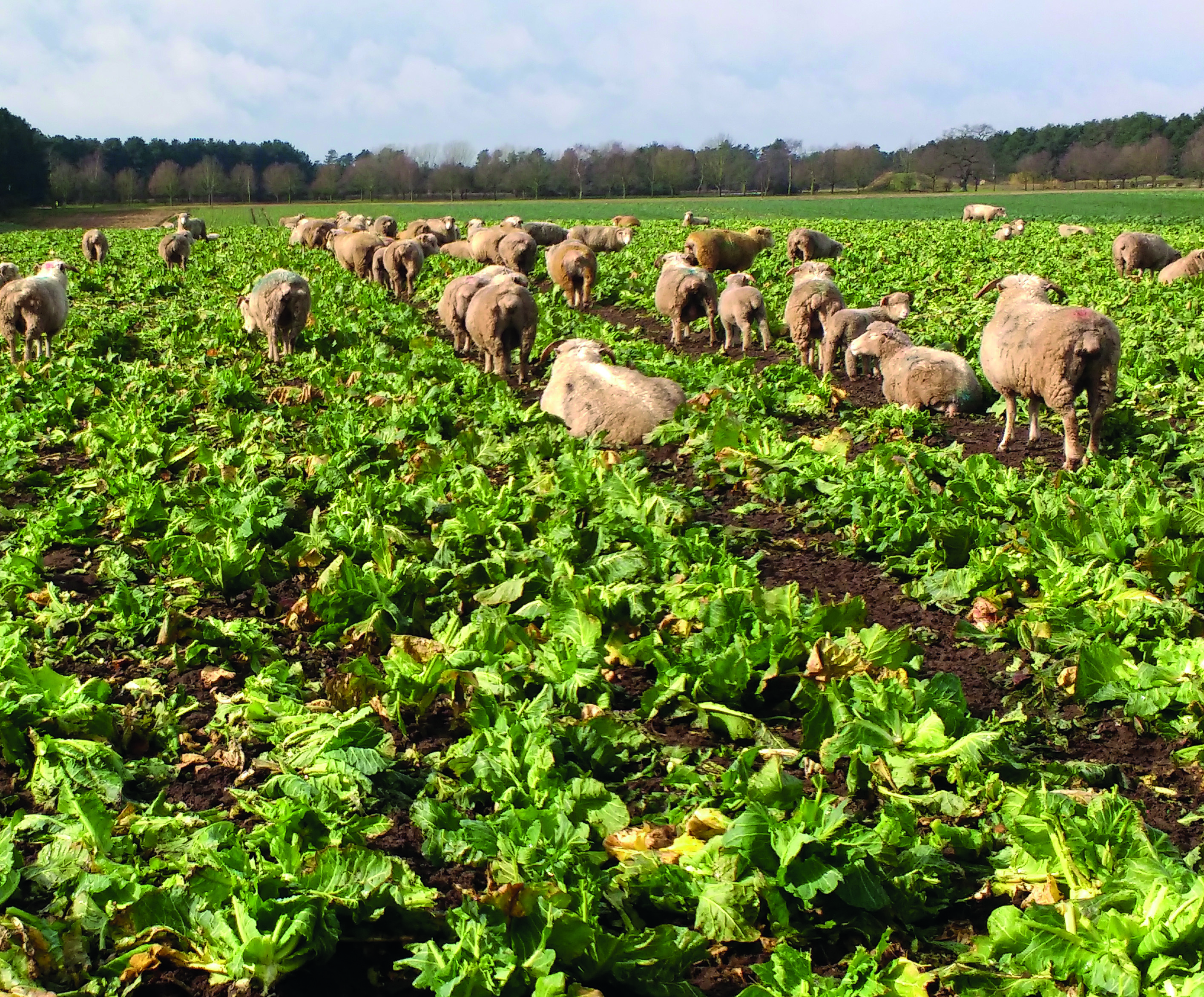
Green waste left over from vegetable harvesting provides feed for sheep and is then returned to the soil as manure
Livestock has disappeared from swathes of England in the past 50 years as many growers became increasingly specialised. However as our soils increasingly suffer leaching, erosion and compaction from ever-heavier modern machinery, more and more arable farmers are reaping the benefits of bringing sheep and cattle back on to the land. Such measures help support SDG 12 Responsible Consumption and Production.
A number of property companies are going beyond traditional corporate responsibility to be net positive. Instead of opting for sustainability strategies that manage risk and reduce negative impacts, these companies are seeking to put back more into society, the environment and the global economy than they take out. Whilst the breadth and scope of these net positive commitments made by real estate leaders vary, there is enormous opportunity for this sector with sustainability and in supporting SDG 7 and 13.
This article explores how lawyers can work together to increase social mobility and diversity within the legal profession. Julian Sayarer talks to Chris White, founder of Aspiring Solicitors, Chris Benn, lawyer at Kemp Little, Barry Matthews, an in-house lawyer with ITV, and Toby Hornett, legal director at Canon – Europe about the role in house teams play in promoting diversity and access, contributing to SDG 10, reduced inequalities.
Assuming communities in a city may formally express their aspirations for the future sustainability of their city, which technological innovations for changing the city's infrastructure and metabolism might they introduce today, as a first step towards realizing their distant aspirations? What is more, recognizing the diversity of aspirations that may never be reconciled into a consensus, might some innovations and policy interventions be nevertheless more privileged than others, in being non-foreclosing? How might we discover this?

Background Sex workers are disproportionately affected by HIV compared with the general population. Most studies of HIV risk among sex workers have focused on individual-level risk factors, with few studies assessing potential structural determinants of HIV risk. In this Article, we examine whether criminal laws around sex work are associated with HIV prevalence among female sex workers.

Pages